The story
Let's start with the reasons: why visit Japan? The powerful contrast between tradition and modernity that defines this country is certainly one of the most interesting aspects: it's quite something to see skyscrapers and hi-tech structures rising next to temples and shrines, or men and women walking around in kimonos while others wear the latest Prada outfit... Another thing to say about Japan is that you really feel in another world; in New York, London or Mexico City you're a foreigner, yes, but you blend in with the other tourists and therefore feel less "isolated". One thing is certain: as soon as a Japanese person notices you hesitant with a map in your hand or in front of some ideograms, they'll move heaven and earth to help you! What's more, not many Japanese people know English, so they never miss a chance to practise the language with a gaijin (foreigner).
So they are extremely kind, ceremonious and possessed of a politeness and formality that leaves you speechless.
Prices: Let's debunk a myth: Japan is not expensive. You sleep in the centre of Tokyo in a room with every amenity, a huge bed and a flat-screen TV for 60-70 euros a night. You have lunch or dinner for 15 euros (20 if you've overdone it). You buy whatever you like at prices lower than, or at worst, equal to Italy's. Of course, for those who really want to spend, there's plenty on offer: hotels like the Grand Hyatt in the Mori Tower, ryokans with zen gardens that even Master Miyagi couldn't match... or restaurants where every dish is served as if it were a sacred rite.
The timing: My girlfriend and I were in the land of the rising sun from 8 to 24 August 2005 and I must say that the high temperature and humidity make themselves felt on certain days; the best time would be spring, with a drier climate and the cherry blossom offering breathtaking scenery. Autumn is a good time too. In any case, summer has its advantages: you can attend the O-bon ceremony (you know, the paper lanterns on the river?) or treat yourself to a few days at the seaside in one of Japan's many coastal resorts.
The organisation
Flight
We booked the flight online on the KLM website. So the trip was Rome-Amsterdam-Tokyo and back. The price? 850 euros (taxes included). From Narita airport there are shuttle buses that will take you to the centre of Tokyo. It's the only cheap way to reach the city. I strongly advise against taking a taxi: the fare costs more than 200 euros.
Trains and Buses
We bought the Japan Rail Pass, a sort of Japanese Interrail. It can only be bought outside Japan and is valid exclusively for foreigners. It lasts 7, 14 or 21 days. If your itinerary includes several journeys, the JRP will save you a lot of money: as an example, the Tokyo - Kyoto round trip alone costs about 200 euros: practically the cost of a one-week Japan Rail Pass. With this pass you can take some bus lines (those belonging to the Japan Rail company) and all trains, including the Shinkansen ("bullet trains"), with the sole exception of the Nozomi (reserved, in essence, for Japanese commuters). The JRP comes in first and second class. Japanese second class corresponds to first class on our Pendolino/ETR trains. A curious fact about these famous trains: the Shinkansen reach speeds of 300 km/h, so comparable to the French TGV.
The futuristic magnetic-levitation trains (MAGLEV) that everyone talks about are still under construction. There's only one railway line, about 40 km long, used for tests and demonstration purposes. On this line the train was pushed to 581 km/h, which is the current speed record.
Hotel and Ryokan
For accommodation, the same thing: everything can be done online. We booked a really lovely hotel in Tokyo in the Roppongi Hills area (370 euros per person for seven nights with breakfast).
In Kyoto we instead booked (again online) a ryokan to find out what it means to sleep on tatami with a futon for a week (the first two days were a bit painful) and to bathe in the ofuro (probably one of the things that will put you most in touch with Japanese culture).
We therefore chose to make our "base" in Tokyo and then Kyoto. It turned out to be an excellent choice, since from these cities you can reach a great many places of interest.
Our itinerary was as follows:
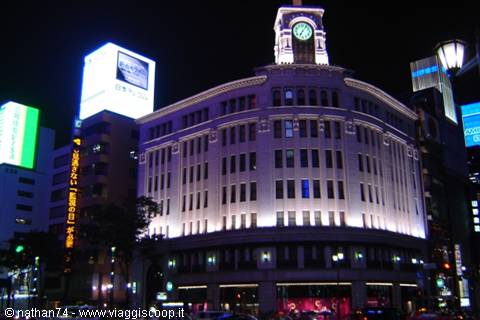
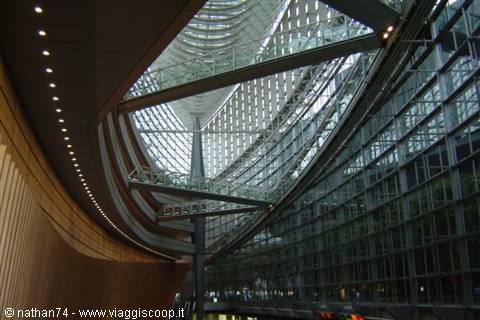
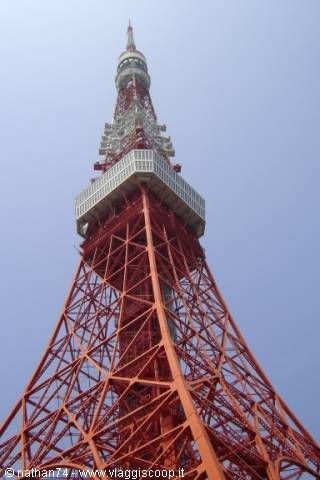
9-16 August: Tokyo. This city certainly deserves 4-5 days. Ginza, Ueno, Asakusa, Roppongi, Shinjuku and Shibuya are the districts you must see. Each of them has a special quality that makes Tokyo unique. In the evening it's all lights and neon and you feel as if you're in one of those cities of the future described in so many books and films.
From Tokyo we spent a day in the Mount Fuji area. We strongly recommend you choose a sunny day: the summit of Mount Fuji is hard to see, so the sky must be clear.
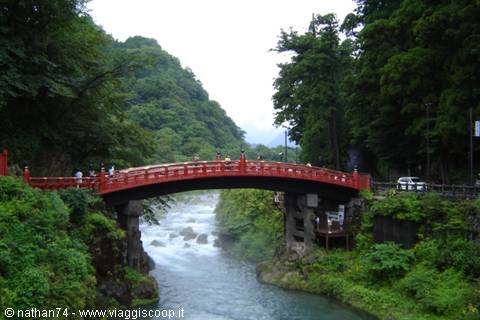
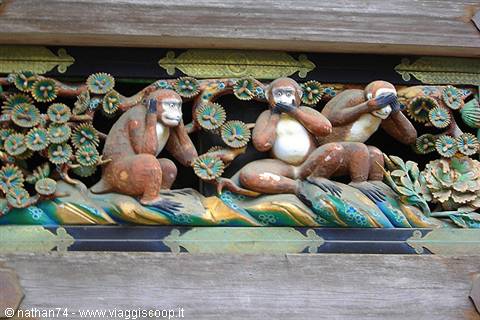
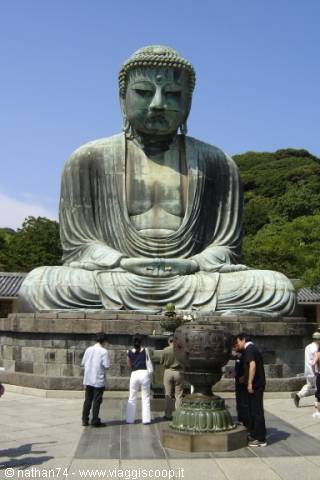
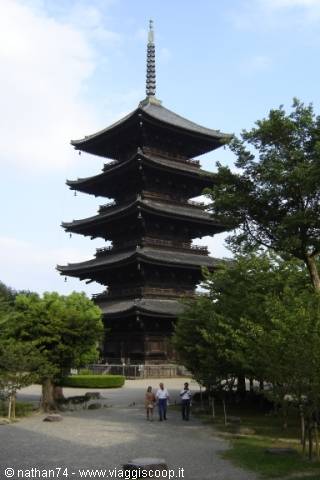
Also from Tokyo we spent a day in Kamakura (where there's a Buddha, or Daibutsu, that's very beautiful) and a day in Nikko (temples, pagodas and torii set in the forest).
All our journeys were made with the Japan Rail Pass, so there was no extra cost for transport. Only in a few cases will you need to spend a few yen to buy, for example, a cable-car ticket.
On 16 August we moved on to Kyoto. By Shinkansen it takes about 2.5 hours (and they're 500 km apart!).
Kyoto is simply fantastic. If Tokyo left you a bit dazed, Kyoto will bring you back to a more human pace and you'll really feel you're in Japan. There are temples and shrines everywhere, traditional shops, bicycles whizzing through the streets and the legendary Geisha district (Gion). This city too needs at least 3-4 days to be experienced at its best.
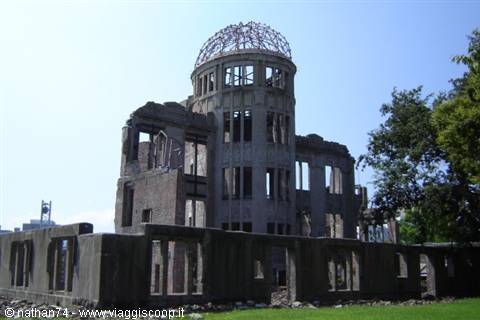
From Kyoto we went on a day trip to Hiroshima (it only takes two hours), which deserves to be seen (the museum is impressive).
We also had a day at the sea, or rather the ocean. Again from Kyoto you can easily reach the resort of Shirarahama (which means "white beach"), on the east coast. The beach is white, large, and the water is crystal clear.
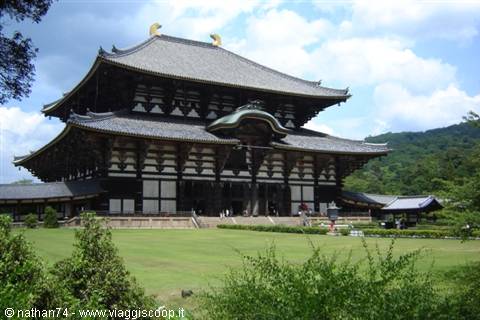
Finally, we devoted a day to Nara, where the Todaiji temple is. Let's put it this way: by seeing the Buddha that resides in this temple and the Daibutsu of Kamakura, you'll have seen the best there is on the subject in Japan. On the way from the station to the temple you'll be surrounded by fallow deer, deer and fawns, who will be only too happy to be petted.
On the last day we moved to the town of Narita, a few kilometres from the international airport. Here you can sample practically every type of cuisine, Japanese and otherwise, because the restaurants are frequented by the staff of the various airlines. If your flight is early in the morning, Narita is the ideal place to spend your last night in Japan.
You can see photos and information about the trip at the address:
The journey's photographs
12 photographs · click to open them full screen


1 reader comments
bellissimo!