The world is like a book, and those who do not travel read only one page. Saint Augustine
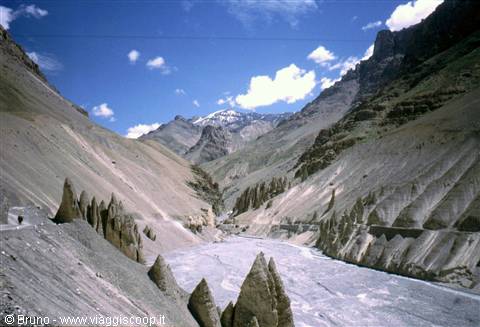
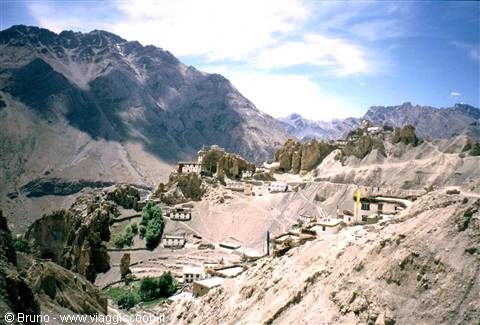
I had already been to those places in 1999. Going back after six years immediately made me realize how our Western "civilization" is reaching even those remote places. All the villages that could only be reached on foot, even the most remote ones, are now served by a dirt road; on the rooftops of the houses, next to animal dung left to dry to be used as fuel for the winter, satellite dishes and solar panels tower; in many places electricity has arrived too. Yet nothing has changed the beauty and majesty of the landscapes of the Spiti Valley. Walking on these trails at more than 4000 meters of altitude instills in the soul a sense of spirituality even in those who have no mystical inclinations. In the villages and along the mule tracks, religion is a constant presence, the call to the divine is everywhere.
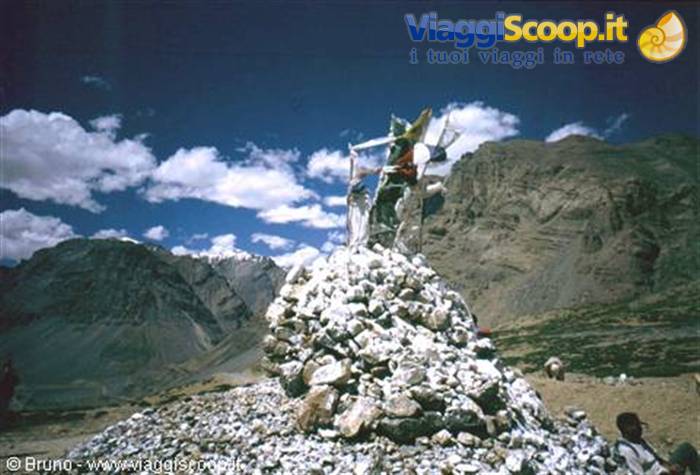
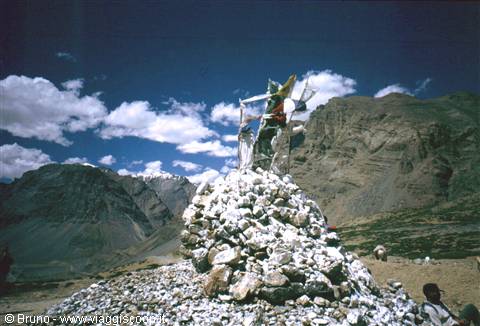
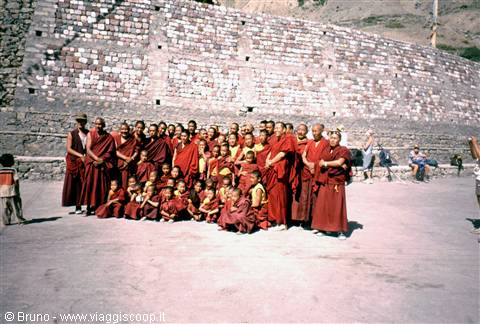
It is recalled by the flags with prayers entrusted to the wind raised on every hill and height, the banners of the monasteries, the chortens, the inscribed votive stones found near the villages, the countless monks encountered along the way, and the very sacredness of the mountains. The journey in the clear light of 4000 meters also becomes a pilgrimage into the sanctuary of the oldest faith in the world: Buddhism. The Spiti Valley, from the Tibetan Spiti: "Middle Country" due to its position among the mountains, located in the Indian state of Himachal Pradesh, bordering Tibet, closed to tourism from 1953 because of the war and the Indo-Chinese tensions of the time, was reopened to tourism only in 1993.
The area, a thousand years ago, happened to be a side route of the more famous caravan routes that linked China to India, such as the famous "Silk Road." For this reason Spiti, linked at that time to both Tibet and nearby Ladakh, enjoyed commercial and cultural exchanges of considerable magnitude. Now an uncomfortable, recently built road connects the city of Manali to the Spiti Valley through the Rothang (3978 m) and Kunzum (4551 m) passes in about 10 hours of hard travel by off-road vehicle. Fate wills that the mishaps and adventure begin right after departure. We are a large group of 24 people, and it was not possible to find seats for everyone on the same flight. So while 20 reach Delhi via Rome and Amman, the other 4 go through Frankfurt and Bombay. I am in Rome waiting for the flight to Amman when I receive a phone call from Franca, one of the 4 people transiting through Frankfurt.
She informs me that their flight to Bombay has been canceled due to an exceptional monsoon that has made Bombay airport unusable. I immediately contact Filippo, my correspondent at "Avventure," who promises to look into it right away and to call me back as soon as we arrive in Amman. Conclusion: the 4 will leave the next day from Frankfurt and will arrive in Delhi 24 hours late. All we can do is stay put for a day in Delhi to wait for them. This allows us to visit the capital of India, we might as well look on the bright side of things!
Travelling towards Kiato
Day 230 Jul 2005
Visit to Delhi
Accompanied by a muggy heat, we wander the streets of this city with its chaotic traffic, amid the environmental pollution caused by bus and many industrial vehicle emissions, as well as the din produced by the thousands of horns honking continuously; but what strikes the visitor most is the filth and poverty that reign everywhere in this city, especially in the old part. On all the outlying streets one can see shantytowns, mostly made up of tents, where the less well-off live.
Pass in the first stage
Day 331 Jul 2005
Towards Manali
At 9:30 the next day, right on time, the plane with our 4 travel companions lands. Too bad their luggage isn't there! The morning is spent at the airport, from one office to another, dealing with the paperwork for filing the lost luggage report. We cannot postpone departure any further, so, once we have confirmation that the luggage will be delivered as soon as possible, at 14:00 we leave by bus for Manali. To cover the 630 km separating us from the Himalayan town, it takes us a good 17 hours, first in the chaotic traffic of Delhi, then on the plain and finally on mountain roads, narrow and often unpaved.
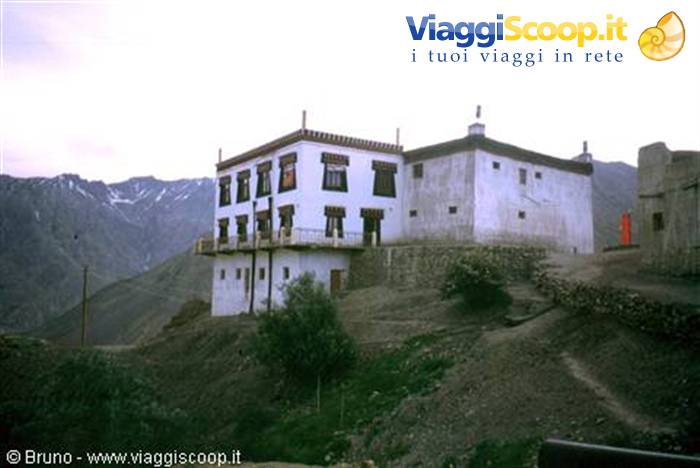
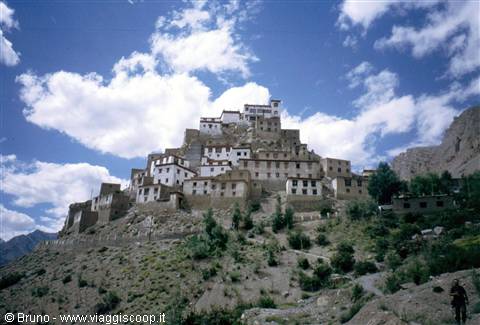
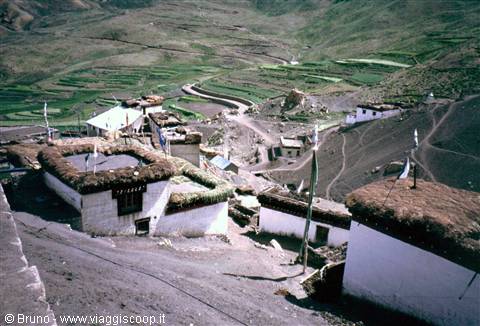
Kibber Monastery
Day 41 Aug 2005
In Manali
After a night spent dozing uncomfortably on a bus seat, at 7 in the morning we arrive at the Arohi hotel in Manali where we find Mr. Thakur, our local correspondent, waiting for us. After breakfast and having made the necessary arrangements for the trek, exhaustion takes over: finally some well-deserved rest in a real bed, a day of relaxation in Manali was just what we needed before the start of the trek. At 12:30 a beating of drums breaks the silence. It is a holiday and in the street in front of the hotel a procession passes by. The drummers are followed by a multitude of people who with great effort drag a large rope to which a square-section log is tied. This log, more than 10 meters long, is then erected vertically next to others already raised in years past. It is a religious event that seems to be held every 10 years.
We spend the afternoon visiting the cheerful little town, surrounded by coniferous forests and situated at 2000 meters in the Kullu Valley.
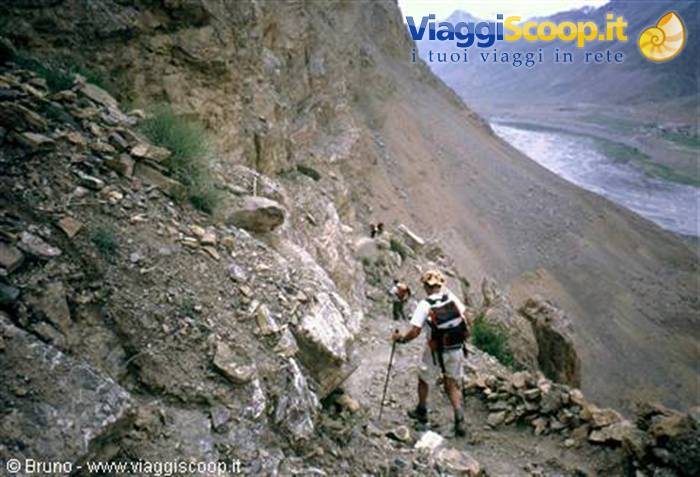
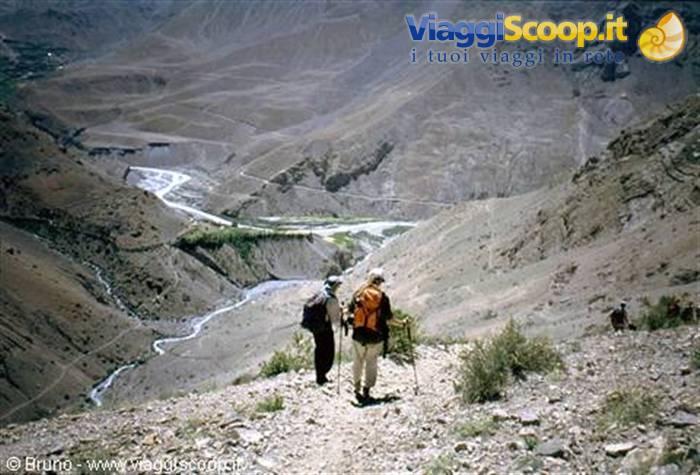
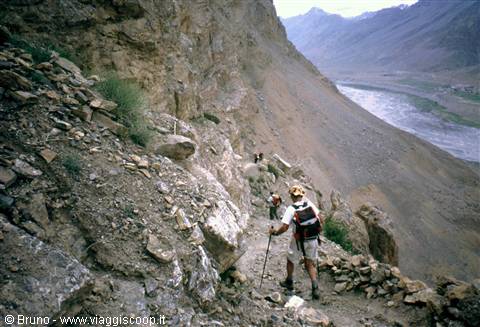
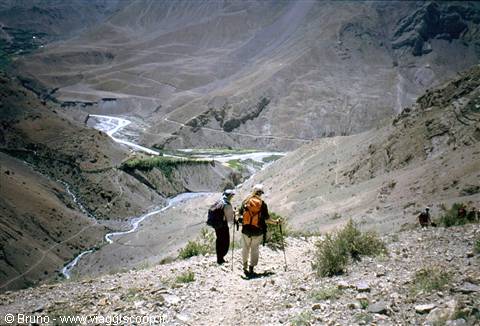
Descent towards the Kibber Monastery
Day 52 Aug 2005
Towards Kiato
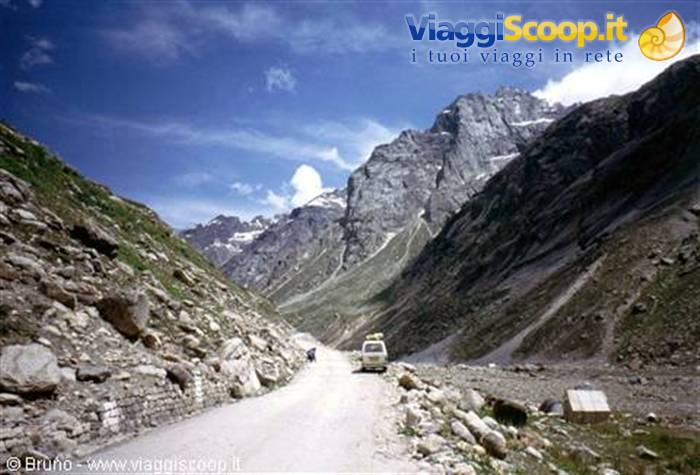
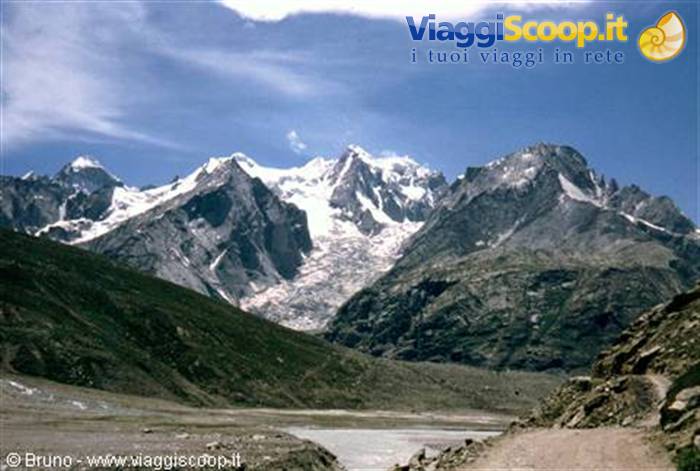
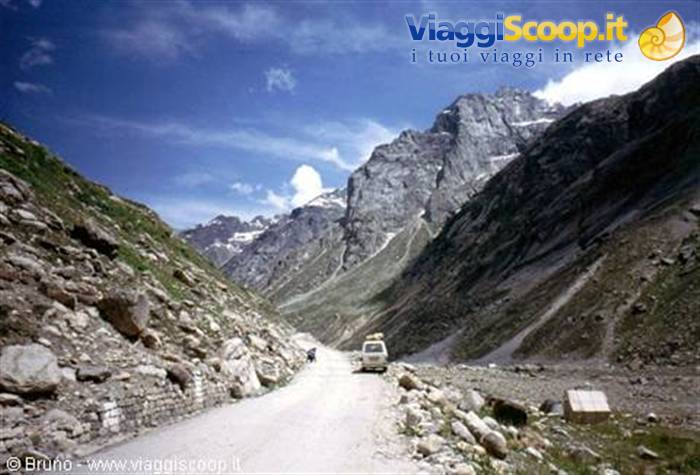
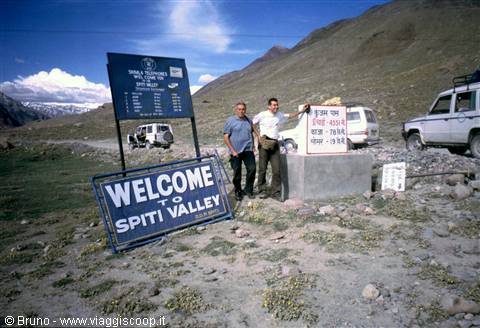
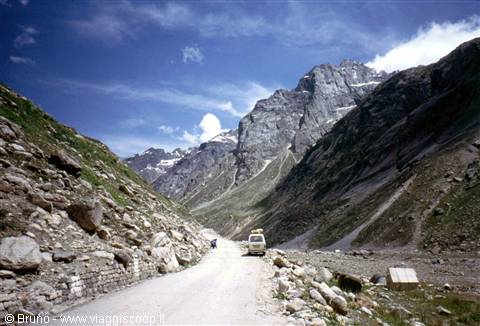
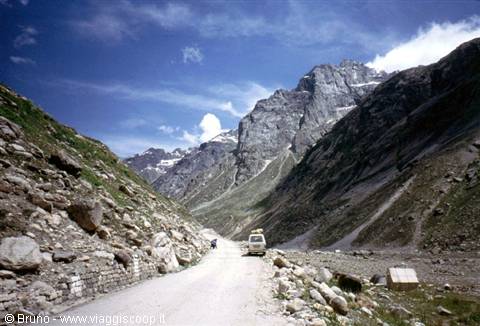
The next morning the luggage that was supposed to arrive at 6 isn't there. It seems to be delayed because of a landslide that has blocked the road. Thakur advises us to leave anyway, he will have it delivered to Kiato, the starting point of our trek, as soon as it arrives. At 9:30, with 5 off-road vehicles, we set off and immediately the road climbs toward the Rothang Pass. Too bad the pass is shrouded in fog that prevents us from admiring the view. Shortly after Rothang the road becomes unpaved and a detour to the right takes us to the Kunzum Pass, which is reached via steep hairpin turns. Unlike the Rothang Pass, now a beautiful sun shines, illuminating the glaciers of the mountains surrounding the pass. Here the Spiti Valley begins, and the many chortens and prayer flags placed on the pass announce entry into the kingdom of the Buddhist faith and Tibetan villages.
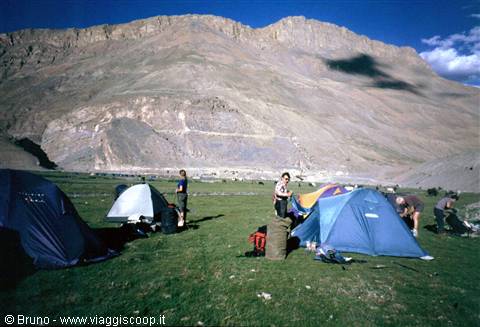
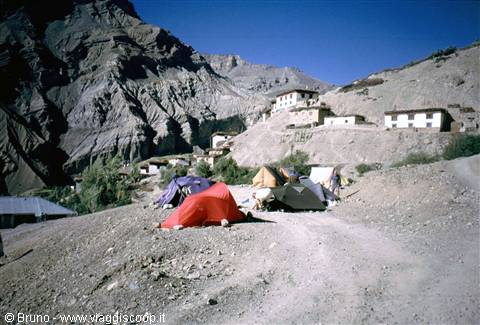
At 18:30 we reach the village of Kiato, near which we set up camp. At 22:30, when many of us had already retired to the tents for the night, the sound of car horns is heard: the missing luggage has arrived. Finally we are all reunited and with our luggage complete, tomorrow we can start walking.
Seventh stage - From Jumbal to Lhalung
Day 63 Aug 2005
The Trek
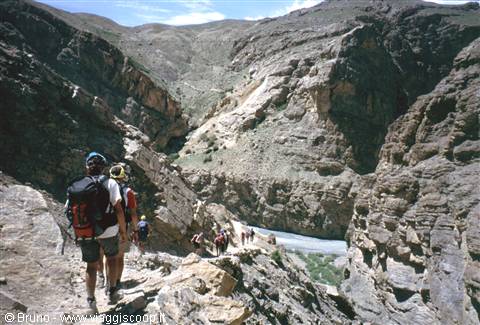
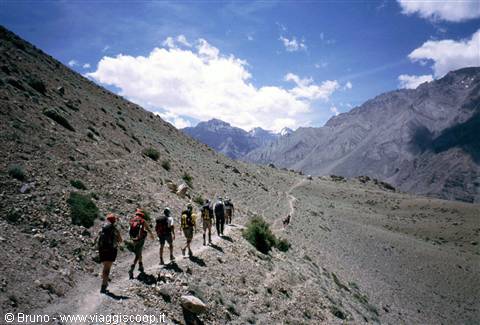
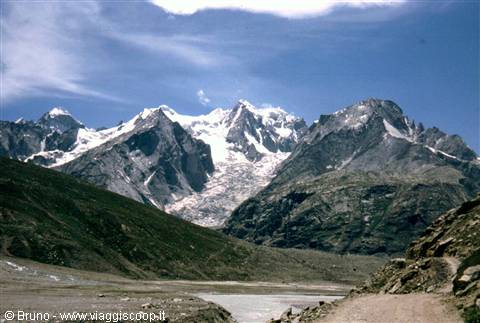
On August 3, at the start of the trek, we get to know the members of the group that will accompany us with the 32 horses: horsemen, cooks and helpers, of Indian and Nepalese nationality, as well as our guide Puren, 12 people in all whom we will have the opportunity to appreciate in the following days for their reliability and courtesy. I will not go on at length describing in detail all the stages of the trek, I will only say that the hardships and fatigue faced during the nine days of walking were amply repaid by the beauty of the panoramas, by the majesty of the snow-capped peaks surrounding the passes and the wide valleys we crossed, by the emotions felt entering the simple homes of the villages, by the hospitality with which we were welcomed, as well as by the sense of peace and serenity that reigns in the monasteries.
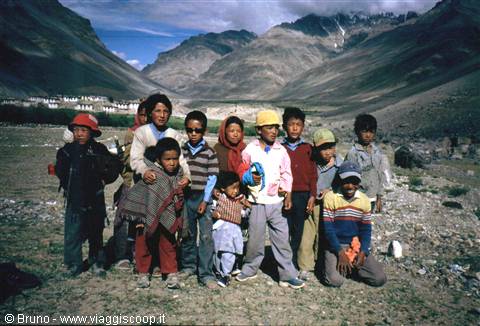
Only in the first days did some members of the group suffer slight altitude sickness, nothing serious; by the end of the walk we were all in excellent physical condition. The first four days of trekking pass without mishaps, quiet walks at 4000 meters under a warm sun, visits to the villages and monasteries encountered along our way in a climate of cheerful friendship. Every day, when the camp is set up, we are surrounded by local children who come running curiously, drawn by the commotion caused by our arrival and happy to receive some gifts, especially school supplies brought from Italy. On the morning of the fifth day, when we wake up, a surprise awaits us: 18 of the 32 horses we had are missing. The horsemen aren't there either; according to our guide, they have gone off in search of them. We stayed put for a day waiting for their return, which did not happen.
The guide says there is no reason to worry since the next day we would leave with or without the horses. Probably, according to the guide, they ran away because they were frightened by some animal, perhaps a fabled "snow leopard." The next day our luggage is loaded onto a tractor with a trailer and we can continue to the fifth stage. In the afternoon, when we have now arrived at the next camp, we see the horses and horsemen approaching in the distance. The guide confirms that they have finally been found. None of us believed the strange leopard story, especially because if an animal had frightened them during the night, a great racket would have been heard, yet no one noticed anything. The most plausible hypothesis is that they needed the horses for two days for some transport. We made up for the lost day by combining the last two stages into one.
There is another episode that deserves to be mentioned: the fifth stage was short, before noon we had already set up camp in the village of Thangyud at 4470 meters. Since the afternoon was free, ten members of the group, including the mascot Andrea, only 15 years old, want to experience the thrill of exceeding 5000 meters. They set off and reach an easy peak near the camp. At the summit the altimeter reads 5250 meters, congratulations to the little group! Our guide does not know the name of the peak and doesn't even know if it had one: it was thus named "Andrea's Peak."
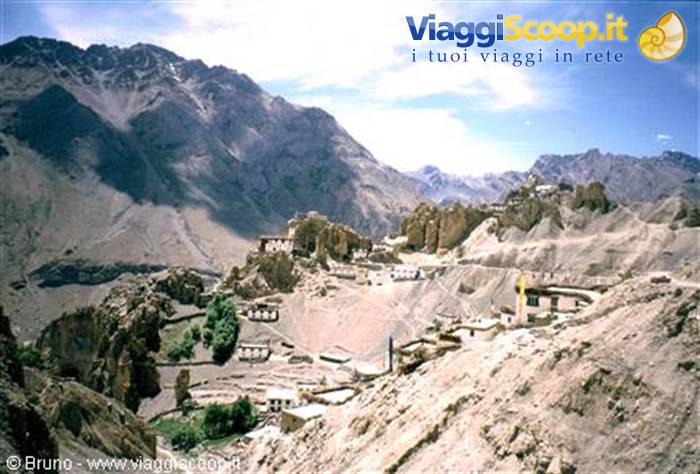
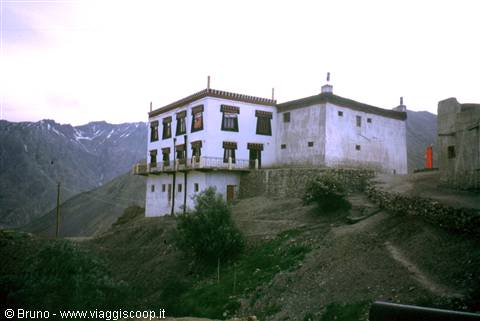
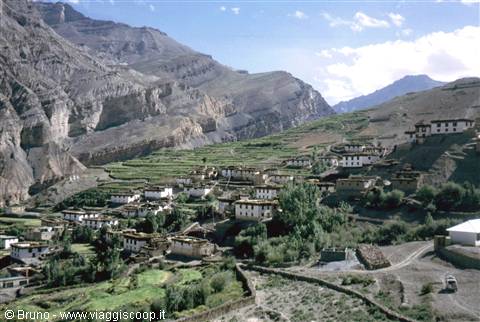
Lhalung village
Day 711 Aug 2005
Fact sheet
After the day of forced rest and the conquest of Andrea's Peak, the walk continues quietly until the end. In essence, the trekking schedule can be summarized with the following table:
Date Starting place Arrival place Walking hours Elevation gain Notes August 3 Kiato Ladarcha 5:30 400 m August 4 Ladarcha Kibber 4:30 250 m August 5 Kibber Rangrik 6:15 100 m August 6 Rangrik Langcha 5 750 m August 7 Langcha Langcha 0 0 Rest day August 8 Langcha Thangyud 2:30 300 m August 9 Thangyud Jumbal 5:30 500 m August 10 Jumbal Lhalung 3:30 250 m August 11 Lhalung Sichling 7:45 200 m
NB - The times include stops
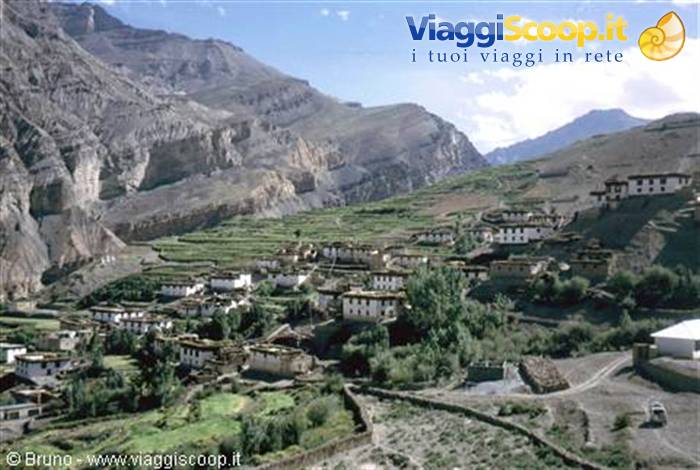
Dankar village
Day 812 Aug 2005
End of the trek
The trekking is over but not our journey. In Sichling we find the off-road vehicles waiting to take us back to Manali, not directly but with a two-day itinerary so we can visit the most interesting places. The first stop is the Tabo monastery, about twenty kilometers from Sichling, dating back to 996. This monastery, surrounded by a wall, consists of as many as 8 temples that we visit with the guidance of a monk. Some have very ancient frescoes inside, while others, perhaps because they have been restored, have a more modern appearance, out of keeping with the place. We continue, reaching Kaza, the capital of Spiti, at 3800 meters of altitude, situated on the left bank of the river. The visit to the town proves very interesting; unlike most of the villages we saw during the trekking, it is reached by a paved road, teems with people and has a very lively appearance.
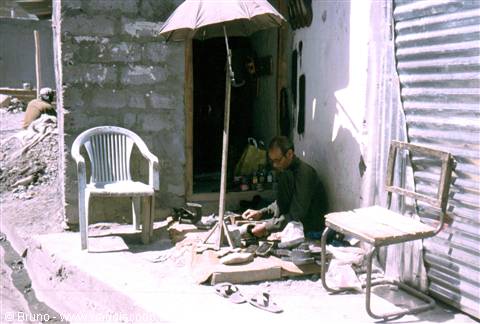
Walking through its streets I am drawn to the sight of a cobbler working seated on the sidewalk outside his shop. Consumerism has not yet arrived here, nothing is thrown away; a plastic chair has a broken leg but that is no reason to scrap it, you simply replace the leg with a piece of wood. Another chair no longer has either a back or a seat: with two planks the seat is replaced, the back can be done without. Is the midday sun beating down on the poor worker? No fear, an old umbrella tied to a stick with a piece of string solves the problem by creating a bit of shade. The art of making do that we Europeans have forgotten is still very much present in these parts. A stop with a visit to the nuns' monastery of Pagmo and then directly to Tacsa where we set up the last camp; tomorrow we return to Manali.
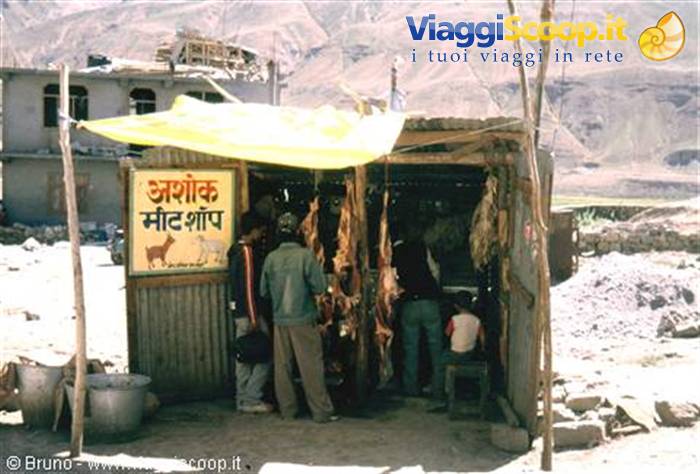
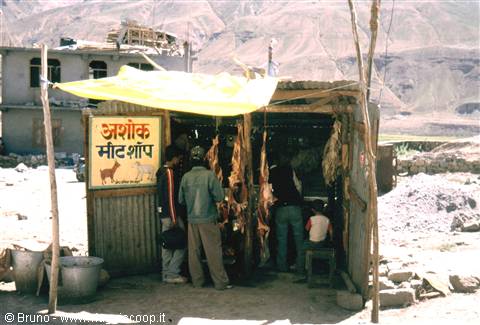
Butcher in Kaza
Day 913 Aug 2005
Back to Manali
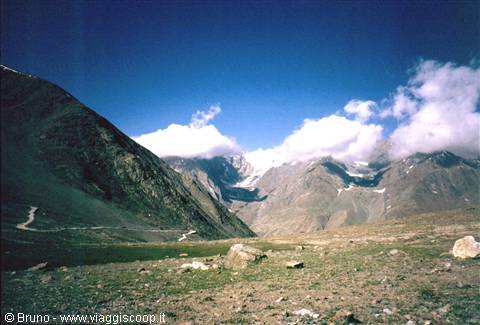
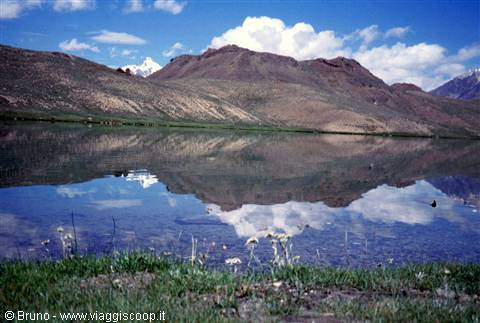
We climb back up to the Kunzum Pass where we stop for a few minutes to admire the snow-capped peaks visible in the distance. Almost at the end of the descent from the pass we make a detour onto a dirt road, with breathtaking precipices and narrow hairpin turns; we reach Chandratal Lake in about 45 minutes. The area is of an indescribable beauty, the lake is surrounded by meadows covered in edelweiss (or perhaps I should say Himalayan edelweiss?) and in its waters the mountains that surround it are reflected. Last night at the Arohi hotel, then, at 5 in the morning, we head back to Delhi in bu
Towards Manali
Day 1015 Aug 2005
Heading back home
Another 17 hours of endless travel before arriving, at 10 in the evening, at the Marina hotel in Delhi. We have 2 days left before returning to Italy, so the next morning, at 6, we leave for Agra where we have planned the visit to the Taj Mahal, perhaps the most famous monument in all of India. On August 18 the group splits up: while 20 of us return to Italy transiting through Amman where we stop for a day, the other 4 make a stopover in Frankfurt. We take advantage of the stopover day in Amman to make a quick trip to the shores of the Dead Sea, on the border with Israel. With a swim in its very salty waters, our journey comes to an end. Tomorrow everyone goes home.




0 reader comments