The story
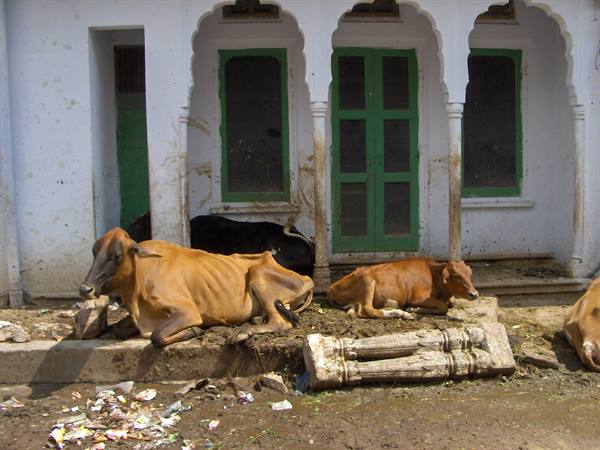
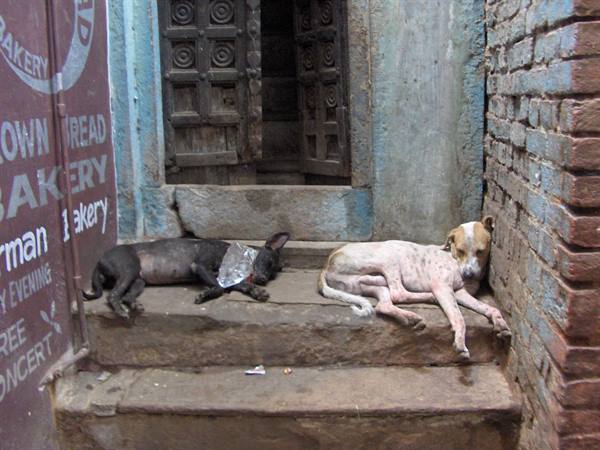
Organising a trip to India is laborious and to the millimetre; when you decide to travel by train, they have to be booked weeks in advance, you must travel first class if you want to avoid surprises. The guest house in Delhi was in a frightening area, on a practically unfinished street, dark, full of potholes, puddles, rubble, scaffolding and stray dogs. With the light, everything began to seem less difficult; the people there, in that tiny guest house, had something strange about them: they were kind, helpful, friendly, worried that you had everything you need to be happy, that you knew how to get around that absurd city. Because Delhi is hell. Crowds of people trying to sell you anything, streets jammed with every kind of vehicle, cows, dogs, sheep, rickshaws, bicycles, mopeds, tuk-tuks, buses and all intent on honking non-stop or on anything capable of making a tiresome noise.
The old part, a tangle of narrow little streets full of the smells of those who live there, full of the colours of some kite stuck among the thousands of electric wires that wrap every house haphazardly, full of men who seem to be 200 years old, of women wrapped in multicoloured saris; if you enter a courtyard you may find a girl ironing piles of shirts with an old charcoal iron, or a man praying facing the wall, and in that wall there is a big crack, and in the big crack a small shrine with a tiny red statuette smiling mockingly. The new part, a continuous and inexhaustible building site, the strenuous attempt to resemble another city, without understanding which one, there is no street, no corner that doesn't have potholes, that doesn't have workers carrying piles of junk as big as the planet.
And everywhere clinics, hospitals, ultramodern facilities with the most cutting-edge equipment; and you wonder how it is possible for this to coexist with that. The roads, the motorways are constantly jammed and packed with human beings and animals, there is no right or left, there is no right of way, there are no rules, the traffic lights are there purely for decoration, you simply throw yourself into the street, at the maximum possible speed, you lean on the horn and you pray: to arrive in time, to arrive at your destination, to arrive all in one piece, but also just to arrive.
India, in the first days, is everything you can't foresee, it is planes constantly almost missed, for no known reason, it is trains always caught literally on the fly, because it is not true that trains in India are always late, they are punctual, it's you who can never manage to arrive, who find yourself in a taxi that can't disentangle itself from the tangle of cows, and it has started to rain and the puddles are torrents, it's you who hasn't understood that in Delhi there are 2 stations with the same name and you are in the wrong one, it's you who doesn't know that trains have 1000 carriages and are kilometres long and you will never reach your compartment. Sometimes in the stations you find a guardian angel.
A little old man who weighs less than you, but is 1000 years older, who, seeing you drenched in sweat and with big tears streaming down because you can't work out which of the 600 platforms around you is the right one, takes a fleeting glance at your reservation, loads your 30-kilo suitcase onto his head and starts running at lightning speed, up and down endless stairs, among clusters of children and luggage trolleys, among cattle carriages containing human beings and women jingling with bracelets adjusting the sari on their shoulder, and in an instant you are on the train, thanks only to that guardian angel.
And then on the trains you find yourself in a tiny berth above that of a Minister travelling with his wife, who shortly afterwards will be greeted by the conductor with a military salute, who will offer you their snacks, who will get off the train at dawn, and so as not to wake you they will dress quietly, without turning on the light. Suddenly one day you arrive on the Ganges, in Varanasi, and your scale of priorities collapses. Only in Varanasi can you understand what colours truly are, what smells are, what a glance can really say. You arrive on the muddy bank of that great river that looks like the sea, a brown sea, and you see the corpse of a sheep float past on the surface, and at dawn you notice the thousands of pilgrims who have come here, after days of walking, to bathe in those stinking waters. And everything turns orange.
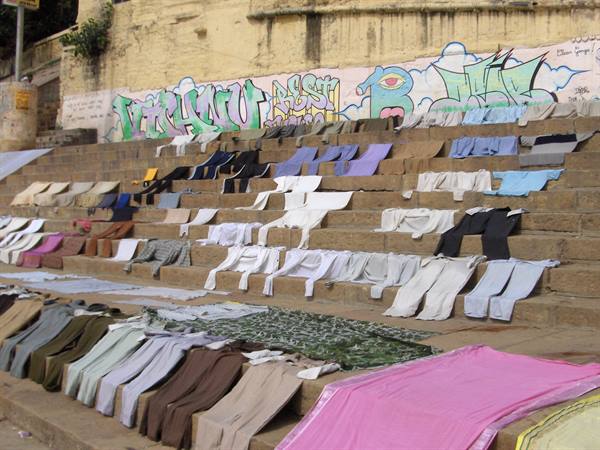
And then you realise that believing is simply letting go without trying to understand, it is an explosion of colour, it is an endless song that you don't know where it comes from, it is a column of buffalo bathing, it is the immense staircase of the ghat covered with clothes laid out there to dry, it is the bamboo umbrellas with very old brahmins beneath them, blessing you amid the incense smoke, it is the barber's shop made of nothing but a mirror, a brush and soap out in the open, in the middle of nowhere, in the middle of everything. In Varanasi there are gods, there are thousands of them and you feel you can hear them, they pop up smiling from tiny shrines in every nook and accompany you along your path through the very narrow streets, where if you meet a cow you have no choice but to turn back.
In Varanasi there are colourful women, sitting on the threshold of their houses made of nothing. In Varanasi there are beautiful children, with huge black eyes and very white teeth, barefoot, dressed in rags, naked of rags, playing with the air. In Varanasi the dead are burned, the blazing pyres abduct you and you cannot help but watch when the skin and flesh are almost gone, and people are folded onto themselves, like jumpers. In Varanasi, there are ceremonies with prayers, incense, fires and the lights of a thousand candles set on the river. In Varanasi there is no hope, there is waking up in the morning to make it to evening, with nothing in between.
You have to leave there if you don't want to be abducted, if you don't want to start longing to spend the rest of your life there, forgetting forever the dripping pipe, the bill to pay, the appointments diary, your friends' birthdays, autumn, winter, Christmas. When you arrive in Rajasthan, you feel you have already understood India, maybe one little god, of those, magical and multiform, has come with you, has slipped stealthily into your pocket and decided to keep you company.
You cover yourself in the colours of the blue city, the white city and the pink city, you have learned to talk to people, you have learned that you cannot be afraid of that misery, a misery with no way out, that in that misery there is an infinite dignity that you will never have, there is a peace and there is a resignation, there is the shadow of centuries of oppression, of slavery that has left scars on people's faces, but amid eyes that laugh. You talk to them, to the children, trying to convince them to go to school, because school is more important than the 4 postcards sold to tourists during the day; but their arguments are stronger than yours, their arguments are hunger, they are their 5, 10, 100, they are their dad who found work in a distant city for a month and sleeps every night on the asphalt in front of the building site, so as not to lose it.
And their hunger has a smile more open than your disillusionment. All this, the guidebooks don't tell you. Hundreds of pages that fail to tell how your heart will melt, in the India of children and smiles, and of colours
The journey's photographs
6 photographs · click to open them full screen



0 reader comments