Suzhou
We arrive in Suzhou in the morning on the minibus at our disposal after about an hour's journey from Shanghai. We are in Jiangsu Province but far from the capital Nanjing, which is much further west. Suzhou is famous for its residences whose gardens are the prototype for all the green spaces of classical China. We get off near the narrow canal that skirts the historic centre, plied by little boats for tourists. Overlooking the canal are decaying houses that make the setting pleasant. A prelude to the first garden we visit, that of the Humble Administrator. I honestly don't understand why this ancient official was humble, since his residence was rather beautiful. Right afterwards we visit another of the city's numerous gardens, that of the Master of the Nets, which offers views over a truly romantic little pond.
Both gardens are very interesting despite it not being the season of blossoms or of autumn colours. It's clear that in winter these places lose much of their charm, but the grace of the architecture remains all the same, the little pagodas, the fake rocks, the bonsai and the zigzag bridges. In China the most beautiful bridges have an irregular course because they are built with the Feng Shui technique, according to which in this way they ward off evil spirits. The main element of these gardens is water in the form of little ponds and artificial streams that make the whole thing very romantic. While strolling it almost feels as if you are in a landscape painted on ceramic like the ones we saw yesterday in the Shanghai Museum.
We take a short stroll through the narrow alleys of old Suzhou among stalls and little shops selling trinkets, then we get back on the minibus that takes us to the silk factory. Besides the gardens created here in the Ming and Qing eras, the city is famous for silk. We have lunch in the spartan canteen of the factory; the meal isn't great, but Franco, our Chinese manager, gives us a bottle of wine and a cake to celebrate the birthday of one of our travelling companions. We then visit the factory, where we can witness the entire silk production cycle, from the extraction of the thread from the silkworm to the creation of the "fabric". The visit is very interesting; we don't just passively watch but are made participants in the process.
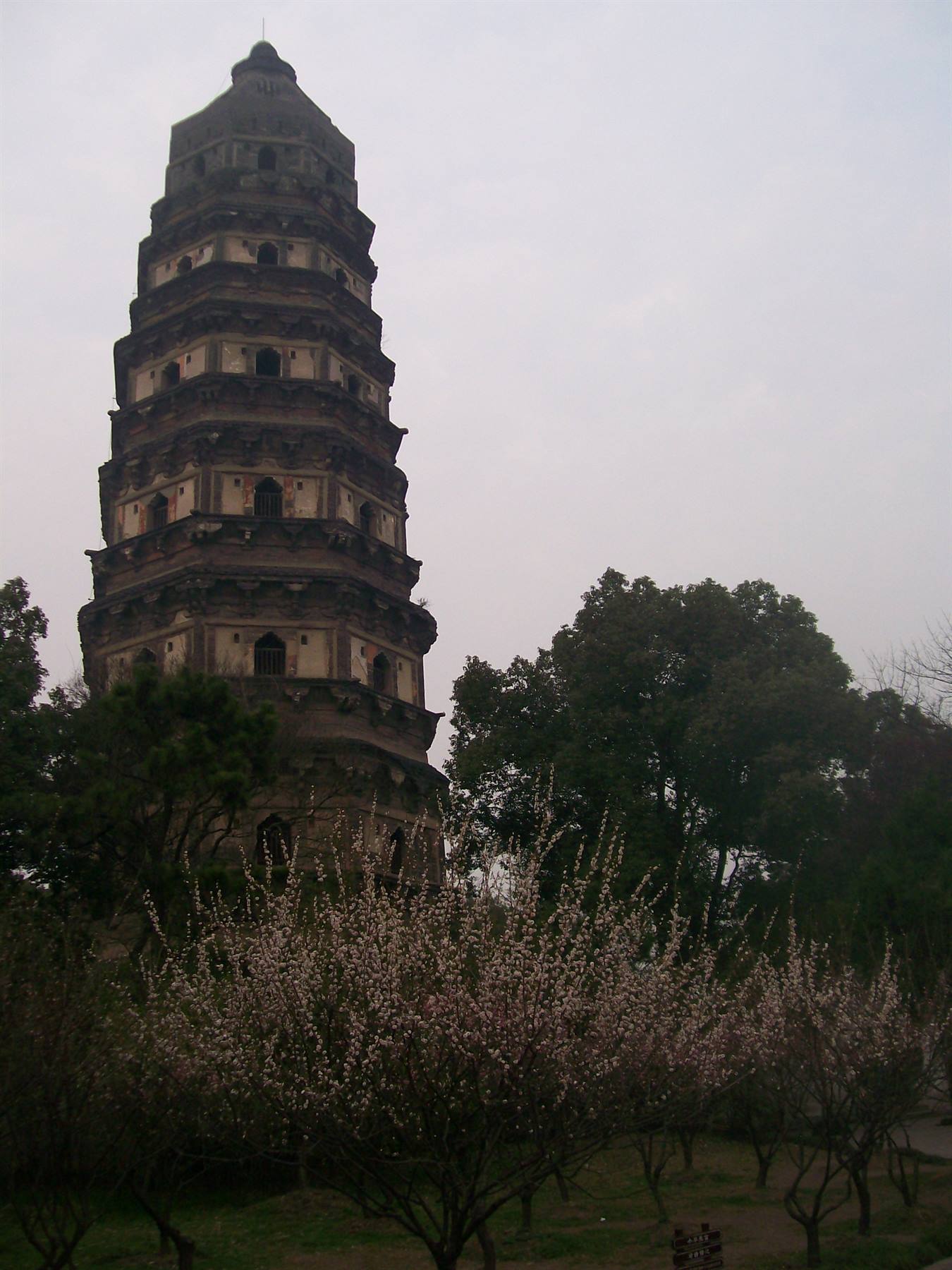
They then take us into the large exhibition halls where you can find everything it's possible to produce in silk: clothes, blankets, sheets, bags, ties, etc. We discover that nothing of the silk is thrown away, since the waste is used instead of feathers to fill "duvets". The prices are obviously lower than in Italy, the quality is guaranteed, and I too make an effort to buy something. From here we go to Tiger Hill to see the Leaning Pagoda, a kind of Chinese Tower of Pisa that tilts to one side. You get there by climbing this hill, on which there are also ancient archaeological remains bearing witness to Suzhou's thousand-year history. This is our last visit in China; from here we take the road to Shanghai Province and to the international airport from which we will return home (See Shanghai itinerary).


0 reader comments