Andrea, Dionigi, Paolo · @ritornoalparallelozero · Treviso
How
Travel diary
The story · 2 days
Day 118 Oct 2004
Shanghai
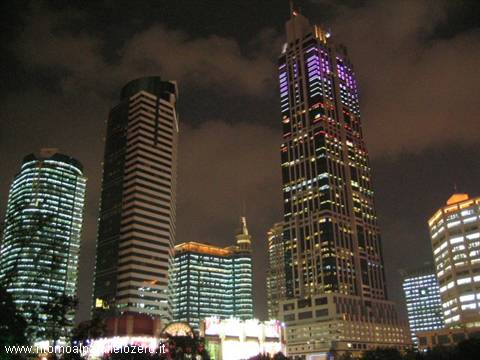
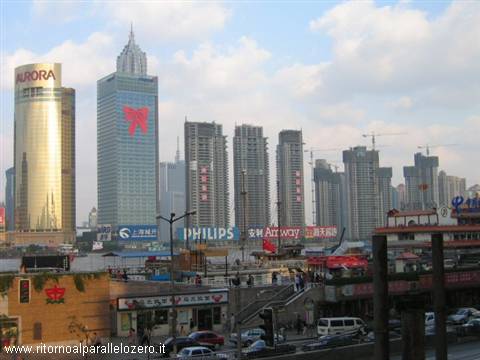
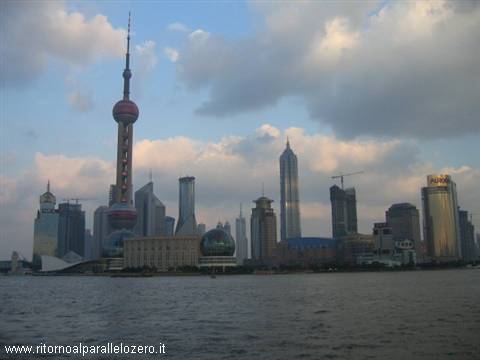
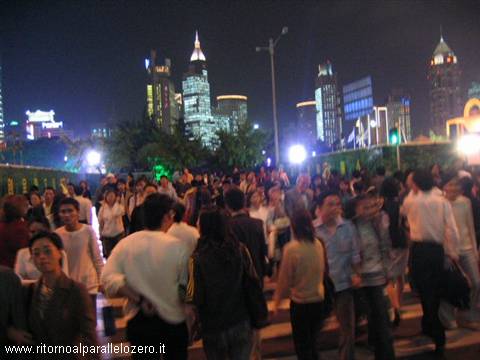
The alarm went off at a crazy hour, it was 6:30, but the packing-up operations required it since our train was scheduled to leave at 8:30 (ticket cost 10 euros per person). This time the odyssey was avoided given the "short" distance (3 hours by train) to cover to reach the final stop: Shanghai. Right from the start the environment was completely different from what we had been used to seeing further north; the view everywhere showed skyscrapers climbing toward the sky, a decidedly milder climate, and an even more intense hustle and bustle of people (if possible) than in the previous cities. For today we opted for public transport (bus and metro 20 euro cents per person), abandoning taxis which had by now become out of our budget; we then reached the hotel booked for us by a woman from Treviso settled here in Shanghai: Alessandra Zanardo (extremely kind).
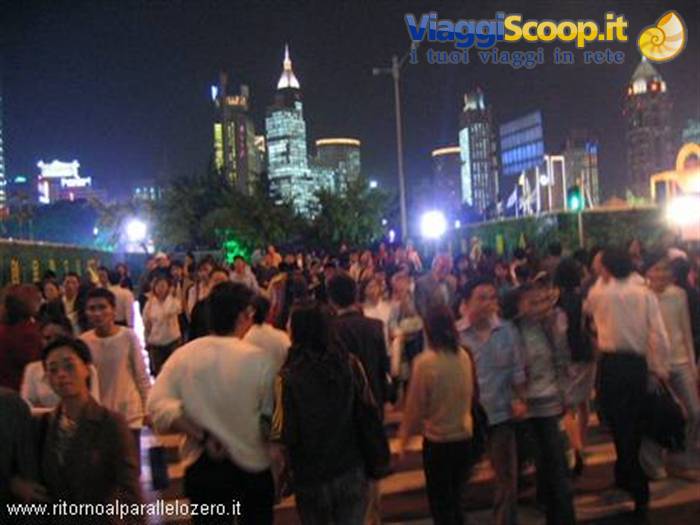
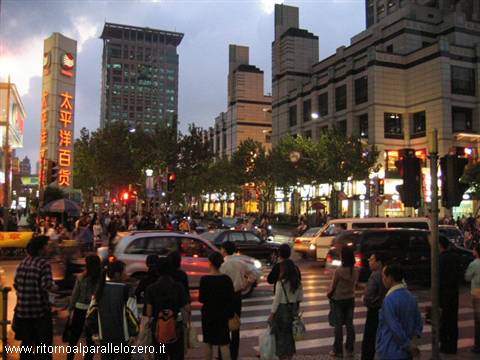
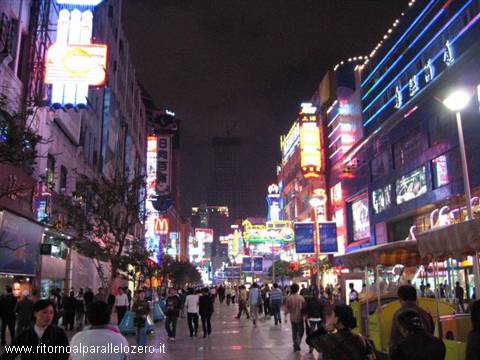
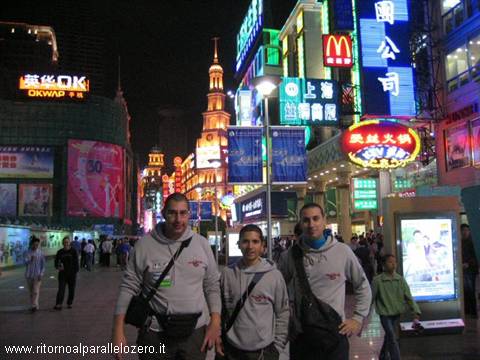
Once the usual formalities of the traditional hotel check-in were completed, we headed toward the city center: although we already knew what Shanghai could offer us, the sight of all these skyscrapers and the classic big-city air left us duly stunned, perhaps also because we had by now grown used to a, let's say, more traditional China.
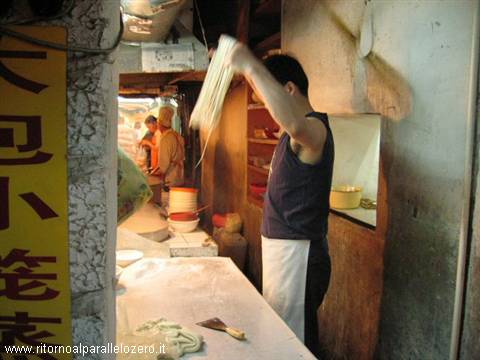
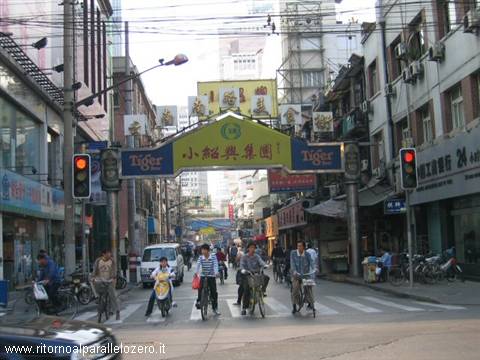
Our visit went on longer than we had expected, and so, since we were downtown, we decided to go and try the by-now famous Chinese cuisine, choosing a characteristic hole-in-the-wall in a side alley specializing in spaghetti (noodles). This experiment also turned out to be more than satisfactory; the cook prepared the pasta on the spot in the street kitchen, just as our grandmothers used to do in the old days. The price was more than satisfactory (1 euro per person), especially considering that it was two big plates of pasta, two of rice, two of meat, and finally another two bowls of vegetable broth: excellent and plentiful for the troops.
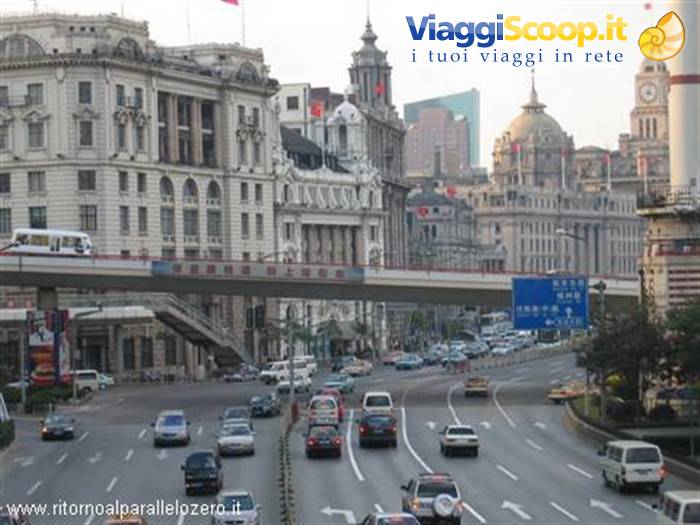
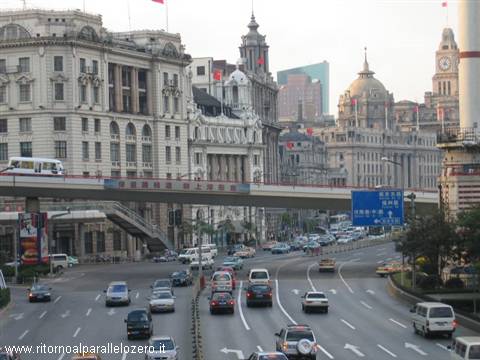
Beyond the skyscrapers: european style
Day 220 Oct 2004
Conclusions on China
Our adventure in China has now come to an end and it seemed appropriate to offer our opinion on this immense country. First of all, although we limited ourselves to four small cities, what appears most evident is the difference we found between the interior and the coast, as well as between the north and the south. While the coast has anyway undergone the influence of the outside world and developed accordingly, the interior seems to have stopped 100 years ago. Seeing these landscapes it almost feels like entering one of those stories of our grandparents, a life dedicated to work and sacrifice.
The fruit of our reflection finds full confirmation in the difference between the two main cities, and symbols, of China. Beijing still preserves a traditional image; alongside the skyscrapers that are signs of progress, an ancient soul is guarded (see the characteristic working-class neighborhoods); a point that in our humble opinion cannot be repeated for Shanghai, where the historical part, obviously existing, has been overwhelmed by the desire for progress. The distance existing between tradition and progress finds confirmation, in directly proportional manner, in the way the local people are toward foreigners (impersonated by us); the habit of continuous interpersonal relations, dictated by the needs of commerce, allowed us to have more fruitful relationships.
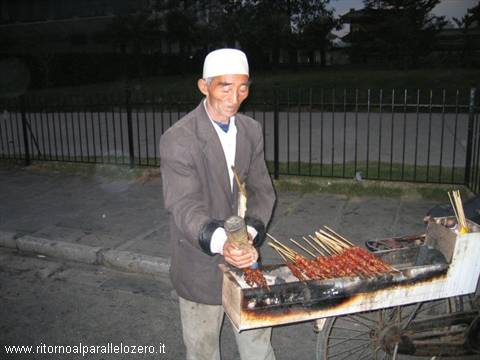
The last consideration, obviously dictated by our readers' criticisms, deserves the Chinese cuisine mentioned several times. Free yourselves from the stereotype of spring rolls; the dishes made available to good chopsticks are so many that even the Chinese don't know them all; even the dinners eaten in the most unimaginable and shady dives can turn out to be pleasant surprises (see Edward Scissorhands). Of course, despite everything, one must consider that Chinese tastes are different from ours; they often tend to mix sweet with salty and there's the possibility of running into glaring mistakes.



0 reader comments