The temples of Angkor Wat
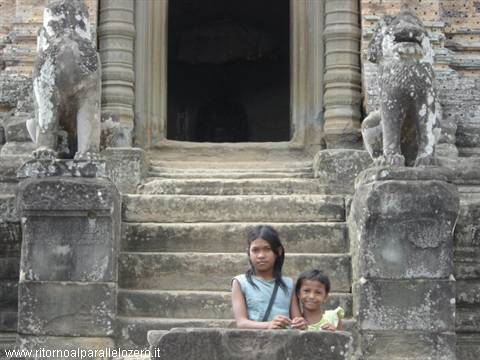
Having left Phnom Penh we headed towards our last stop in Cambodia: Angkor. It is a complex of temples built around 1000-1300 AD, discovered by a French scholar around 1970. Yes, discovered, since they had been completely forgotten and swallowed up by the jungle. Now only the ruins of these temples survive and they constitute the main tourist attraction of Cambodia. To visit the archaeological site of Angkor, you must make a mandatory stop in Siem Reap, a small town whose main function is to host all the tourists who come to visit the temple ruins.
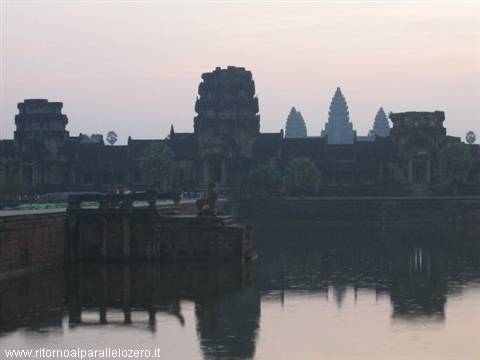
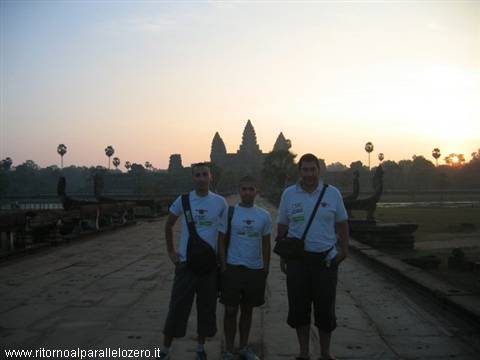
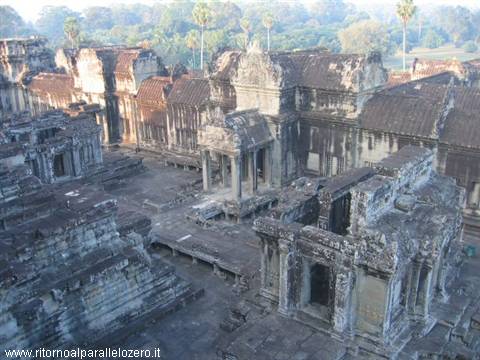
Arriving in the evening in Siem Reap, at the bus station (that's what they called it, although in reality it was just a stop along the road) we were greeted by a crowd of people offering to escort us to a nice and cheap guest house. In the end we chose our man, who with his tuk-tuk led us to visit some accommodations until, in the end, we opted for a guest house a bit out of the way but with decidedly more affordable prices (Siem Reap, thanks to Angkor, can afford to keep higher costs than the rest of Cambodia). That same evening we agreed with our tuk-tuk friend that he would come to pick us up the next morning at 5 to see the sunrise at the main temple of the entire archaeological site: Angkor Wat. Super! Without a doubt the early wake-up was rewarded. The temple ruins are truly spectacular, evocative, covered by a veil of mystery and sacredness.
At some moments it felt like being in that novel whose author I don't remember, but which surely everyone knows... "The Jungle Book." It almost seemed that at any moment the young Mowgli, Baloo the bear, Bagheera the panther or Kaa, the mythical serpent, would come out of the jungle or the temple ruins.
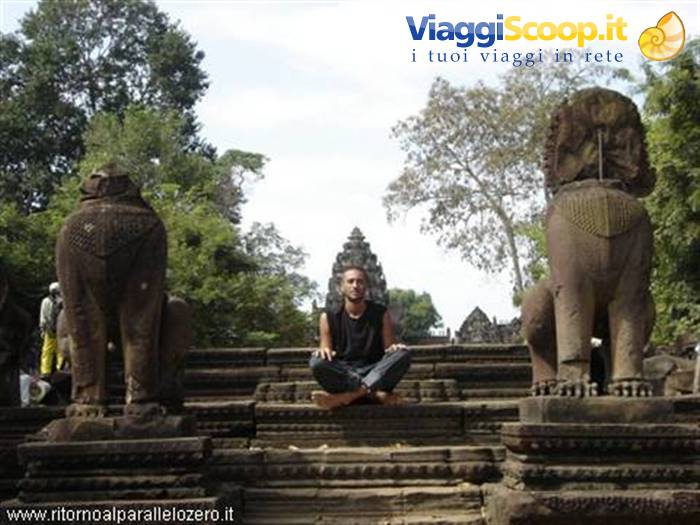
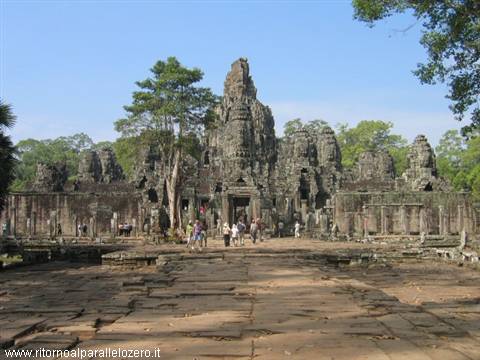
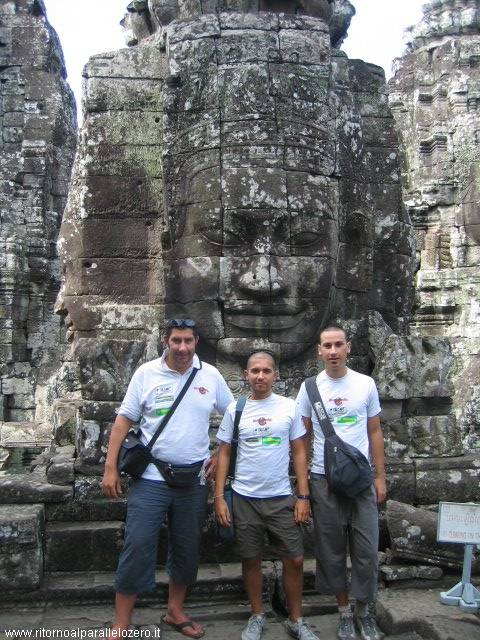
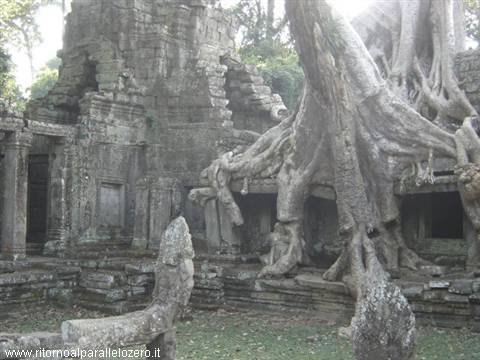
Some temples are still preserved in good condition, some are truly just ruins. But all are characterized by the same structure: gigantic sculpted blocks fitted "flush" one on top of another. In some ways they resemble the Egyptian pyramids (although in reality none of us has ever seen them!). What amazes, especially in some temples, is the mingling of the built and nature. As already said, these temples had been completely forgotten and enveloped by the jungle... and the jungle made them its own, penetrating them completely, between stone and stone, with majestic plants that wrap around the walls, pass right through them, with a unique and inimitable visual result.
An unexpected and most welcome encounter was the one we had in the early afternoon with half a dozen pachyderms. They were there to give a little ride to all those tourists willing to shell out 10 dollars; we of course didn't take the elephant ride, but we took advantage of it to take a few photos with them, touch them, stroke them... incredible!
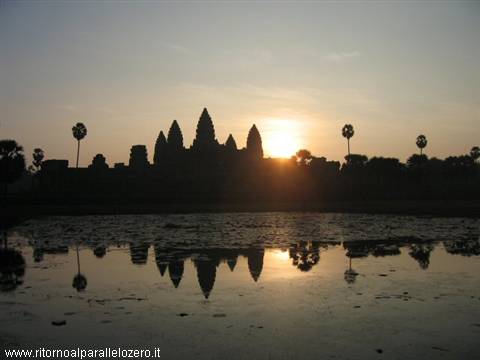
The day at Angkor ended by watching the sun set from the same temple where we had seen it rise 12 hours earlier. We then headed towards Siem Reap to go and welcome our Scottish friends, Bryan and Laura, with whom we went to dinner. Back at our guest house we packed our bags for the next morning. In fact, another long bus trip awaited us from Siem Reap to the border with Thailand.



0 reader comments