The story
Rollers Adventures
"From Genoa to Borj El Kadra" for the children of the desert 2002
What can I say, African journeys are always a great experience; every kilometre travelled enriches us, giving us landscapes and sensations that can hardly be found elsewhere. This journey was certainly different because it allowed us to interact with the world around us and not just play the part of spectators. The school for deaf-mute children in Douz was our first destination: the founding manager of the facility spoke only Arabic; only thanks to the headmaster and some of his co-workers did we succeed in our aim. The community, made up of children aged roughly between 5 and 11, was over the moon when it found itself receiving an avalanche of teaching materials. We, meanwhile, all with a "lump in our throat", had to swallow a few times before managing to utter a simple sentence, but above all to understand that just 2500 km from our home there are so many people who need serious help.
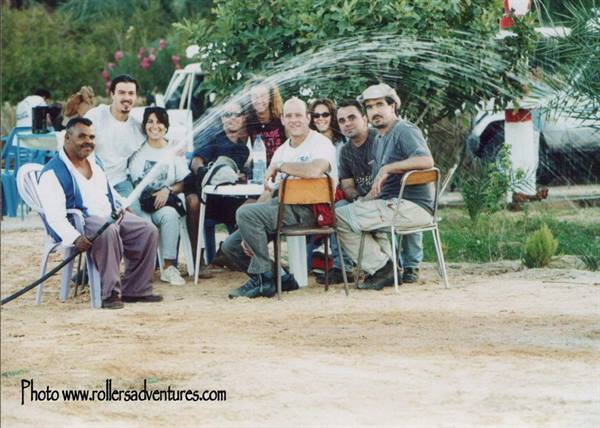
We formed a circle and, a few seconds later, the founder, dressed in typical local clothes, began telling the story of the founding of the facility, all in Arabic; behind him some of the school's teachers, at his side the headmaster translating into French what the founder was saying. A tide of photos documented our wish to help the young Tunisian students at the facility. Douz, a wonderful little town; there the people could teach us many rules that we Europeans have by now forgotten: loyalty and sincerity, calm and the virtue of living with the essential and not with the superfluous. The next day we went to the café "le Port Du Desert", where Ahmed Boualì offered us comfortable hospitality.
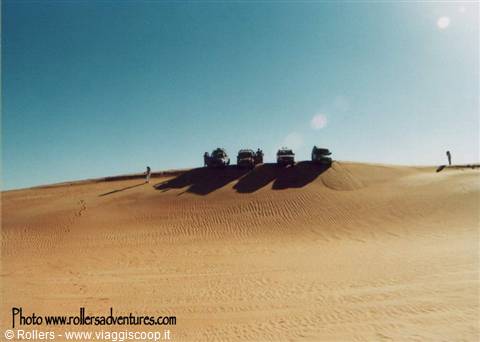
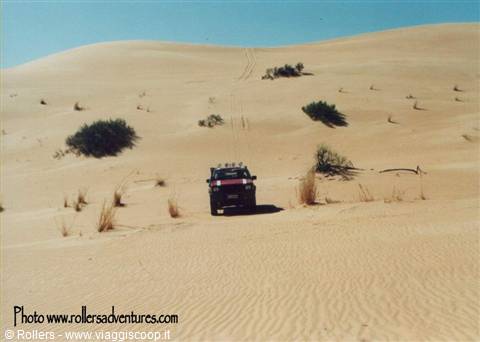
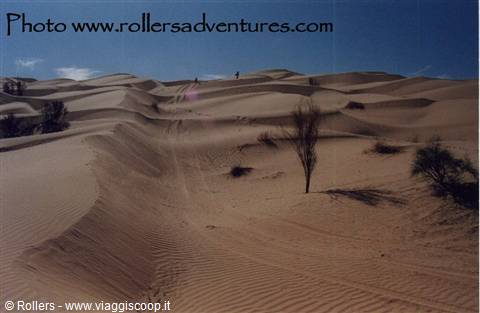
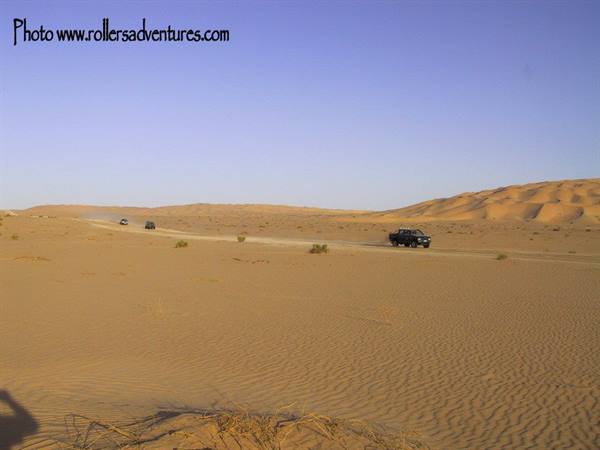
Our old friend, after offering us a hot plate of Cous Cous, accompanied us over sand dunes to the café at Bir Soltane, where a friend was already waiting for us because the news of our arrival had already spread in Douz. The handover of the materials unfortunately took place in the dark because the stretch of dunes linking the café "Du Desert" and Bir Soltane ran against our direction of travel. After a hot mint tea and a couple of coffees, we returned to Ahmed's café, where after resting for the night in his place, we set off at first light for Borj el Kadra. Before reaching Borj El Kadra, because of a simple technical hitch concerning the permits to access the south, we went to Tataouine, where we lost a whole day dealing with the bureaucratic process.
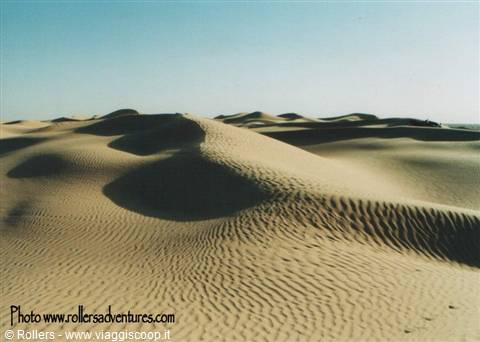
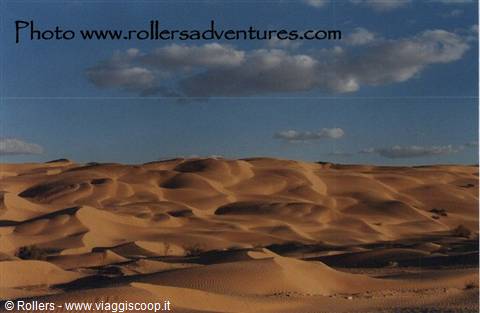
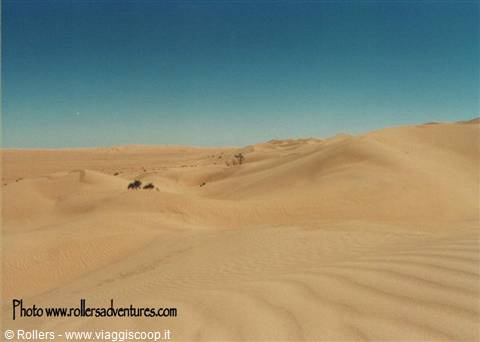
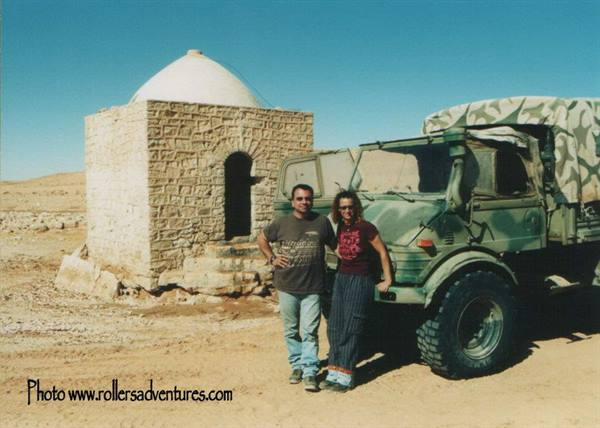
Reaching the community of Borj El Kadra a couple of days later, the welcome was magnificent; our group, by now known to some of the village elders, was received with festivities and traditional dances, but above all genuine ones, all framed by a fine long table laden with various foods. The distribution of the clothing materials was entrusted to our friend Douh, who with great generosity gave us 4 desert roses of about 35 kg each. In the community of Borj El Kadra live numerous families with dozens of children aged between 3 and 10. The latter live about 400 km from the first civilised town (I should say that in my opinion they are more civilised than all of us), reachable via the famous pipeline or the chains of dunes that give their name to the Grand Erg Oriental of the Sahara desert.
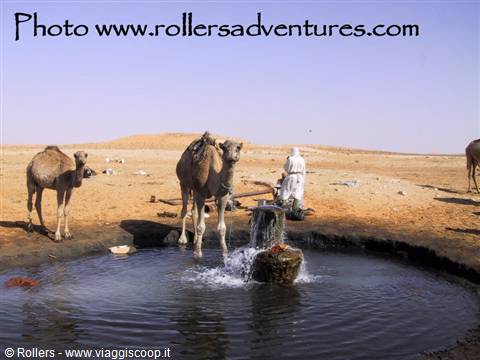
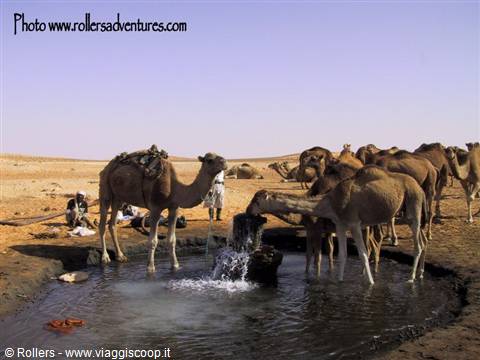
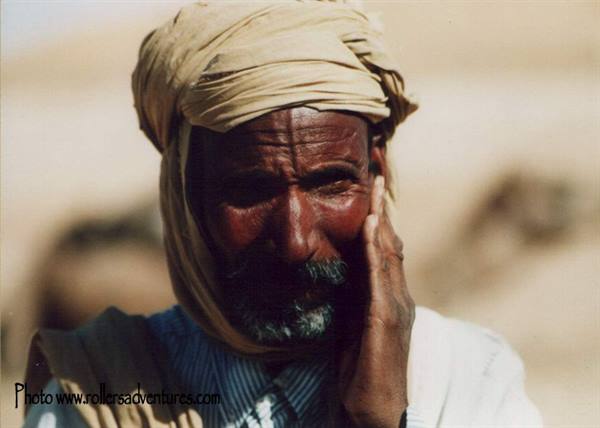
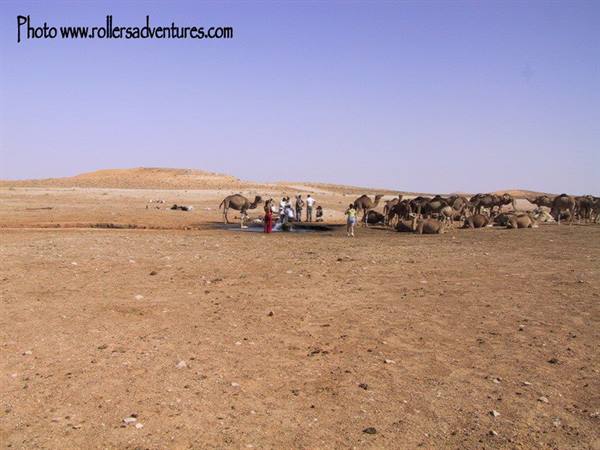
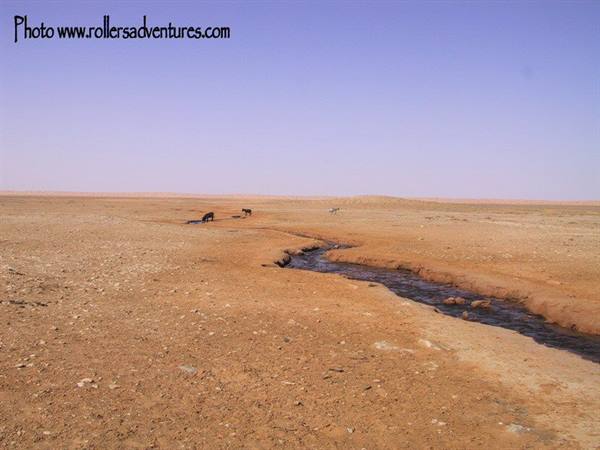
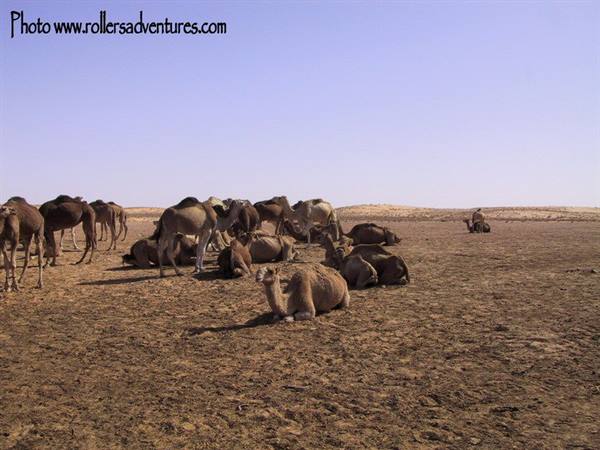
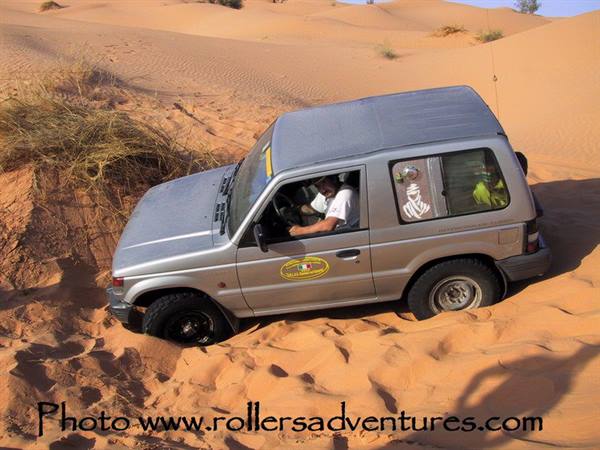
It is precisely from there that, with our off-road vehicles, we reached El Borma and immediately afterwards the well of Bir Awin, where we met a group of Tuareg who had come from Algeria and were watering their camels. As soon as we turned off our car engines, the youngest of the Tuareg approached us with a metal jug and, after whispering a few words in dialect, offered us freshly drawn camel's milk. We thought that exchanging it for a packet of Italian biscuits, a plastic funnel for pouring water and various clothes for their children was the most fitting thing for the occasion. A unique experience! The climb back up the Erg was hard but finally here we are. We reached Ksar Ghilane where, after searching for about ½ hour, we finally found the school.
A tiny structure located in the real Ksar Ghilane, that is the old one and not the touristy one, housed 7 children who, when we arrived, were drawing. The teacher, very mistrustful of us, established peaceful contact with our organisation only after understanding that we were there to deliver various school materials, simply because we believed in what we were doing. He thought that the photographs we took were a means of documenting their inferiority (structural and economic) compared to the European one. After bidding farewell to the small community of Ksar Ghilane we headed, across the sand, to Douz, obligatorily making a long stop at the café "le port du desert" at our friend Ahmed's.
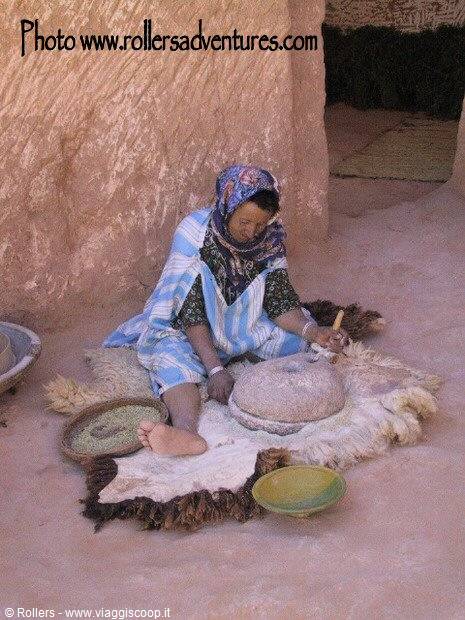
Report of the report: We identified numerous little towns perched between Matmata and Tataouine, people who live on the essential, places where children go to school without pens or notebooks, but even more seriously without shoes. We contacted several schools for children of primary and middle-school age; we found communities of people who live by herding, people who work grain with a stone mill; families with numerous children who deprived themselves of their food to offer us a piece of their bread; we found so much richness in their souls; we came to know marginally what it means to live in poverty, but we came to know what it means to love one's neighbour.
Our group will return in March 2003 for a new mission.
Lorenzo Bonacorsi, Margherita Fenelli and Claudio Coletta
The journey's photographs
20 photographs · click to open them full screen

0 reader comments