The story
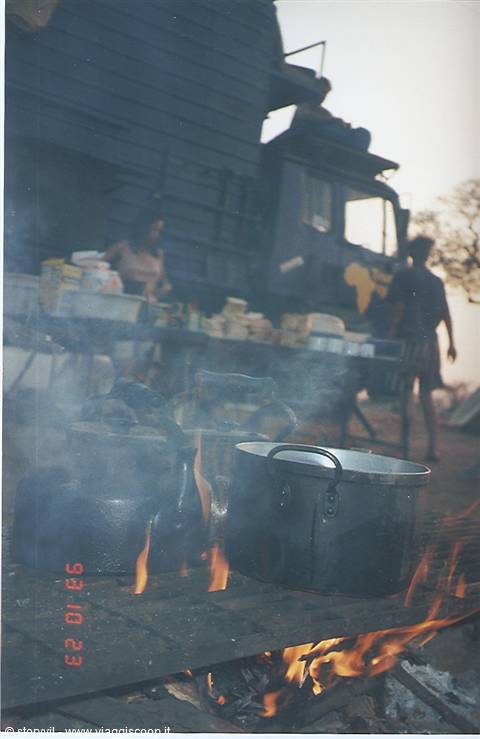
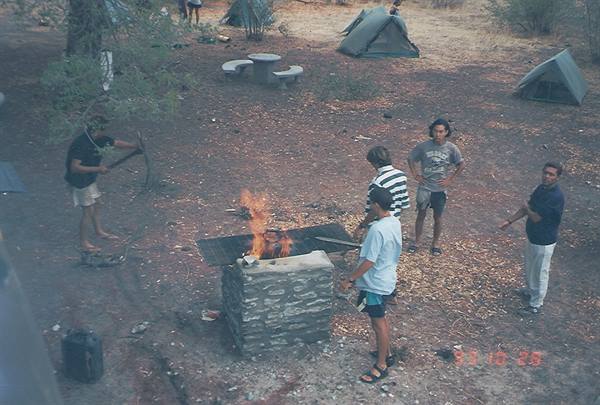
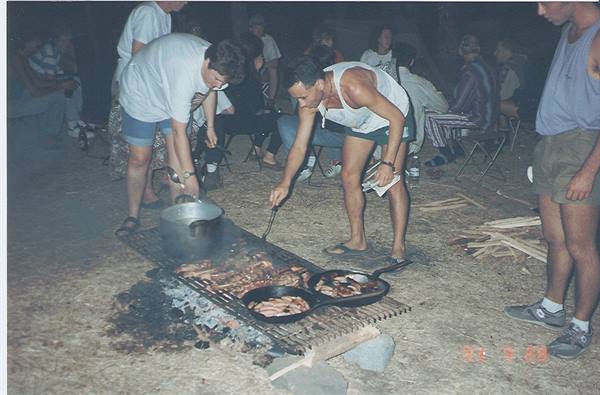
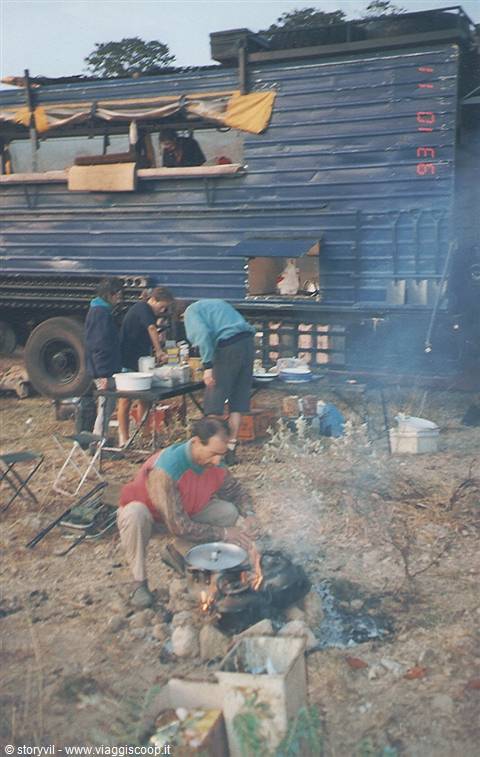
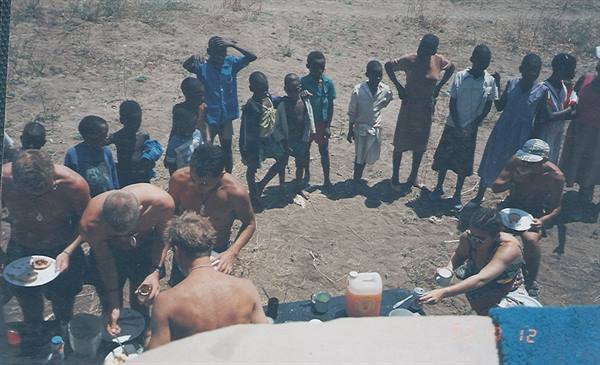
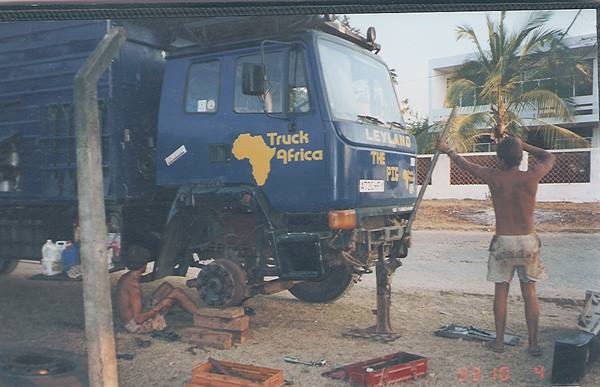
20 km north of the capital of Tanzania, in a campsite protected by iron nets and guards, we also found another three trucks of other companies doing tours similar to ours. The choice was to go three days to Zanzibar by boat or to stay there. Nicola and I opted to stay. With my Graziella bike I took various little rides around, and with the dinghy I'd brought, rowing by hand on the sea. We were on duty as cooks for two days, we two Italians; the food we cooked was much appreciated, never mind Linzy's sandwiches. With the truck we went the 20 km that separate the campsite from Dar es Salaam to pick up the lads returning by boat from Zanzibar, and on the way back, right in the embassy area, a leaf spring of The Pig broke. In a couple of hours the two drivers replace it; thank goodness they had a spare.
A power cable hit the top of the truck in the evening, by then close to the campsite, and sparked away; thank goodness none of us got electrocuted, thanks to the rubber tyres. Even this I had to try. Well! Finally we set off again the next morning after a week of stopping and boredom; maybe it would have been better if Nicola and I had gone to Zanzibar too.
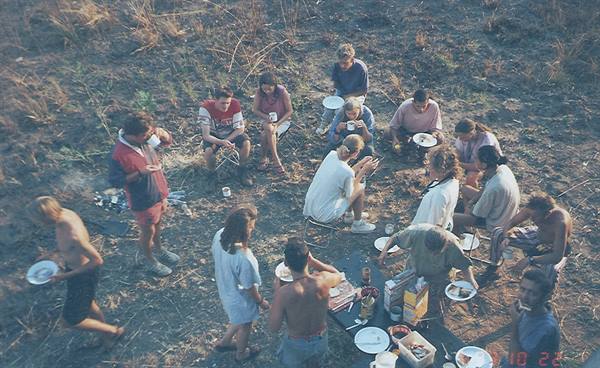
Km and km, eight hours of truck at 80 an hour with the usual stop around 13.00 for lunch at the edge of the truck, made of bread and beans and maybe a fruit, and day after day we reached Malawi. At the border they make problems because some of us, with faces full of piercings and hair clearly like drug addicts, had to respect the rules of that country which forbids such things.
In the north of Lake Malawi we spend the first night; they tell us not to swim in the lake because bilharzia, a disease of still water, is present, but not in the centre and south of the lake.
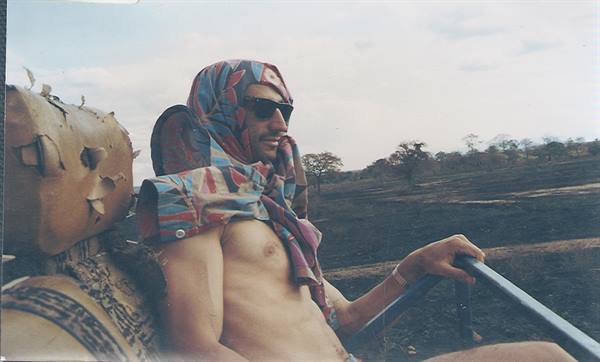
The days pass; we've never eaten so much dust; the truck is all open and naturally there's no air conditioning, which only the two drivers could use in the cab. But this is Africa and that's how it must be.
That day, those on kitchen duty decide to buy some chickens from the black people who were selling them to cook; only they were still alive and, after a few km, freed from the string around their legs, they ran off everywhere down from the truck, sparking a search and chicken hunt by all of us. The poor things shortly after suffered what destiny had decided for them, and became very good then, yes, but for our palates.
At Monkey Mia we stop a few days; we're a few km from Lilongwe. The lake with the little monkeys that kept us company is very beautiful; my little boat was a great success; even our driver and the female driver of the Dragoman (another company) enjoyed it, drinking their usual beer.
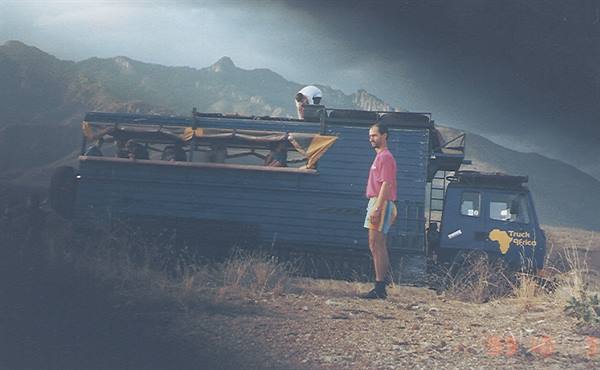
The life of Truck Africa is by now our habit, lots of freedom, and views of enchanting landscapes when in nature, but horrible when in the city.
The hours by truck for all of us were the ugliest thing, 8-10 hours a day, or stopped a week as at Dar es Salaam, unfortunately.
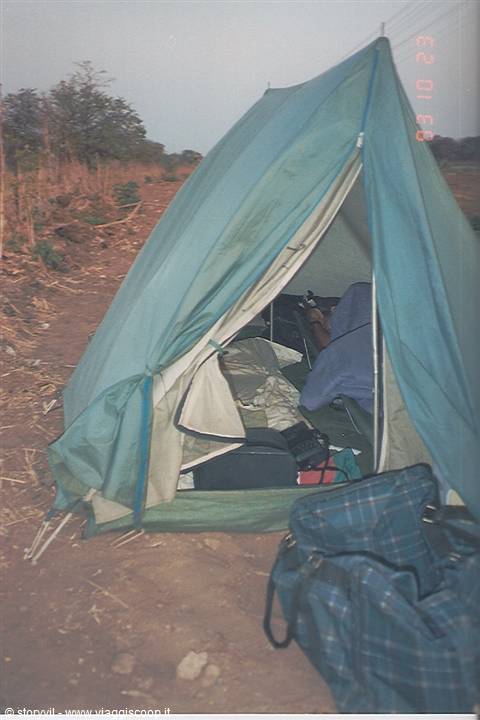
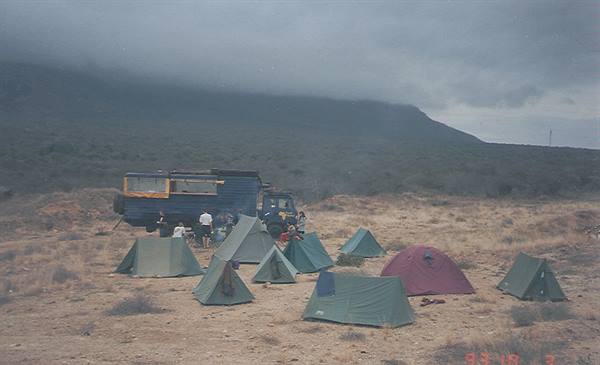
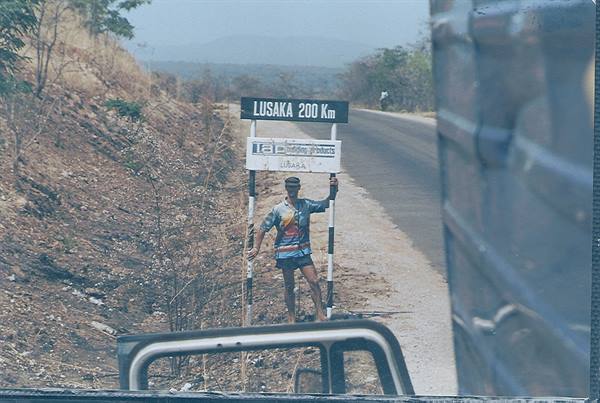
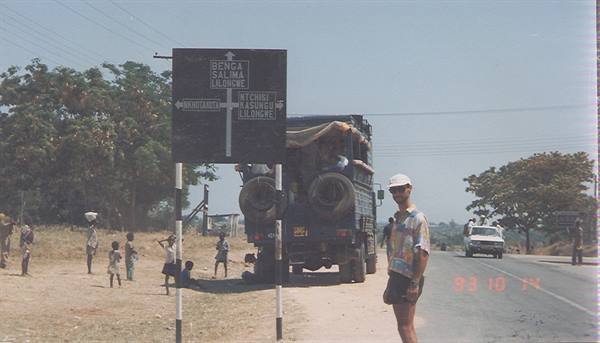
From Malawi we enter Zambia; the customs all fine, passed losing little time. Here we were only in transit for two days; not finding a good place to camp, Steve pulled over to the left side of the road and there, two metres from the asphalt, we put up the tents that night. Thank goodness there was no traffic; we were still far from Lusaka.
A city we pass through the next day, stopping at midday for lunch and a brief visit.
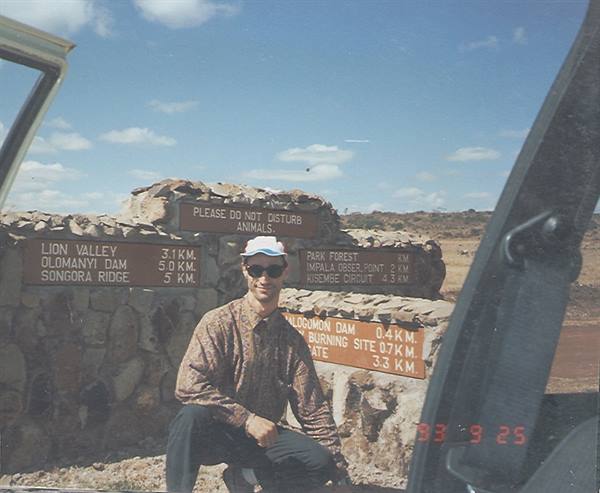
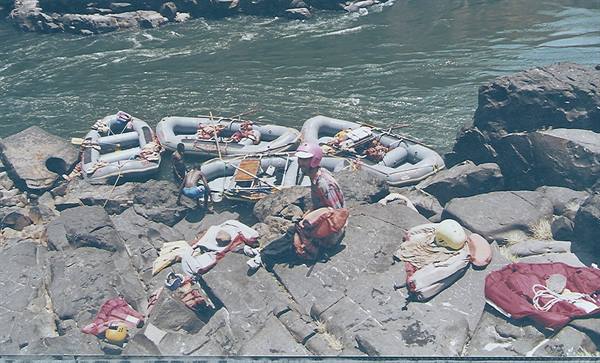
As we got closer to Livingstone and Victoria Falls, the desire in all of us to get there at once grew. In fact a few days' stop here at the falls allowed us to do a fine safari on horseback, and a whole day of rafting down the rapids of the Zambezi river, and I, with a local guide, also half a day of 4x4 safari in the nearby Victoria Falls national park.
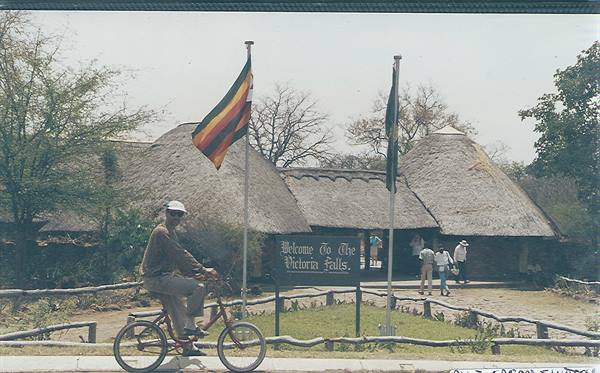
Every morning I got up early and with my Graziella bike pedalled far and wide around the town. The bridge that joins Zambia to Zimbabwe is the scene of the bungee jumping free-fallers. Nicola and I were tempted to do it, but 100 dollars a jump was too much.
A Frenchman who was there in Zimbabwe for work wanted my Graziella bike to go to work, and since I had no intention of being left without it, I quoted him a figure that was too high: 220,000 pounds for a bike with an old, beat-up but still working speedometer.
Well, he immediately said yes; to an offer like that I couldn't back out, so I accepted.
From Zimbabwe we set off and enter Botswana for the first time in my life. Here too, as in all the other states we've passed through, you drive on the left side of the road. At the border they run the truck through a pool to disinfect the wheels, and all of us with the soles of our shoes on a damp cloth to remove the Zimbabwean bacilli.
It's the first of November, the start of the rainy season, and wouldn't you know, after weeks of sun, the first brief downpour of a few minutes eases the drought.
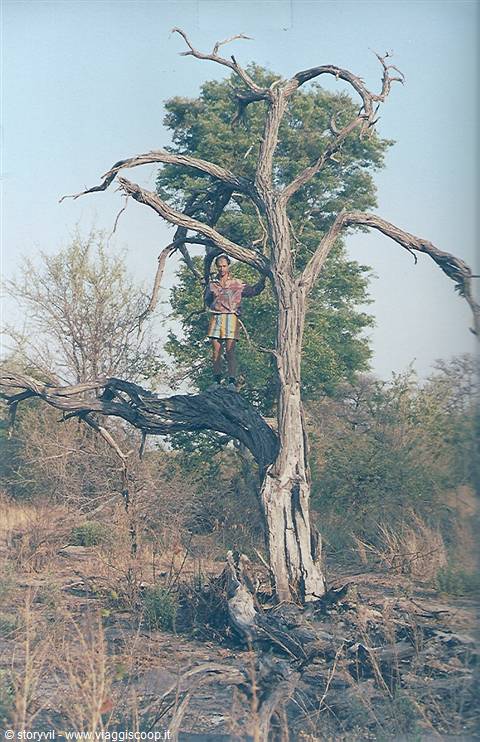
In Botswana we camp in a magical spot. The landscape of African acacia trees etc appeals to me from the start. Very tall termite mounds frame the scene. The truck gets bogged down in the mud and all of us push.
Having arrived at Maun, we camp at the Island Safari Lodge, on the edge of the Okavango Delta. The donkeys bray at night here to mark their territories and to keep us, who are sleeping, awake; they're considered sacred animals here; you see them in the streets as we have dogs.
Three-quarters of the group enter the delta in two little Cessna planes to spend a couple of nights on safari, while Steve takes the chance to change some tyres, since they cost less here. During the whole trip we blew seven like bombs, and I assure you it really feels like a bomb.
Nicola and I decide to break away from the Truck Africa tour and enter the Okavango for three nights by land and speedboat at half the price the others paid for just two nights.
We also got back from Steve a few dollars of the kitty, the common fund, since we wouldn't be going with them for a further week to Harare, at the end of the tour.
Bye bye to the truck, and we head in with a guide provided by the Island Safari Lodge, and here begins an adventure that's incredible. Total nature, indeed too much nature.
Sam the black guide pushes a canoe called a mokoro along with a pole to stand up, and the two of us sit one in front of the other; the silence with the sound of the water caressing the little boat carved from a tree trunk is too beautiful. A little further on, navigating the clear water of the Okavango, among water lilies and algae, we take a dip and discover that what they'd told us is true, namely that the water is good to drink, and so we do for the remaining three days; we didn't even drink the canned orangeades. But the best was yet to come.
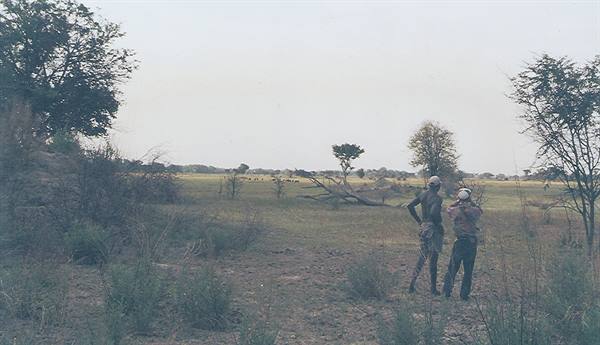
The safari consists of long walks with Sam, armed only with a stick, and this is precisely the point. Sam has no rifle or tranquilliser gun, and both Nicola and I wondered how we'd behave if we encountered lions. Sam told us we wouldn't meet lions, then shortly after he'd show us their tracks. Whatever!
Well, Nicola and I had anyway decided that if we did meet a lion, we'd give Sam to it to eat; I think, though, that Sam thought the same thing about us.
Well, in four days and three nights we didn't see them, though every night the hyenas came to visit us right outside our tents.
The journey's photographs
26 photographs · click to open them full screen



0 reader comments