The story
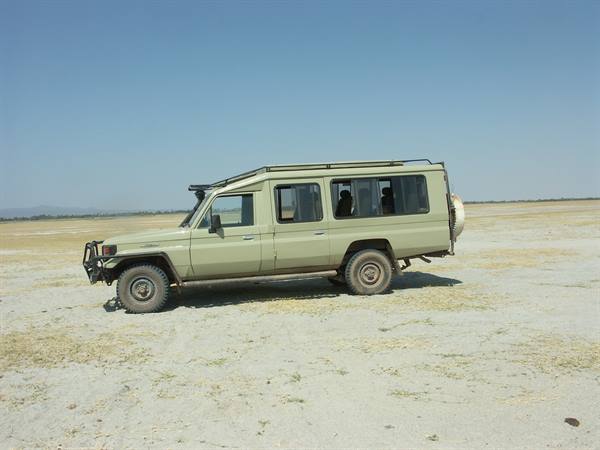
Serengeti Today we head towards the Serengeti, a conservation area at 1,400 metres; we make a first stop to admire Lake Manyara from above, we cross the Ngorongoro N.P. full of vegetation, at times lush; an elephant almost climbs into the jeep. The Masai, on the other hand, do not like being photographed, even though our guide Hibrahim tells us that they are hospitable and that, out of hospitality, they even lend their wife, and if she were to become pregnant, the child is recognised by the head of the household. There is even an old Masai with 30 wives. As far as we can see, it is a very handsome race: the women have a pronounced bottom sticking out backwards and the men are very tall and slender. We stop for lunch at the park entrance, where we can climb on the rocks and be entranced looking down at the immense "endless plain" from above.
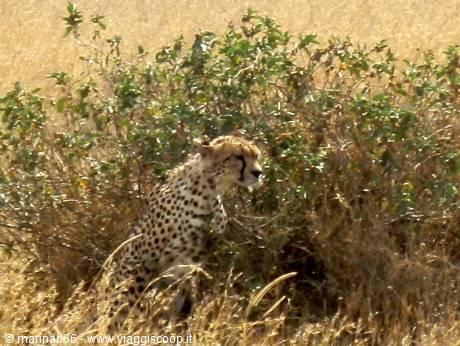
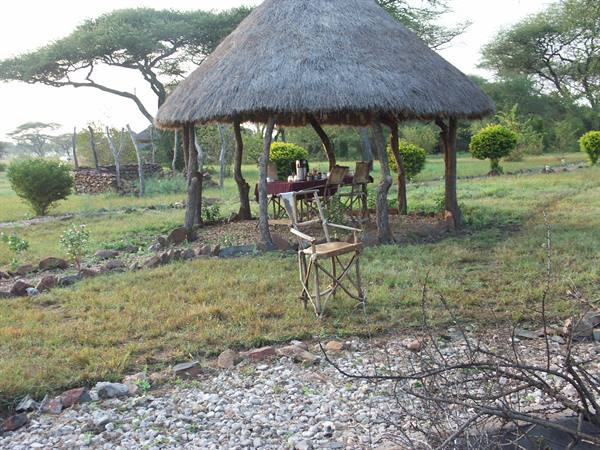
Along the track that crosses the park we find many more animals; we pass the Hippo Pool where, besides the hippos, we see, in the immobility that marks them, two crocodiles as well, and we glimpse a leopard among the thick foliage of a tree. A young cheetah, on the other hand, lets itself be filmed in close-up, beautiful! The real photographic safari begins. For two nights we will stay at the Ikoma camp. There is a fairy-tale sunset; near Ikoma there are giraffes eating the leaves of the trees. Mirko, who tries to get close to photograph them, says they are afraid. This camp is run by Pepe who, as he tells us in a gibberish mixing Spanish, Swahili and English, came here from Barcelona about four and a half years ago.
He sensed that in such a green area there had to be water, a precious resource, and with the help of dowsers he found it; he has also installed solar and photovoltaic panels. Indeed, we manage to have a hot, plentiful shower. He also tells us how difficult the supplies are; he needs 5 hours to reach the town where he stocks up, and so you can understand too how the cost of a trip to Tanzania is higher than to Kenya. In the morning they tell us that during the night wildebeest and buffalo passed through to reach the area where it rained and where the grass will grow in no time, joined also by the giraffes, which indeed we no longer see around. This camp is on the animals' migration route, and at night the guards keep watch with torches and sticks.
Serengeti Breakfast under the gazebo, practically like being in the park; the menu is mostly intercontinental and above all savoury — omelettes, sausages, bacon — we squabble over the jam (they don't yet know how greedy Italians are), but fortunately there is their tropical fruit, and we are ready to face a day entirely devoted to the Serengeti. We see stretches of impala and Thomson's gazelles, which are resident in Tanzania, while the zebras, which look a little ungainly and above all emit a not very charming bray, cross the road by the thousand and, together with the wildebeest, head towards Kenya.
During this day we can truly say that the Serengeti is an earthly paradise that one hopes will never be altered, only flora and fauna: lions, cheetahs, leopards, servals, impala, baboons, various species of antelope, wildebeest, zebras, buffalo, warthogs, Grant's gazelles, Thomson's gazelles, mongooses, hippos, crocodiles, elephants, giraffes, hyenas, jackals, so many species of birds; I have listed the names of the animals I know, because there are so many that I had never seen before; you stand and watch in silence, thinking "is this real or am I dreaming?". On the way back to Ikoma we see young men with a white mask on their faces; it is hyena dung that they smear on for two weeks when they are circumcised.
The return is very sad because, as we will repeat every evening, there are families and children who come up to the jeep with eyes hoping to receive something, and when we hand them our uneaten food they smile at us with gratitude and greet us. Ngorongoro Reluctantly, after breakfast, we leave the Serengeti. Arriving at the entrance to the Ngorongoro park, from above there is the enormous crater with a soda lake in the background. Thousands of animals are grazing: warthogs, wildebeest, zebras, gazelles, elderly elephants that linger in a very damp spot, where they wait to "die", because the grass there will never be lacking and they don't have to work to find it. We meet Masai with their sticks and their red and purple costumes, and there are also many children taking their animals to pasture.
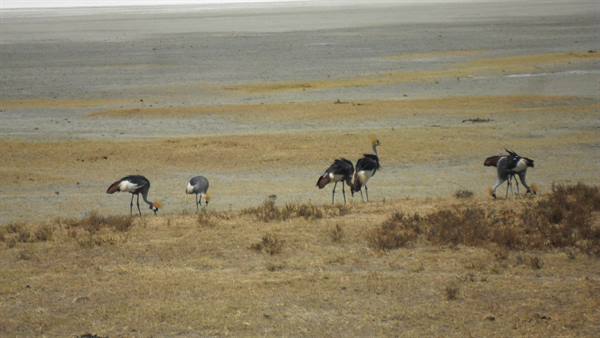
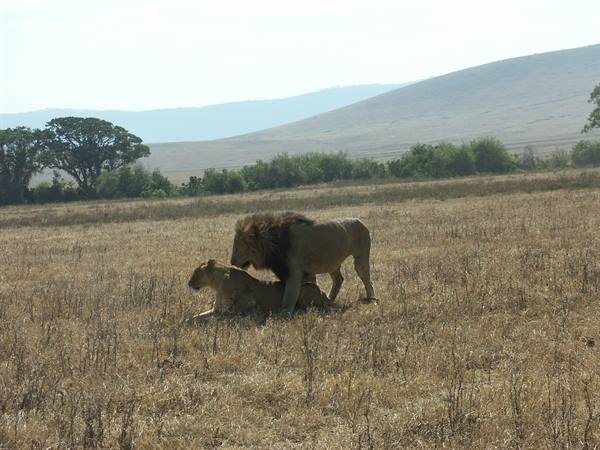
Every now and then in the distance a long neck is an ostrich, but also numerous groups of "crowned cranes"! At last the famous "black rhino" too. We stop to eat on the shores of a small lake but inside the jeep, because there are eagles flying just above us that could eat our lunches. We manage to flush out a lion and a lioness in a love game: it is always the female who rules the game. Downwind there is a herd of wildebeest that, as soon as it smells the lions, turns back. We leave the crater along a very steep track; it is thrilling to climb up with lush vegetation, tropical forest, on either side! Then we descend towards Karatu, 14 km away, we see one of the few road signs and we find ourselves on asphalt again; it feels like another world! A stop to buy fabrics, though they are not the ones the local women wear: what a pity! We arrive at a nice hotel, the Eileen's Tree Inn in Karatu.
The electricity comes on only at 19:15 and there is no hot water, even though the excavations for a future swimming pool are already there! Tonight too there is chicken, but it's a good "chicken pie", with mashed potatoes and vegetables, as well as a banana dessert. The lodge has gardens with beautiful flowers, and lovely avenues of bougainvillea that we light up with our torches to reach our comfortable rooms. To be continued....
The journey's photographs
6 photographs · click to open them full screen

0 reader comments