Our trip began in Cape Town, with a rental car, with which we visited the city and its surroundings, the southern states of Western and Eastern Cape as far as Port Elizabeth. Tuesday 13 June: CAPE TOWN Thursday 15 June: CAPE TOWN – WILDERNESS (450Km / 4h 30) Friday 16 June: WILDERNESS – TSITSIKAMMA (145Km / 1h 30) Saturday 17 June: TSITSIKAMMA – PORT ELIZABETH (170Km / 2h)
With a domestic flight we then moved to Durban, from where, with another vehicle, we visited the great Hluhluwe-Umfolozi and Kruger parks, the independent state of Swaziland, the Mpumalanga area and then reached Johannesburg. Sunday 18 June: DURBAN – HLUHLUWE (300Km / 3h) Monday 19 June: HLUHLUWE – EZULWINI (450Km / 4h) Tuesday 20 June: EZULWINI - HAZYVIEW (400Km / 4h) Thursday 22 June: HAZYVIEW – HOEDSPRUIT (150Km / 2h 40) Saturday 24 June: HOEDSPRUIT – JOHANNESBURG (450Km / 4h 30) Here we returned the car after a total journey of about 3500 kilometres and, after about 10 hours of flying, we arrived back in Verona.
Day 112 Jun 2006
The day of departure
Towards mid-morning we go to Catullo airport in Villafranca. The day of departure has arrived, we are finally fulfilling our dream, that of visiting a part of Africa.
At 13:15 we take off on an Air Dolomiti flight to Frankfurt, here we stop for just over a couple of hours and then take, around 17:00, another flight with South African Airways to Cape Town.
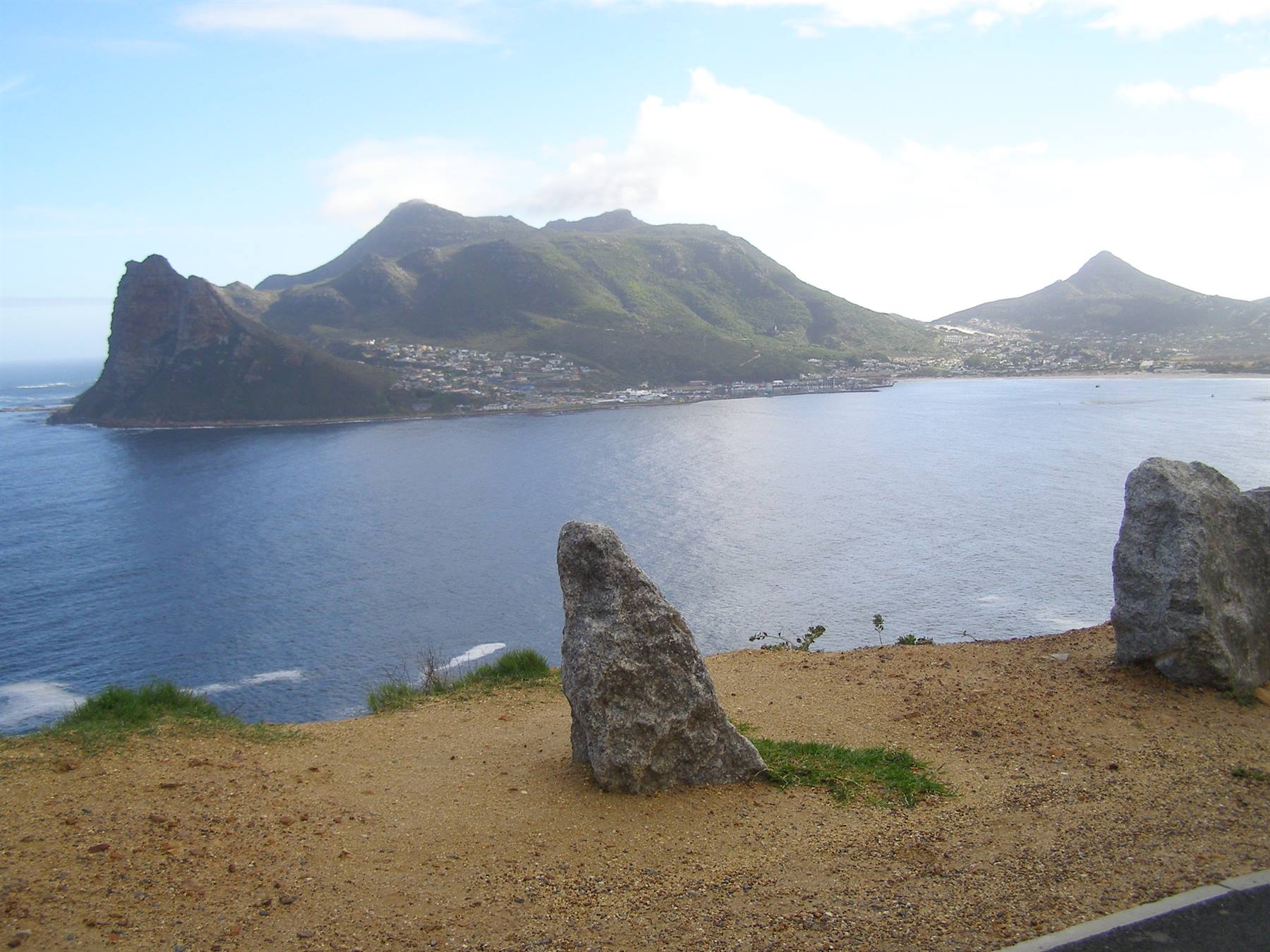
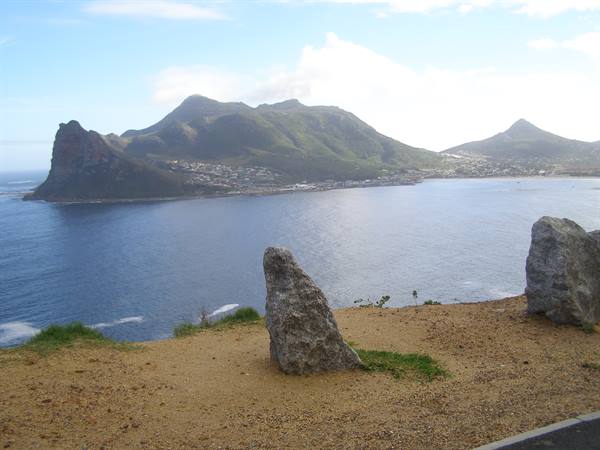
Hout bay in the distance
Day 212 Jun 2006
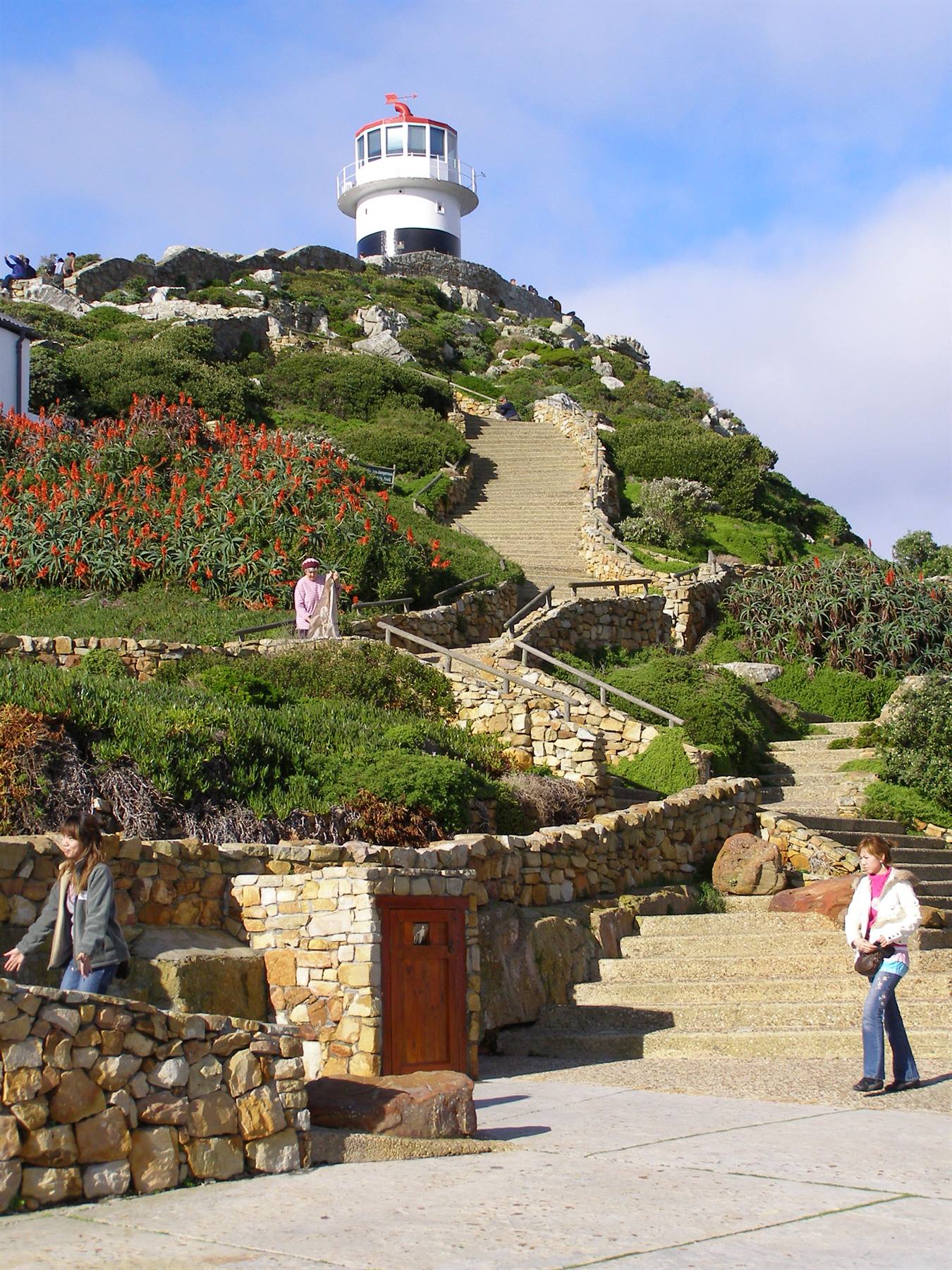
The lighthouse of the Cape of Good Hope
Day 313 Jun 2006
Arrival in Cape Town and the excursion to Robben Island
The night passes fairly peacefully, after about 12 hours of intercontinental flight and after clearing customs we finally set foot on South African soil. It is still dark also because it is 5 in the morning. Fortunately we don't have to make any time zone changes. We therefore proceed to first collect our suitcases and then collect our car that will accompany us for the first part of the trip. Unfortunately we have a small mishap, since not being in possession of a credit card Europcar cannot release our car. After about a couple of hours of negotiations we agree to leave cash as a guarantee, the second problem looms when we have to withdraw money from the ATMs, in certain banks our debit cards don't work. Fortunately after walking for at least half an hour we find the right one and finally we can withdraw the money that will allow us to rent the car.
After having paid about 500 euros as a deposit, they finally hand over a Toyota Corolla with automatic transmission and we set off in search of our hotel, also because we are a bit tired from the long journey and need to rest.
Driving on the left is a bit demanding, but following the other drivers it all becomes more natural. To reach our first hotel we have to take a ring road that goes from the airport to the center of Cape Town. As soon as we leave the parking lot we immediately notice kilometers and kilometers of shacks, the famous "townships" that skirt the roadway. Even though it is only 9 in the morning, the roads are very busy and we immediately realize that there are no rules, cars overtake on both the right and the left, so you have to pay a lot of attention. We arrive at the hotel with a certain ease, also because at the airport they gave us some very detailed information. The house is truly beautiful, early-1900s Victorian style completely renovated, the room is wonderful and very spacious, nothing is missing. They even give us a bottle of wine to wish us welcome.
So we decide to rest a bit, before going to visit the city. Around 12:00 we head to the old port of Cape Town, renamed Victoria & Alfred Waterfront in honor of Queen Victoria and her son, after it was redeveloped as a tourist-commercial space. We park our car and go to the ferry boarding to reach Robben Island, the famous prison where Nelson Mandela was imprisoned for more than 20 years during Apartheid. The ferry trip, about 1/2 hour, was a real hell, the ocean was very rough, also because the weather conditions were not the best.
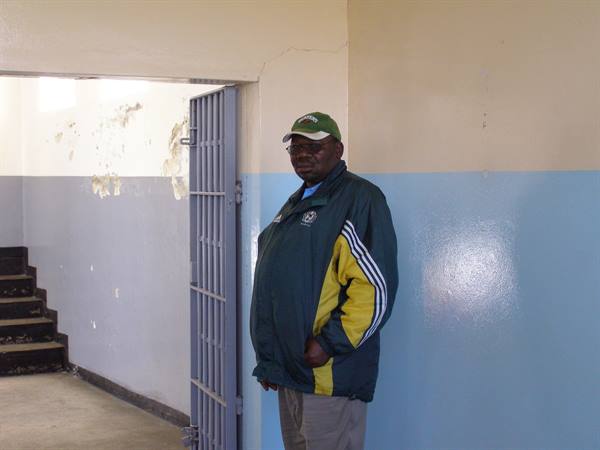
Arrived on the island, which since 1997 has been declared a world heritage site, two minivans await us and accompany us during the visit of the entire island as well as the prison. During the minivan ride I slept almost the whole time, while Marica was very attentive to what our guide was explaining. The interior of the prison made a great impression on us and our guide, who during apartheid was a detainee, explained very well the living conditions of the prisoners. They were registered based on skin color and religion, and even the amount of food was divided according to these absurd criteria.
Nelson Mandela's cell was extremely small, about 2m by 2m. One can very well imagine the hygienic and psychological conditions that the prisoners had to endure. At the end of the visit we had a little time to visit independently the remaining part of the island, where a colony of African penguins lives. We took the ferry for the return, decidedly less traumatic, and arrived back at the port we notice that some seals, lying on the concrete pier, are comfortably resting.
We decide to go eat something and along the way we meet a young single mother who asks us for charity, we not having money give her some t-shirts and pens, but she leaves a bit regretfully.
We reach the center of the Waterfront, offices, shops, luxury restaurants and many bars, and in one of these we decide to have lunch. The waitress is very kind and when she asks us for some information about the order, we a bit at a loss with English get help from a guy sitting near us. He was an American who had spent his honeymoon in Italy and was finishing it in South Africa. We take a stroll around the Waterfront and then head to our room, also because it is starting to get dark and it is advisable to be very careful, in fact before reaching the car we cross several groups of men with a rather suspicious manner. We pretend nothing and having reached the car we head to our room. Here a pleasant surprise awaits us, the fireplace in our room was lit and made the atmosphere truly romantic. For dinner we decide to eat in a place near our accommodation.
The restaurant is called Arnold, it is very nice and in the end they even give us a bottle of red wine. I forgot, meanwhile outside the place a real downpour has broken out that keeps us inside the restaurant for a while. Around 10 we reach our room again. It is our first night in South Africa and all day we have been asking ourselves where we are, we can't believe it. After months and months, we have finally arrived in the much-dreamed-of Africa.
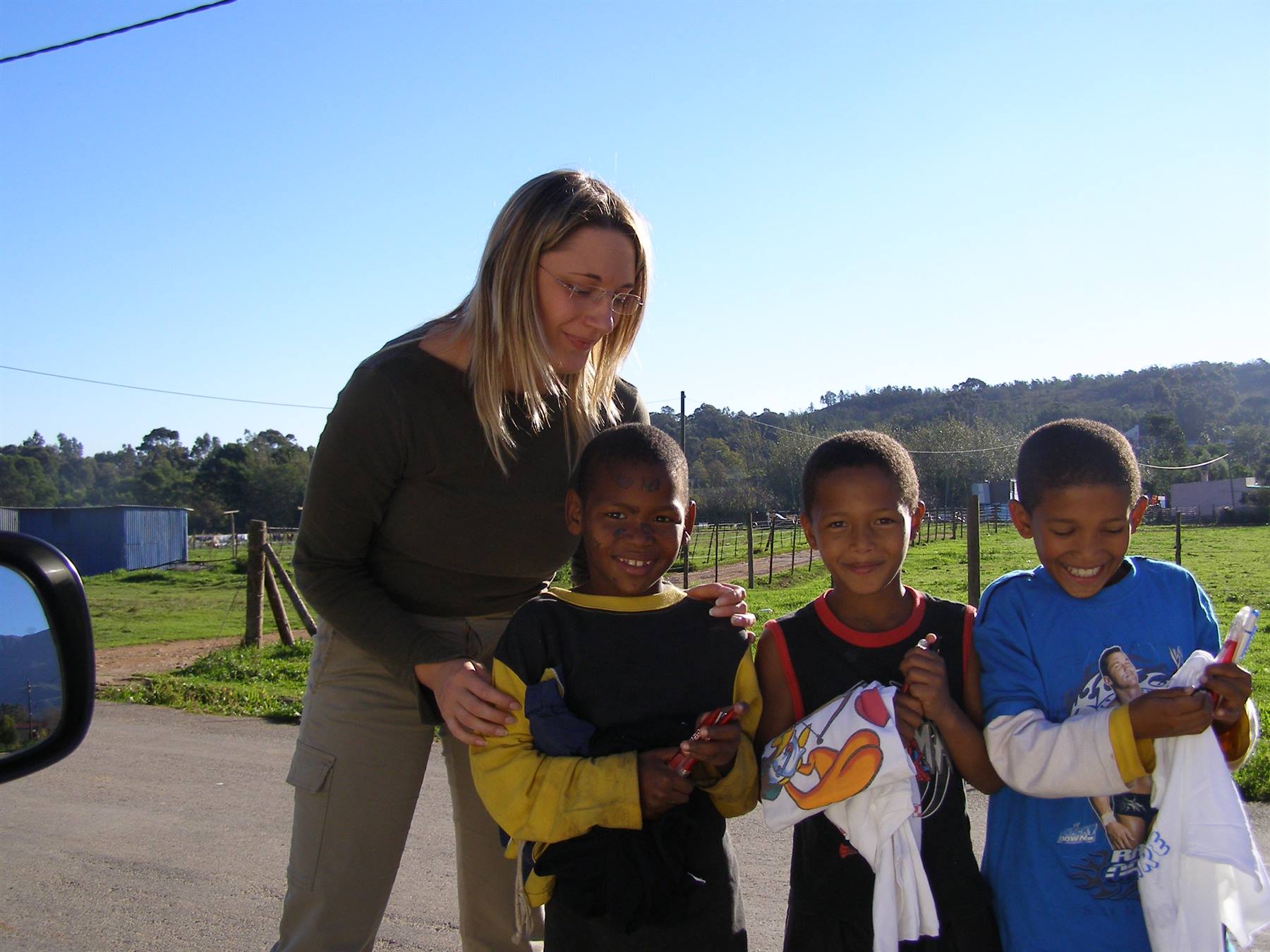
Some children in Swellendam
Day 414 Jun 2006
Excursion to the Cape of Good Hope
In the morning we wake up around 8:00, a very abundant breakfast and then in the car: heading for Table Mountain. Arrived at the departure point of the cable cars they advise us against going up because the top is covered in clouds. We therefore decide to go and visit the Cape peninsula passing through Camps Bay, Hout Bay, Chapman's Peak... We stop for a walk on the shores of the ocean near the town of Sea Point, which we reach passing among beautiful little houses; here it is truly difficult to think of being in Africa, and not in California or Florida. We then resume our vehicle and pass the promontory that leads to the town of Hout Bay, located on the legendary Chapman's Bay.
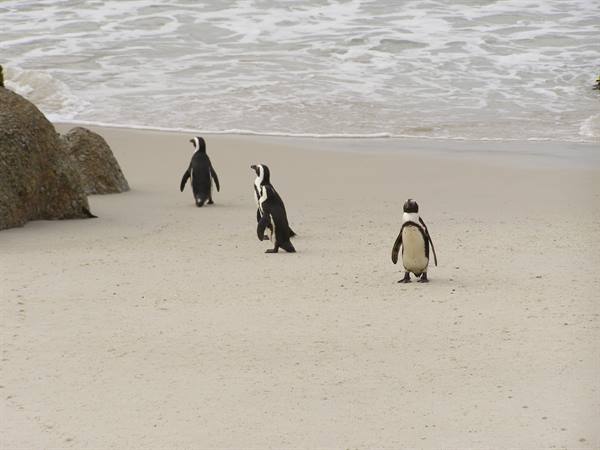
From here, after another brief stop, we go along the Chapman's Peak Drive, a beautiful panoramic road over the bay, which rises sheer above the sea, and we reach the ocean again, on the east coast of the peninsula, at the great False Bay. After about twenty kilometers we arrive at Simon's Town, and we stop a little further on at 'The Boulders'. This is a beautiful area of small coves surrounded by large rounded boulders. At one of these coves a colony of South African penguins has settled and thrived for several years, and recently a nature park has been established in the area. We go along the equipped trails that lead us to the beach, on which there are hundreds of small penguins, extremely cute, after having already encountered some as we approached.
The freezing waters that characterize these areas have evidently constituted an ideal habitat for these penguins, which in fact swim happily, entering and exiting the ocean here rather calm, reaching the numerous nests found in the surroundings. Marica was enchanted, so much so that, grabbing the camera, she started photographing anything that moved. Lucky that for the previous Christmas we had given ourselves the digital camera!!! We continue our route until we reach the entrance of the Cape of Good Hope national park. The landscape is very barren, almost devoid of vegetation, and there is only one road that takes us to Cape Point, where there is a small parking lot, a souvenir shop and a restaurant where we decide to eat, the view is breathtaking.
From here, with a short cable car, we reach the viewpoint, all around nothing but ocean.
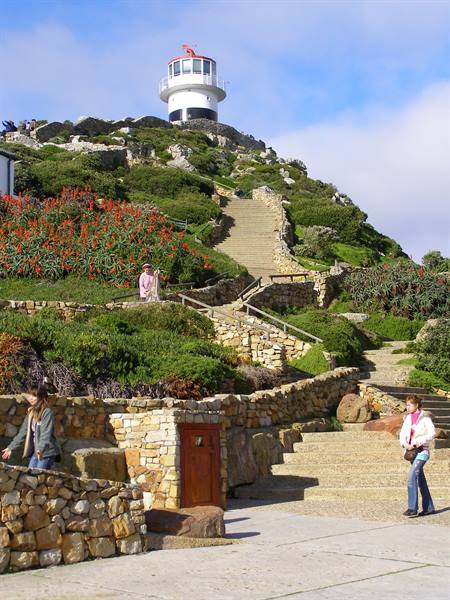
After a long staircase we reach the new lighthouse, which in a dominant position, towers over the whole area.
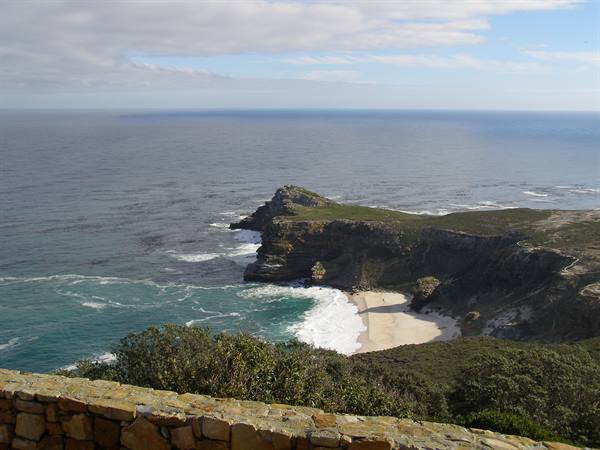
The views from this panoramic point, where the highest cliffs in South Africa are found, almost 250 meters above sea level, are truly magnificent, also given the luck we have of finding a splendid day. This promontory, defined as the most beautiful in the world, ideally divides the two Oceans, the Indian with the warm Agulhas current and the Atlantic with the cold Benguela system. On the right you can instead see the tip of the Cape of Good Hope, just over a kilometer away, defined by Bartolomeu Dias, who first rounded it in January 1488, as 'Cape of Storms'. For the descent we use the long stone stairways, built on the slopes of the hill on which the lighthouse stands, and surrounded by beautiful vegetation.
We resume our car and head towards the Cape of Good Hope, the area is rather wild, with some trails leading to the surrounding heights, while the beach is covered with gigantic algae as long as ten meters, and beaten by large waves. The smell of salt spray almost makes me nauseous but knowing where we are gives me an unimaginable sense of freedom. We then take the return road, while, after a few hundred meters a large ostrich crosses the road running, then we glimpse in the distance a rodent almost as big as a rabbit wandering among the rocks, the Cape hyrax. For dinner we go to the African Café, a place recommended by our inseparable guide, the Lonely Planet. The restaurant is beautiful and characteristic, all in African style, the walls are very colorful and the waiters welcome us with their great cordiality.
The menu is fixed and they let us taste many typical dishes of African cuisine, from South Africa to Morocco, from Zimbabwe to Namibia, and so on. As is African custom the waiter washes our hands and then it will be exclusively he who serves us all evening. The dishes offered to us are some very good, others less so, but it is certainly an experience absolutely worth doing. As usual, also in this case we are offered roiboos tea which we drink very willingly.
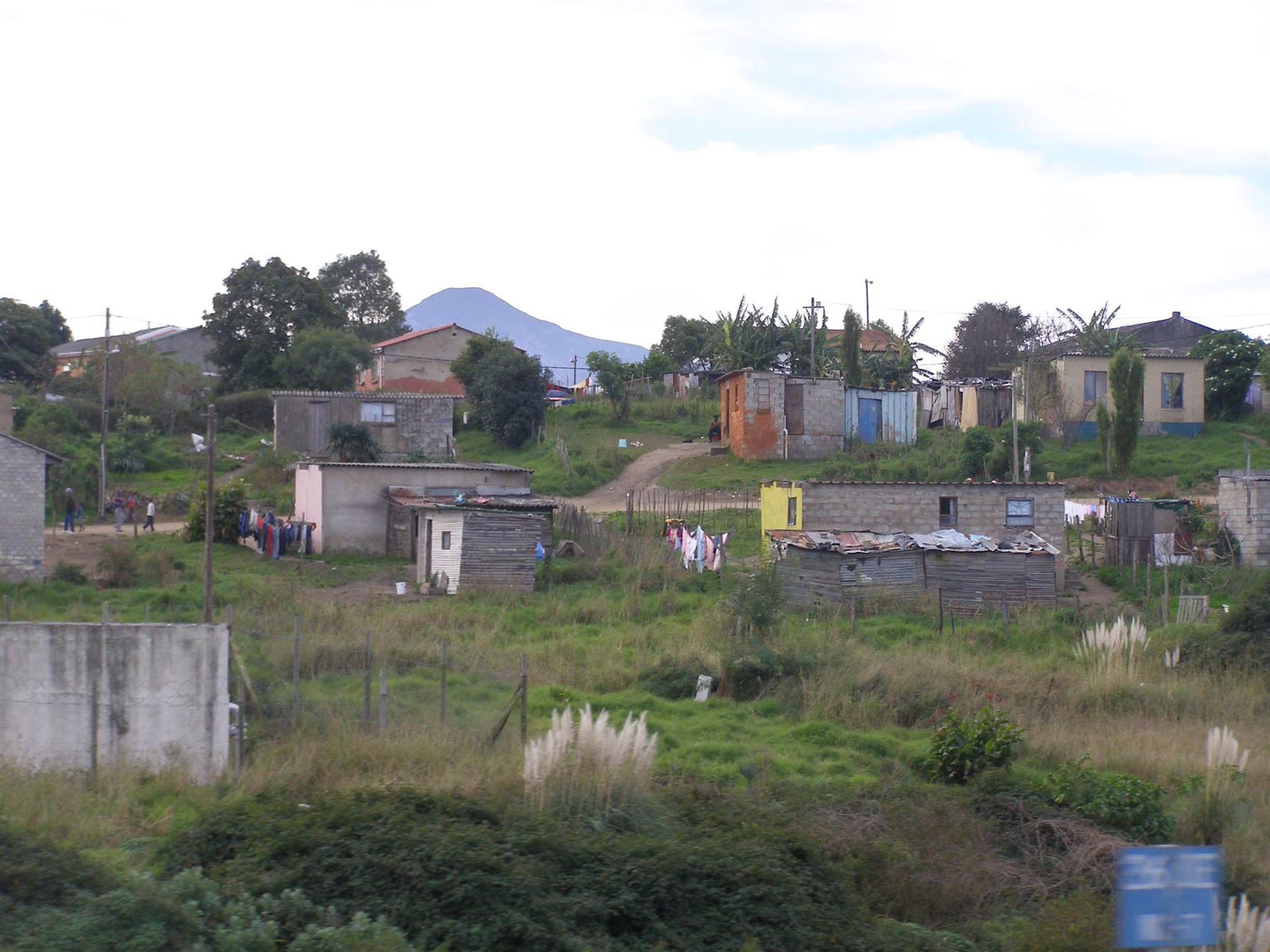
The township of Knysna
Day 515 Jun 2006
On the way to Wilderness via Stellenbosh
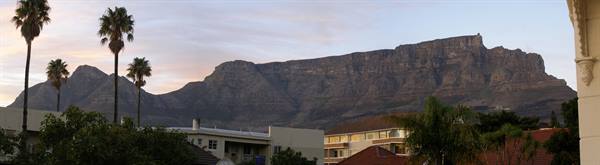
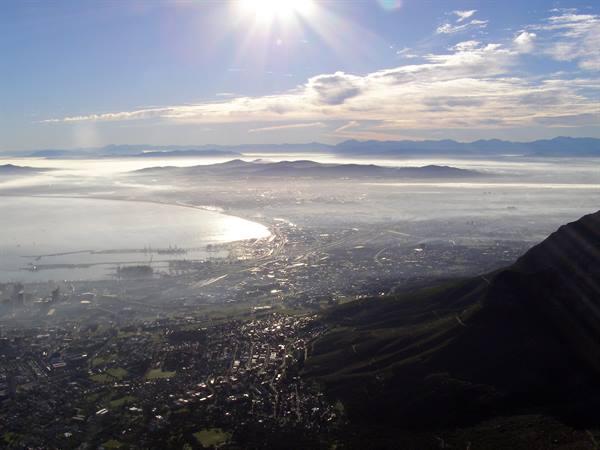
We wake up around 8:30, the usual abundant breakfast, and then we leave to go and visit Table Mountain, but first we have time to take a panoramic photograph of the entire mountain complex directly from the balcony of our room. Judge for yourselves!!!
The weather is perfect and so having taken the cable car and arrived at the top of the famous mountain, which encloses the heart of the city, we enjoy a spectacular landscape. On the right you can see the port and Robben Island, while all around the Atlantic Ocean that fades into the horizon with its thousand gradations of color. It is only the third day, but given the many things we will have to see we decide to have the memory card shipped by express courier to one of our hotels. Unfortunately the time at our disposal is little and so after having strolled far and wide the moment has come to return to the car, not before however having stopped at the souvenir shop to buy some mementos.
Having reached the car, we begin our long day visiting the area famous for its vineyards, Stellenbosch, encountering along the way the usual townships, many people at the edges of the roadway hitchhiking and numerous very crowded schools. Having reached Stellenbosch, a beautiful town nestled among vineyards and hills, we go to a farm to buy a couple of bottles. It is about 10 in the morning but it is inevitable not to taste these wines, and so after a couple of glasses we irremediably feel a bit dazed.
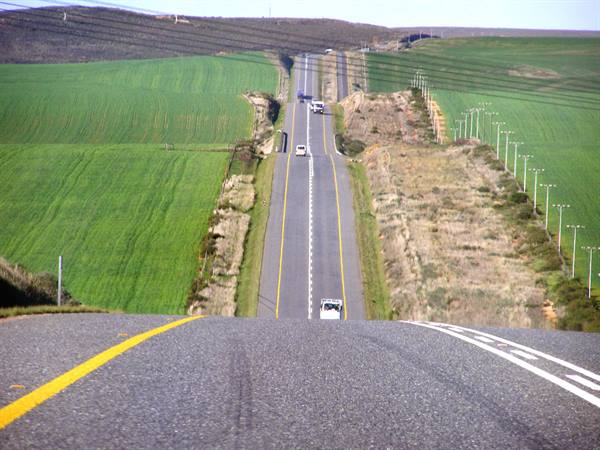
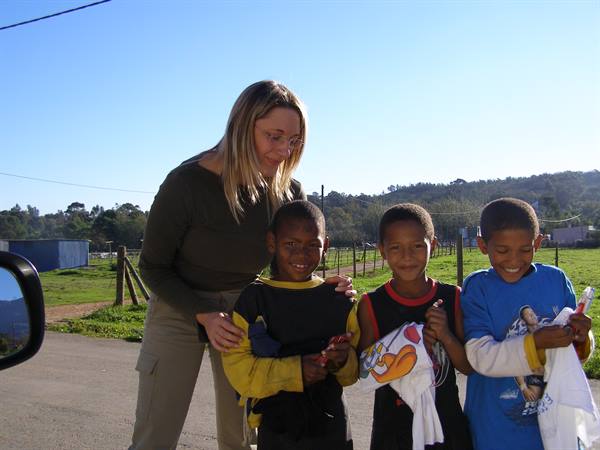
We leave Stellenbosch and having reached the N2 we continue towards Wildernees. During the journey we stop at Swellendam to eat something, where we stop outside the village to give some t-shirts to some children who had come to meet us. We continue our journey without stops until Wildernees, beautiful roads and mostly straight. We arrive around 18:00, it is already dark, the room is not exactly the best, also because perhaps we had gotten too used to the good previous one in Cape Town. Anyway we rest a bit and then go to dinner.
We dine in the restaurant of the Protea Hotel, where we are staying, a famous South African hotel chain, and we immediately realize that here the portions are truly very abundant.
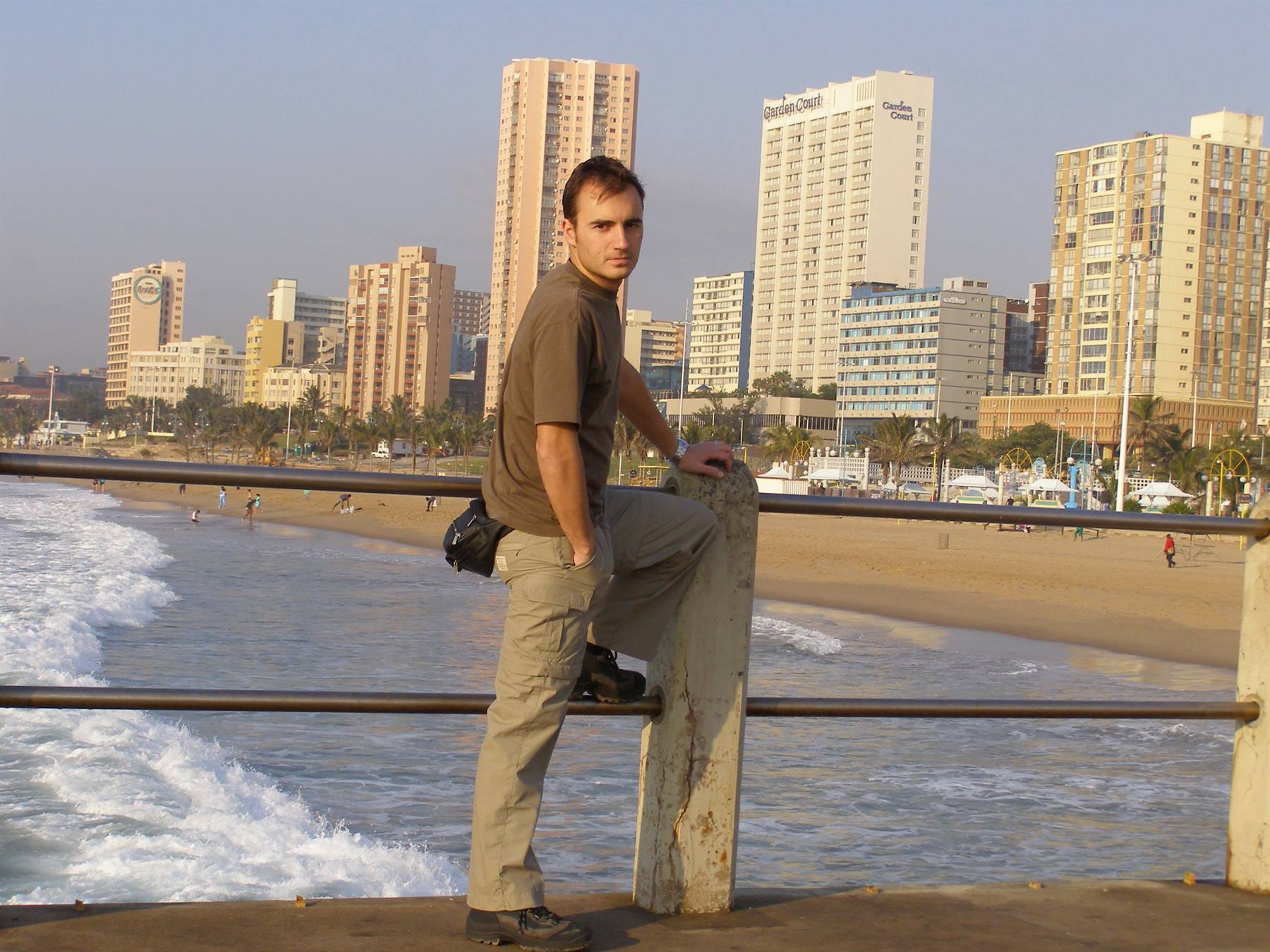
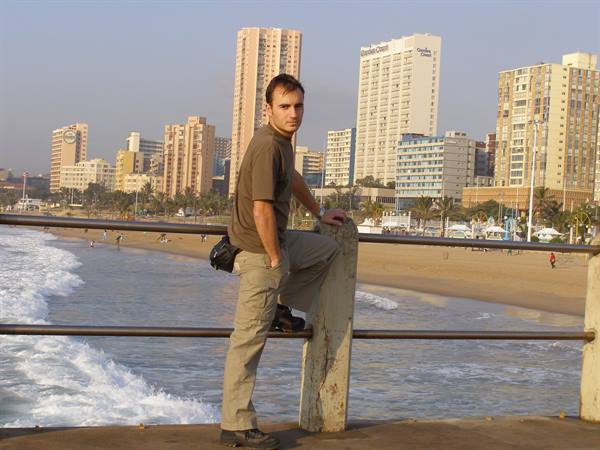
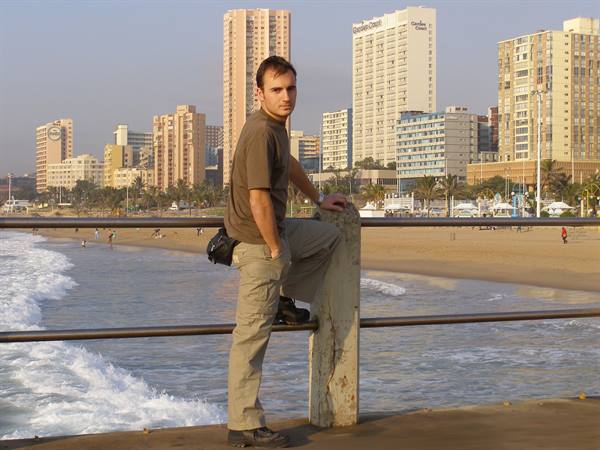
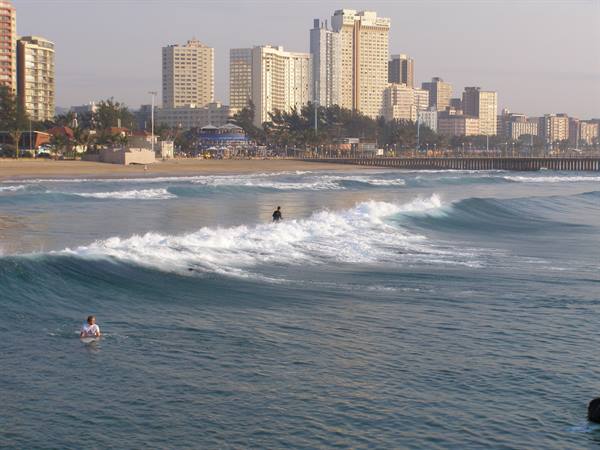
Durban skyline
Day 616 Jun 2006
Destination Tsitsikamma, via Outdshoorn and Knysna
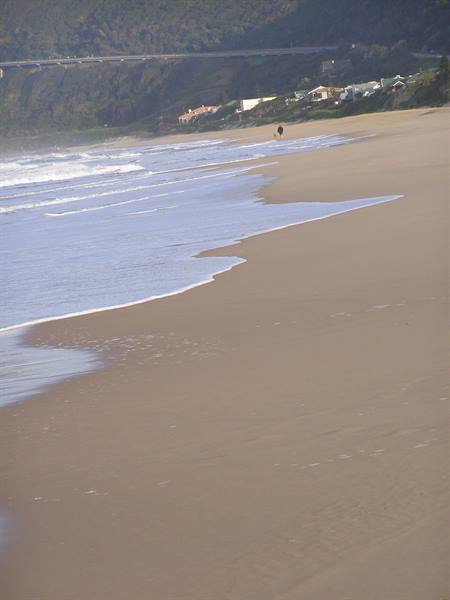
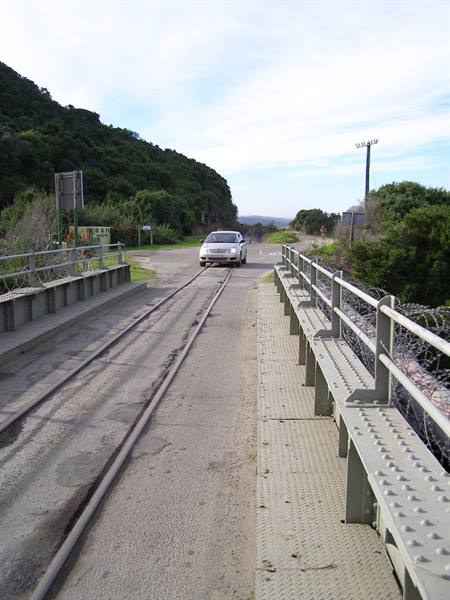
In the morning wake-up at 9:00, we have breakfast and then decide to go see Wilderness beach. It's deserted but the landscape surrounding it is incredible: behind us mountains and forests, in front the Indian Ocean. The Wilderness area is also famous because it's at the start of the renowned Garden Route, which during the summer turns into a frame of a thousand colors thanks to the thick and varied vegetation. Unfortunately at this time of early winter the vegetation isn't very lush, but you can easily imagine the spectacle of this stretch of coast. At a certain point, to explore the surroundings of the town, we come across a very particular road, to get past this point we are forced to cross parallel to the train tracks at our own risk since there are no visual signals nor even barriers.
Only after passing it do we realize that the train would have passed by shortly after, a steam train in its maximum splendor.
We decide to make a short detour toward Oudtshoorn to go visit the ostrich town, famous in the nineties, when ostrich feathers were in fashion. We pass near the large city of George, leaving the coastal road and heading inland, toward the Karoo region. The road becomes more and more winding, and climbs up the Outeniqua mountain range, crossing green expanses of fynbos. After about twenty kilometers, we stop at the Outeniqua Pass, a mountain pass with magnificent views of both the distant plain and the surrounding mountains.
On the other side of the mountain range extends the Little Karoo region, the landscape is rather arid and sparsely populated, and in fact the scenery gradually changes, and the road becomes almost flat. A few kilometers later we spot, on the side of the road, a farm of the famous local ostriches. Another few dozen kilometers and we arrive at the town of Oudtshoorn, the tourist capital of the Little Karoo. Following the directions of our inseparable guide we go to eat in one of the famous restaurants of the town where they cook the local specialty. Even though we traveled more than 100 kilometers it was truly worth it, the ostrich meat is exquisite and very flavorful.
We return to the main road and continuing on the Garden Route toward Tsitsikamma we reach Knysna, famous for its townships and for the numerous local craft markets. So we decide to go into the township, driving through we feel a bit watched and we're also a bit scared. The poverty of these areas is incredible, accustomed to our standard of living it's hard to understand their situation. Continuing another thirty kilometers or so we arrive at Plettenberg Bay, where we stop only long enough to take a photo at the edge of the ocean. We thus arrive at Tsitsikamma, a splendid spot in the middle of the national park of the same name, famous for its yellowwood forest. The hotel is very nice and evocative, we're right in contact with nature, the calls of some animals unknown to us and the singing of the birds make everything very enchanting, even though the temperature has dropped considerably.
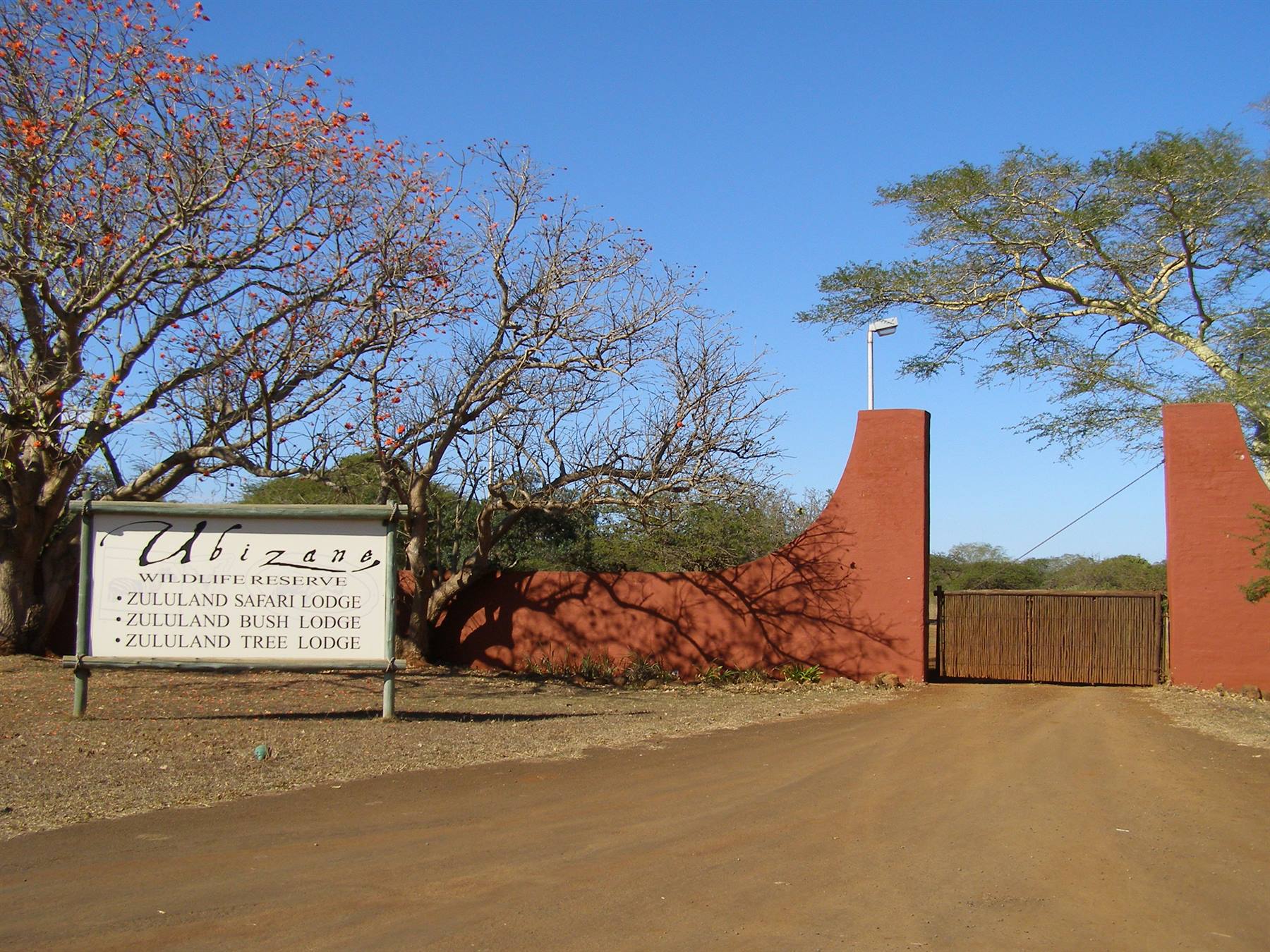
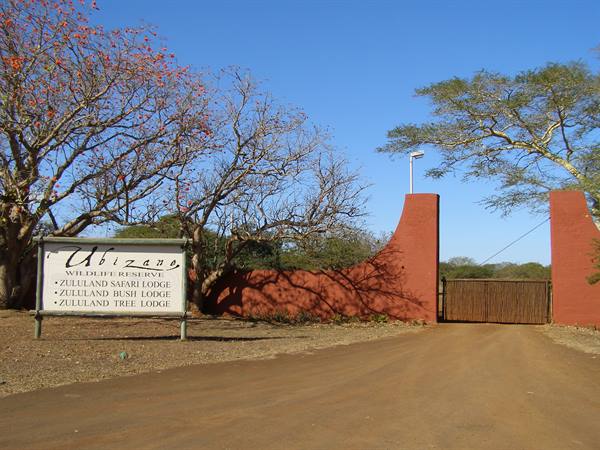
The entrance of the reserve
Day 717 Jun 2006
From Port Elizabeth, flying to Durban
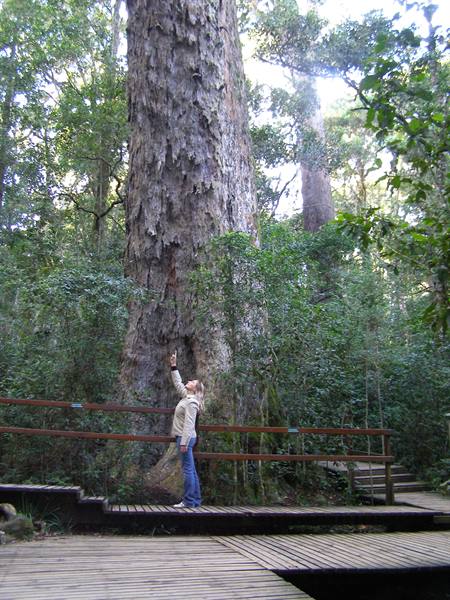
We wake up to the chirping of birds and after breakfast we get back on the road toward Port Elizabeth. We make a short detour to go see one of the major attractions of the area, the 'Big Tree.' After some searching and leaving the car in a small parking lot, we begin a route on a equipped trail, which goes into the big trees of what is one of the most spectacular South African forests. After a few hundred meters we come in view of the 'Big Tree,' a tree of the yellowwood species almost forty meters tall, and nearby another fallen specimen of almost equal size.
Unfortunately as usual time is short so we get back in the car and arrive at Jeffrey's Bay. During the journey we cross numerous vans transporting workers. It's the most used and logically least expensive means of getting from home to work. The town is characterized by immense beaches, beaten by gigantic waves, which have made it among the most famous in South Africa, and in the world, for surfing.
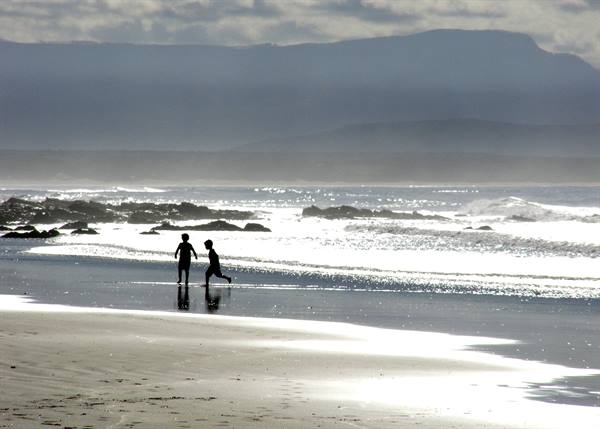
Arriving at the beach we immediately understand why, numerous surfers challenge the highest waves to perform increasingly difficult maneuvers waiting for the perfect wave, while some children enjoy with their carefreeness these moments of pure fun. We arrive in Port Elizabeth around 12:00 and with some difficulty we find the airport. Unfortunately after buying numerous souvenirs we're forced to buy a backpack too to avoid problems at the airport. So we decide to go downtown and fortunately we find numerous stalls selling just about everything. We find the backpack that suits us and then we head in a hurry to the airport. Here we leave our vehicle, and we take off on time, and after about an hour we arrive at our destination.
We collect the luggage and quickly handle the formalities for picking up the vehicle we had booked already in Italy, and we're assigned a model identical to the one we left just a few hours earlier, the only thing is it doesn't have automatic transmission and indeed I notice right away. We head toward the Balmoral Hotel, which is right by the ocean and right on the very long Marine Parade. As soon as we get out of the car we immediately notice that the temperature has definitely risen and moreover in the air there's a strange perfume made from the countless spices used for preparing typical Indian dishes. The hotel is one of the oldest, but it's kept very well. We immediately decide to go visit the seafront. Markets everywhere and consequently, even on this occasion, Marica can't help but buy, paintings, masks and numerous wooden statuettes.
We eat something at a bar by the ocean, but immediately after we decide to go to the room to watch the World Cup match; today Italy plays against the United States. After a very hard-fought match the result is a 1-1 draw.
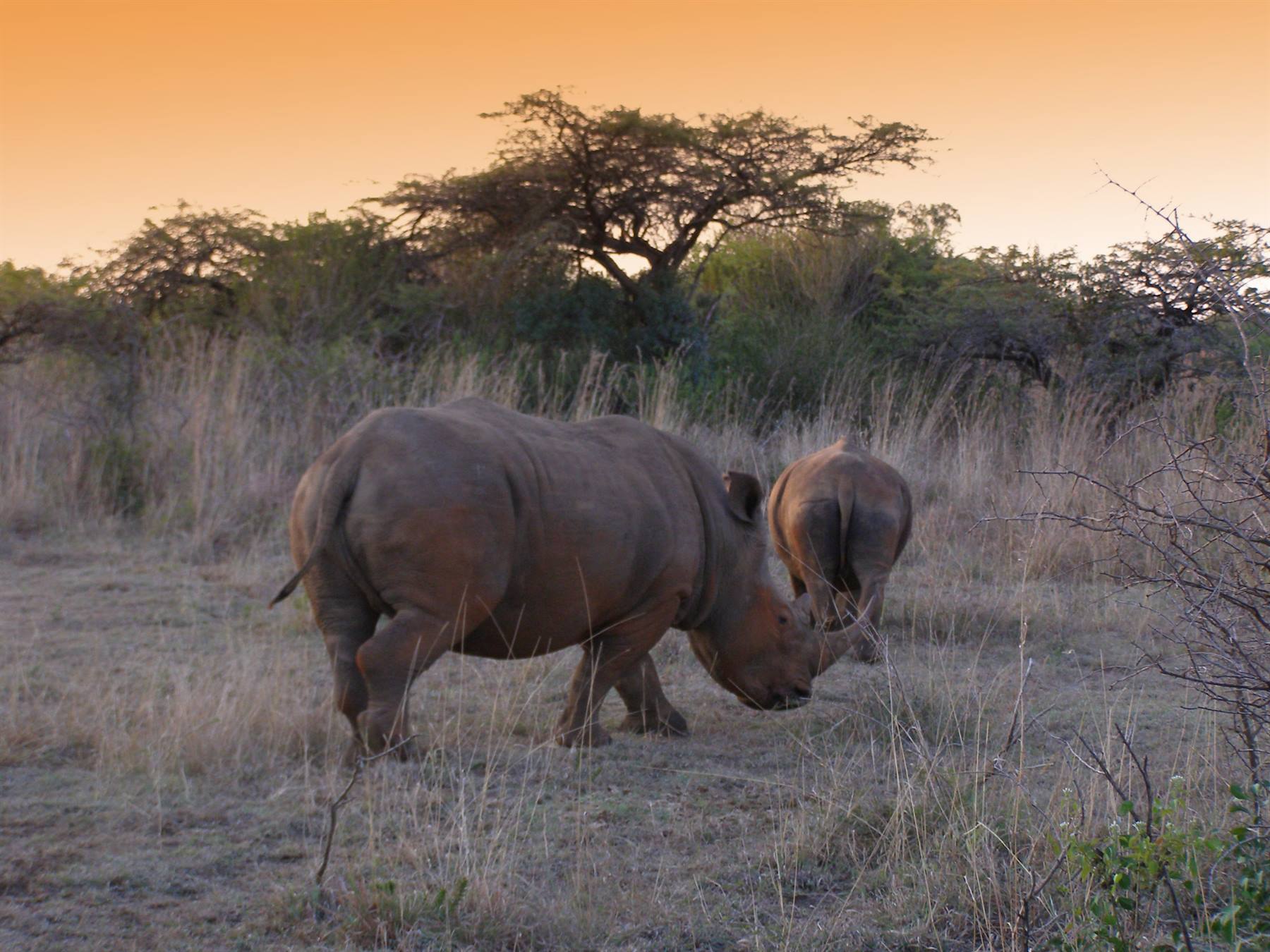
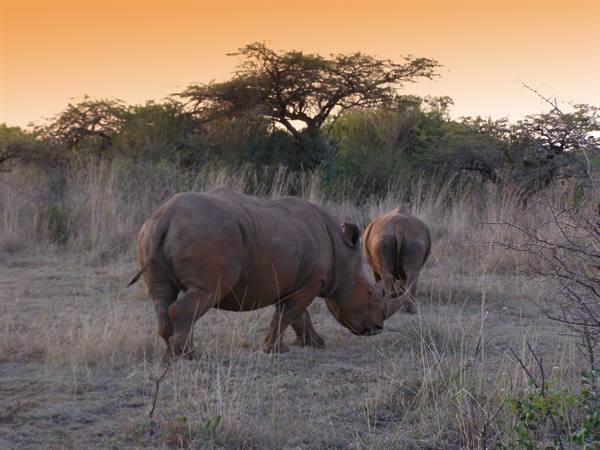
Two rhinos
Day 818 Jun 2006
Our first game drive in the savannah
Durban is a large subtropical city with a mild climate all year round, and with an intense and sunny charm, all the more so on a beautiful day like this. After breakfast we walk along the magnificent avenues of palms, crossing a great many people of Indian origin; the city's Indian community is in fact the largest in South Africa, with almost a million individuals. The day is beautiful and also very hot. Here too, as in Jeffrey's Bay, there are numerous surfers. We'd really need a good swim and above all to take a few hours of absolute relaxation, but not having much time we're forced to get back on the road, also because we have to reach the next stop by 13:00.
We stroll a bit on the seafront and on one of the very long piers, from which you get beautiful views of the city, and during the return to our hotel to pick up the suitcases, we recognize a distinguished man in jacket and tie who a few minutes earlier was enjoying the first waves of the morning. We continue on our N2 and just outside Durban we notice that the landscape becomes more and more "African," villages scattered left and right and with the typical circular buildings with straw roofs. We arrive at Hluhluwe and try to locate the entrance of the private reserve where our room is booked for a day.
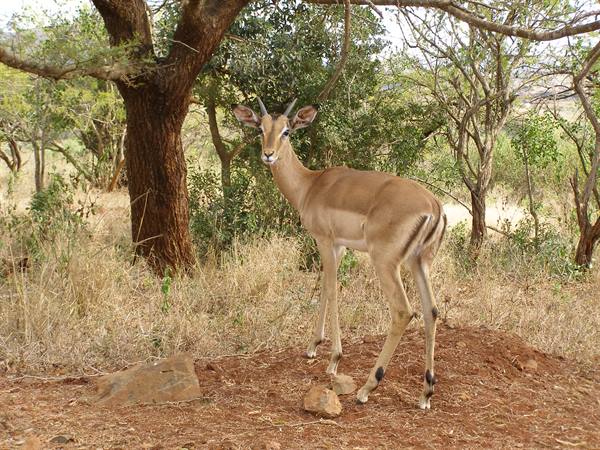
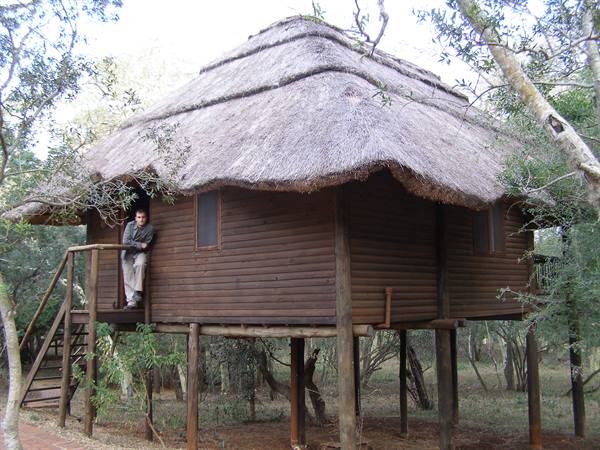
We enter the reserve and after a few meters we cross an impala, we're very excited, but right after we realize that it's the most common animal and that therefore we'll see them everywhere. After being welcomed with a nice welcome aperitif, our ranger accompanies us to our lodge. It's beautiful, all in wood and built on stilts to prevent animals from bothering us. Our ranger informs us that lunch is at 13:00 while at 16:00 we leave for the afternoon game drive. Lunch is quite good, but it's the setting that makes everything so unique, in fact the restaurant is outdoors and therefore animals of every type visit us, monkeys, impala, warthogs, nyala, etc. At a quarter to 16, after resting a bit, we get ready for our first safari, it's very exciting the idea of spending the next two hours in the middle of the African savannah.
Arriving at the entrance of the lodges our ranger waits for us with her off-road vehicle, ready, off we go. Today the safari takes place inside the private reserve. Our first animal of the day, after driving around for about half an hour, which was very interesting by the way, is a giraffe drinking at one of the park's ponds; it's beautiful, its image reflected in the clear water. After a while another one arrives and their alternating movements indicate that they're on alert to avoid being attacked by some predator. We leave the giraffes and a little further on we find ourselves in front of two rhinos; they're enormous and by the way they're also very scary. At a certain point one of the two turns toward us and with a threatening manner, surely annoyed by our presence, points at us.
At this point the ranger as a precaution engages reverse, but once the danger has passed we stop a bit more to admire these incredible animals up close.
After about an hour and a half of safari it starts to get dark, the sunset in Africa takes your breath away, the colors that intertwine with those of the savannah are unforgettable. As soon as the sun sets we realize that it's winter, the temperature drops considerably and then we're forced to use the blanket that our ranger had provided us.
We still see impala, Grimm's duiker, the greater kudu a large antelope with colossal twisted horns and numerous species of birds whose names we don't know and many many other animals.
Arriving at the lodge we drink a good hot tea and wait for 19:30 for dinner. There are many people and indeed the menu includes many traditional dishes, more or less good. After dinner we head to our room, but raising our eyes to the sky we notice that there are thousands of stars; the spectacle is impressive. We had never seen a sky like this, this is possible because there's no light pollution, given that we were isolated in the savannah.
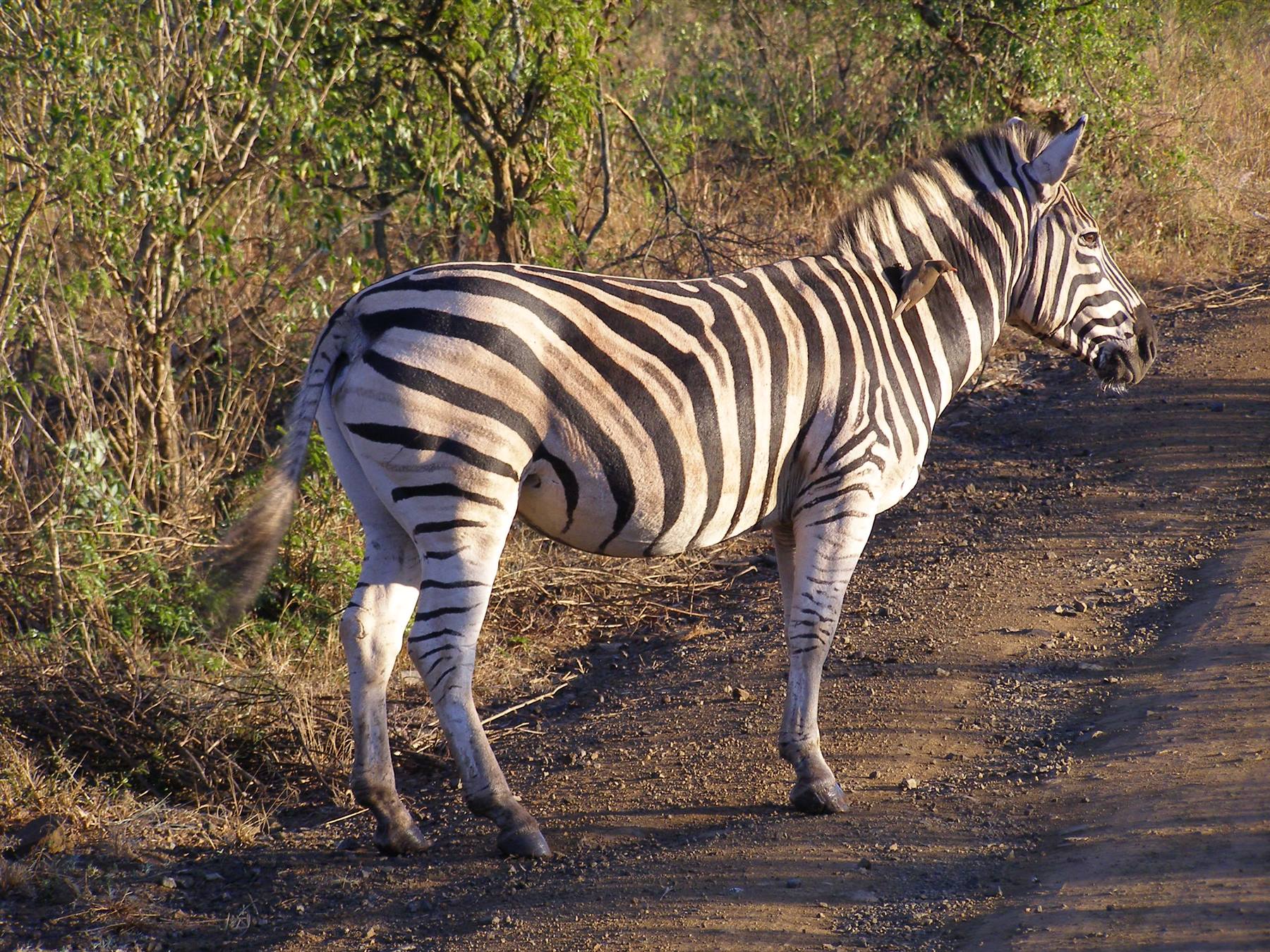
The zebra
Day 919 Jun 2006
Trip to Swaziland
At 5:30 in the morning a phone call wakes us with a start, it was our ranger giving us good morning. At 6 we were supposed to be ready for our excursion at the Hluhluwe-Umfolozi park. After about half an hour of driving, the jeep was open and it was terribly cold, we arrive at the entrance of the park. It's still dark, so you could practically see nothing but after seeing the sun rise, on our road positions itself
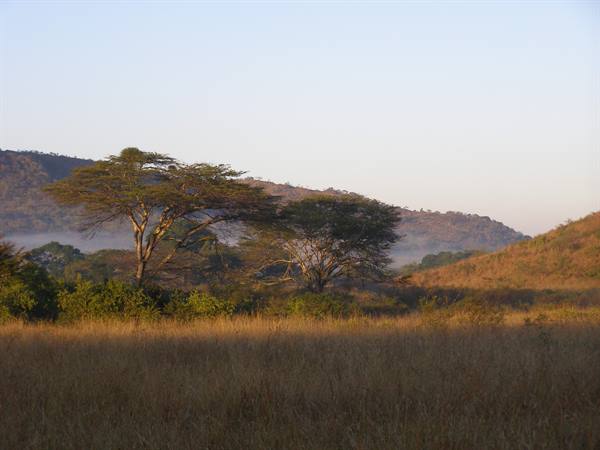
in front of us an elephant, the ranger tells us it's a male about 30 years old; it's indescribable to be able to admire an animal like that in its natural habitat. The landscape is like a postcard, the morning mist envelops the plains of the area.
The elephant will keep us company for about half an hour without us being able to overtake it, and the photos taken, naturally, are countless. Then finally our travel companion decides and goes to scratch himself along the banks of a dry stream that ran alongside the road. Continuing we encounter a zebra with its inseparable friend. The little bird that cleans it.
We reach a plateau and stop for a break, the usual rooibos tea and some pastries.
It's now more than two hours that we've been driving around, and meanwhile we still spot elephants, impala, giraffes and zebras, then at a certain point, right on the road we see the African buffalo, it's enormous, but to tell the truth it's not really that beautiful.
Around 9:00 we return to our reserve, with a bit of a rush we have breakfast and then off to our next destination.
We decide to make a small detour to go visit a Zulu village, but unfortunately they inform us that the village is uninhabited, only the huts remain, which once a week are reused for a show for tourists.
We get back in the car with destination Swaziland, the landscape is constantly changing and we see more and more often isolated villages with typically African constructions.
Along the road something incredible happens to us. Given the time, around 3 in the afternoon and not having had lunch yet, we stop along the road where some ladies are selling fruit. They don't speak English and therefore it wasn't easy to explain ourselves. We only wanted two bananas, while they understood that we wanted the whole bunch. After a while a young girl approaches who speaks a bit of English and helps us. The cost of the bananas was 2 rand and we give her 20, not wanting the change the lady starts screaming and jumping with joy. The happiness and the smile of that lady filled our hearts with joy.
Finally we arrive at the border, we have to get out of the car, enter the office for the visa because they have to fill out the documents all strictly by hand, the procedure is very laborious, but in the end they let us pass. Swaziland is a country with a mainly agricultural economy, rather poor but also very dignified, governed by a monarchy, which according to us, doesn't improve the living conditions of the inhabitants at all. Before arriving at our hotel we stop along the road to give away again some t-shirts and some pens to the children returning from school. A difference however between South Africa and Swaziland we noticed right away, in fact in this small state you don't see racism, neither in the street nor among the people. It's late afternoon but we decide anyway to go visit the nearby Swazi cultural Village.
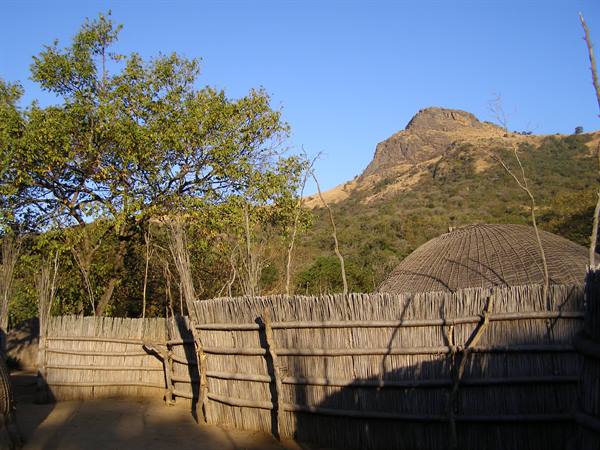
We proceed for a few kilometers through a picturesque landscape, rich in waterways and vegetation, near which is also the Mlilwane nature reserve. At the entrance of the village we find waiting for us a friendly guide in colorful costume, who accompanies us on the long and interesting visit. They let us visit only a part of the village and therefore we don't come into contact with the population but only with the guide who illustrates in detail the living conditions of the inhabitants. The village consists of about ten large huts, and reconstructs the various living environments of the Swazi population, based on cattle breeding. In some you can enter through the narrow and low opening, while the guide describes in English the functions of the various environments. Then our guide takes us to see the mountain and the waterfalls where once the young people of the tribe were initiated.
Now this practice has been abolished also because the police are very strict and attentive to these customs and therefore you also risk prison.
We arrive at the hotel where they welcome us with… … a glass of iced tea!!! We smile but pretend nothing happened. We have dinner with an excellent ribeye then to bed after having done almost 300km and already thinking about tomorrow when we'll have to do as many, not yet knowing what was about to happen to us.
The children of Swaziland
Day 1020 Jun 2006
A bit of rest in a villa in the Mpumalanga region
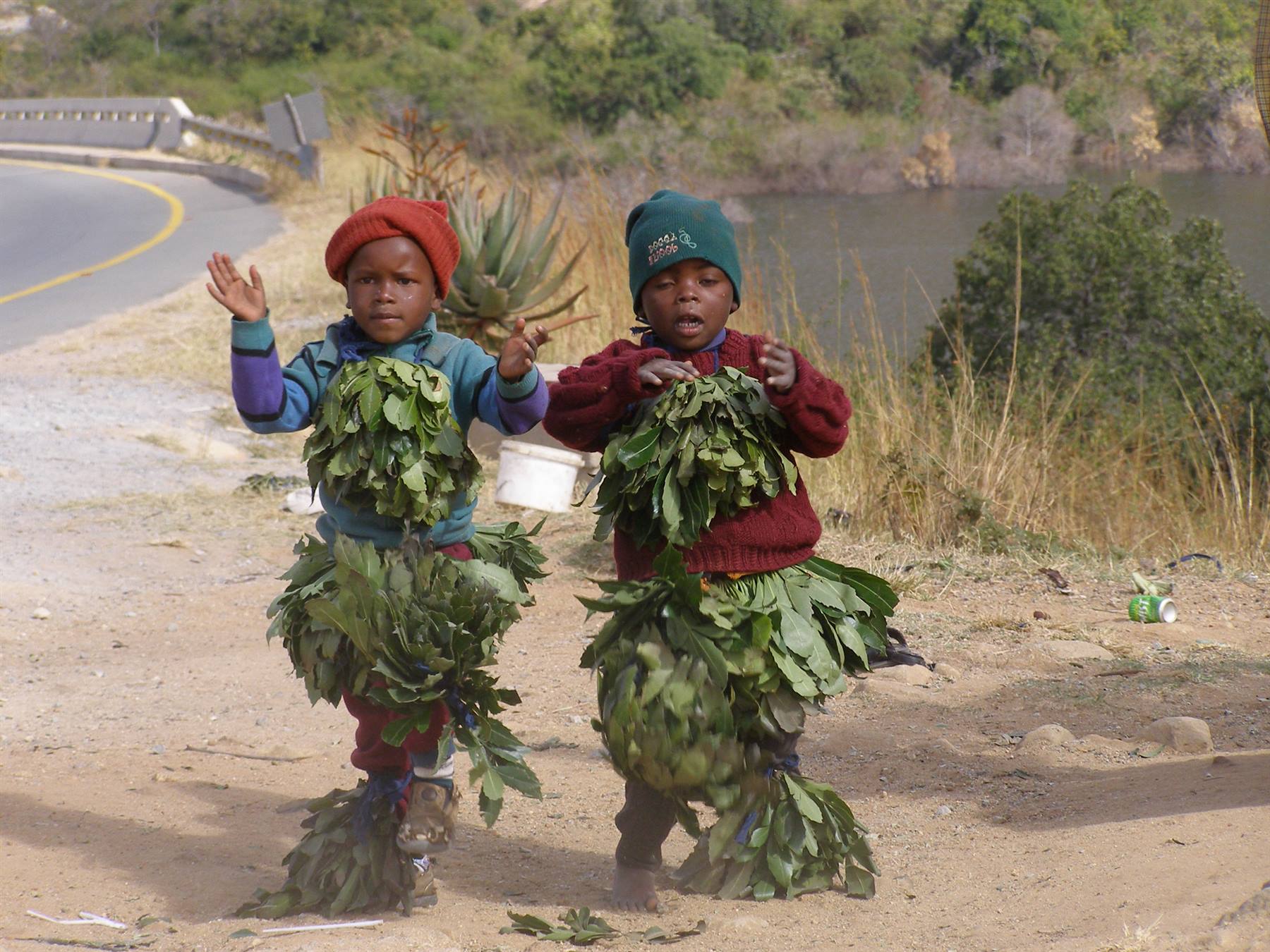
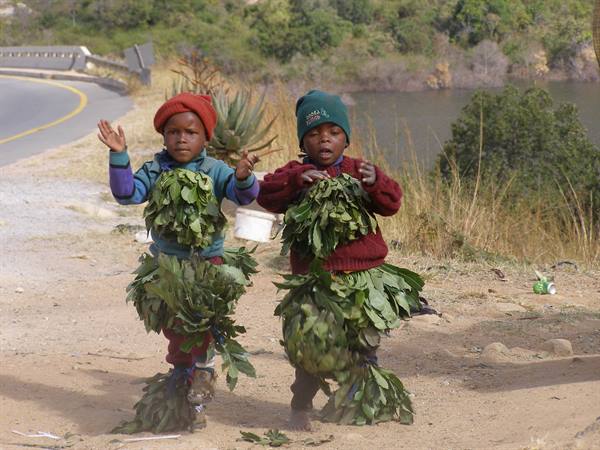
As usual we leave after having a hearty breakfast, we visit a local craft market and then off toward the border. We still encounter quite a few markets arranged along the road, and at some we stop for further purchases and contacts with the courteous local population. The local vendors, mostly women, in displaying their handicrafts, infect us with their joy continuing to hum popular songs. It's inevitable to make the comparison with our culture, much more reserved and increasingly selfish. Along the road some children dressed in banana leaves, dance to the rhythm of a drum, they're very small and they make us very tender. We give them all the money we have and then we leave again.
Before reaching the border we cross numerous villages scattered left and right of the main road. The houses are simply of mud and wood, incredible. To reach the border we have to travel a stretch of unpaved road. Also in this case, as for the entry into Swaziland, we have to stop and fill out the documents to set foot again on South African soil.
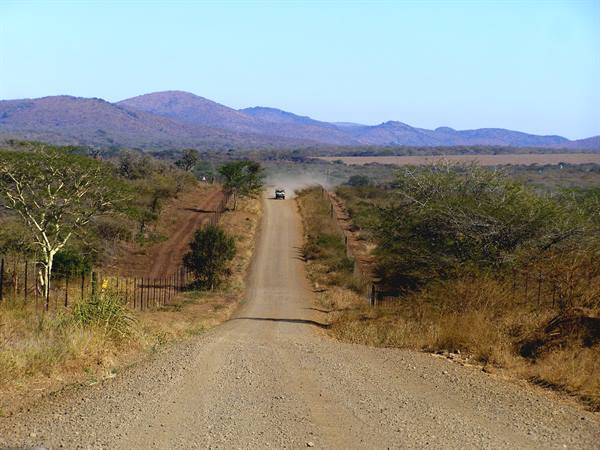
Once past the border another stretch of unpaved road awaits us, at first it's very fun but in the end after having traveled almost 100km of dirt road, seeing asphalt again seems almost a miracle.
During this stretch we encountered quite a few plantations of pines, firs and larches, but we didn't encounter a single person. If we had had car problems it would have been a real mess. We arrive at Hazyview, hundreds of banana plantations, right and left and as many sugar cane plantations. With a bit of effort, we finally arrive at our lodging, Casa do Sol Resort.
An enchanting Mediterranean-style villa immersed in greenery with well-kept gardens and conveniences of every kind. We take a walk in the internal park, the vegetation is very lush and after a restorative hot shower, we go to dinner. The food is exquisite and both the venue and the waiters are very very chic.
God's window
Day 1121 Jun 2006
Excursion along the Blyde river Canyon
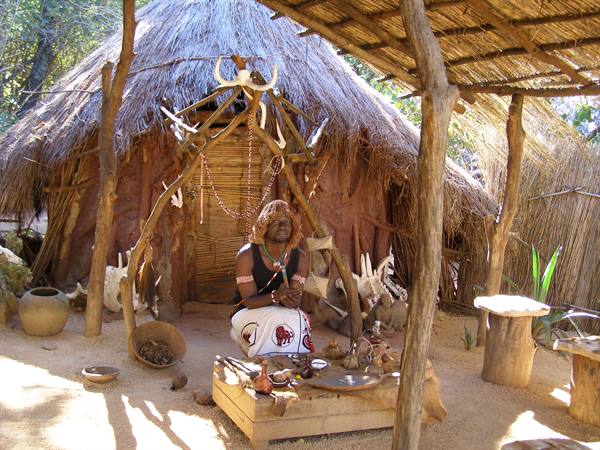
In the morning we go to visit a real tribal village "Shangana"; at the entrance our guide tells us that to enter we must ask the village chief for permission, who after making us kneel gives us a nod and lets us in. The village is very small but we can easily imagine what the lifestyle of this tribe is like.
Some women are building a sort of mat to sleep on and the men are making objects of various kinds.
Inside the village there is even the doctor or witch doctor who cures illnesses with roots and herbs from the area.
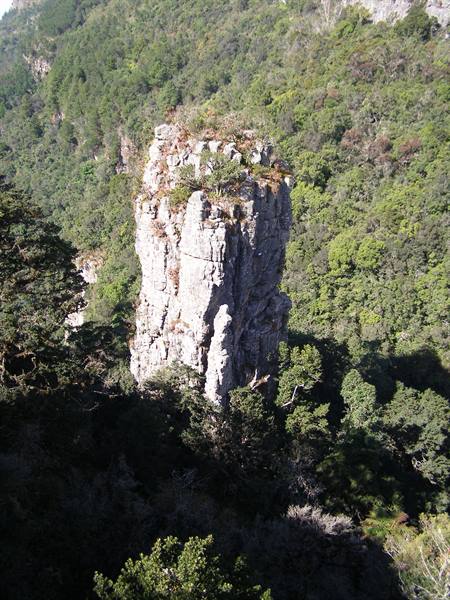
We set off on the road again to continue our itinerary, heading for Blyde River Canyon. The first scenic point is the pinnacle, a very tall rock formation rising toward the sky from a dense forest, but beyond that, nothing else. Continuing on toward the Blyde River we reach the town of Graskop, famous for its savory pancakes, and given that it's lunchtime we decide to stop. The pancake is truly excellent, the place is very popular with tourists and allows us to exchange a few words with two newlyweds from Bologna, also on their honeymoon, and considering that for about 10 days we haven't met a single Italian, we're very happy to chat with them.
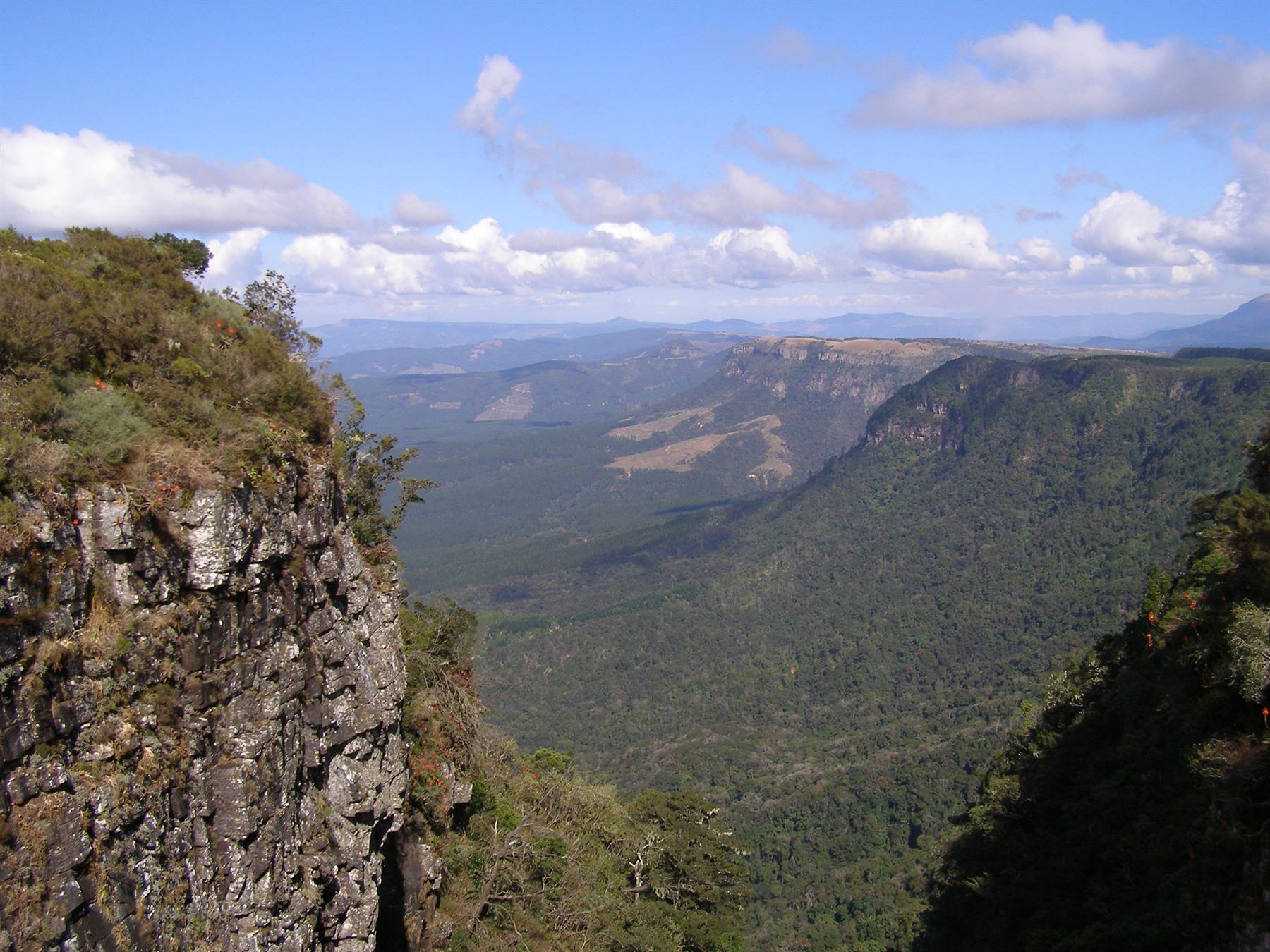
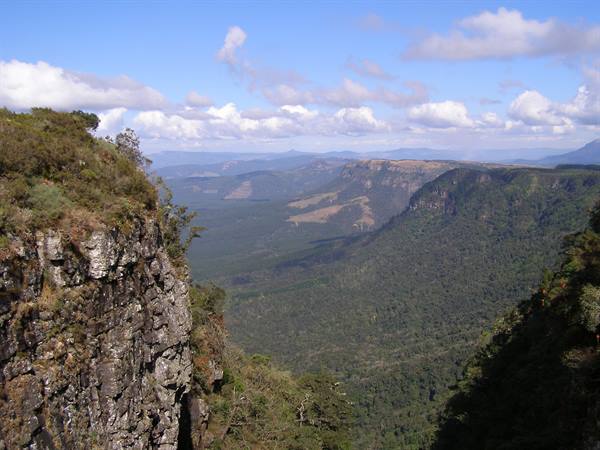
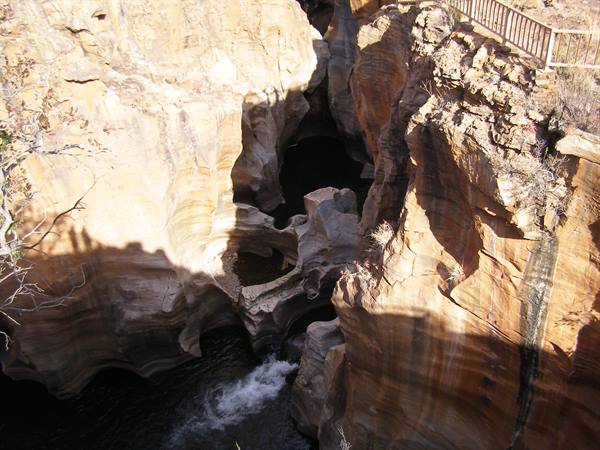
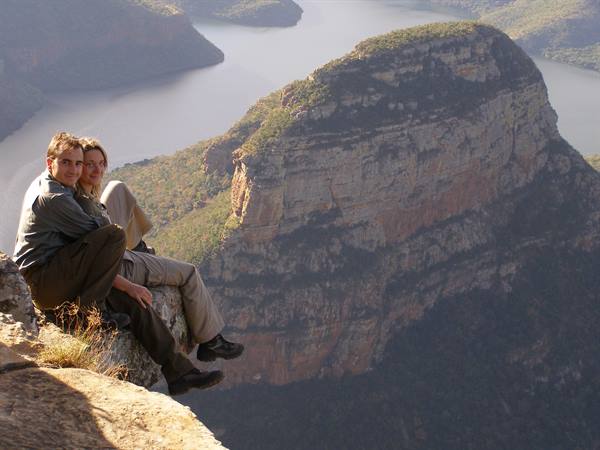
We say goodbye to them and set off again, until the next stop, "The God's of Window". The view is truly striking; we walk along a short equipped path that takes us onto a ledge that shows us the landscape below, about 1000 m further down. We make our way back to the car and before setting off again we visit the countless sellers of local crafts. Continuing along the canyon we reach "Bouke's Luck Potholes". After a short walk, we arrive in view of a small canyon carved by the river into the rock, where the river's whirlpools have formed bizarre cylindrical holes over the millennia. The scenery is truly magnificent; some bridges cross the river, in this dry season, to better admire the spectacle that nature has in store for us.
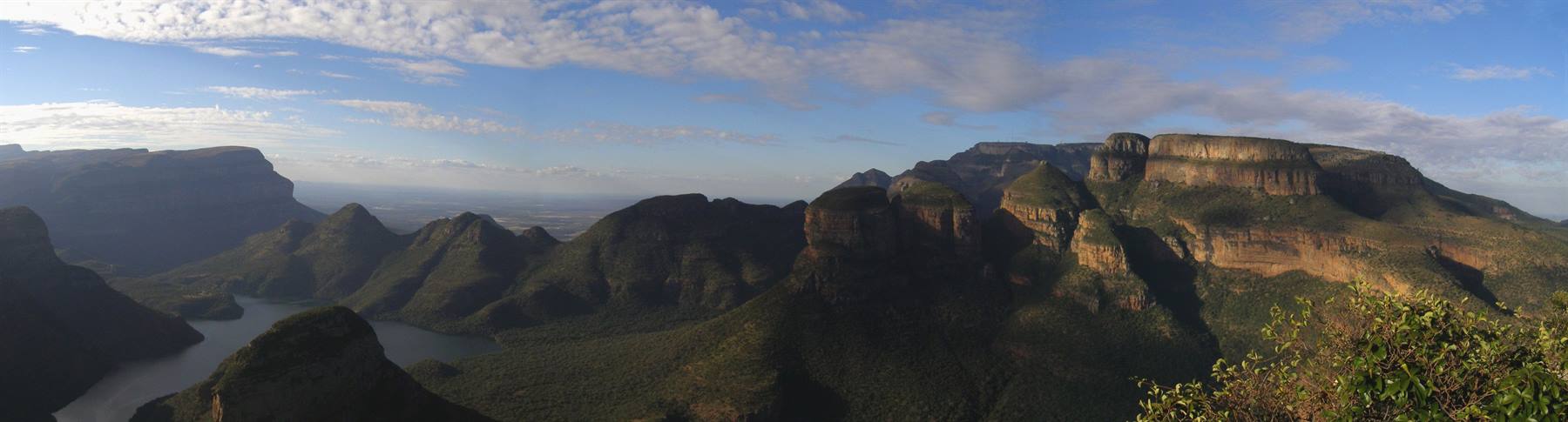
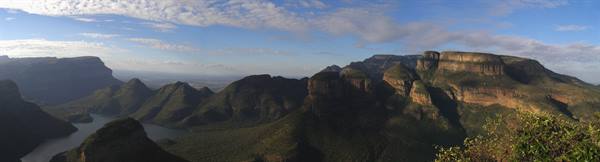
We then take the road north again, and over the following kilometers we stop a few times at various scenic points over the Blyde River Canyon, which at this point reaches its greatest extent. This is the third largest canyon in the world, and in this area it is truly spectacular, characterized by curious rock formations, among them the "Three Rondavels", three great natural rock towers covered in vegetation, shaped just like three huts.
We remain enchanted. The scenery that opens up before our eyes is indescribable; we stay at least an hour admiring it and taking numerous photographs. From here on the road slowly loses altitude, descending toward the plain, where shortly afterward we reach the town of Pilgrim's Rest, very famous in the early 1900s for gold prospecting. This very characteristic and evocative place has by now become exclusively a tourist destination after the gold prospectors abandoned it when gold began to run out. It's starting to get dark, so it's better to return to our accommodation. After about an hour's drive we arrive; we get ready and go to dinner at the second restaurant of the villa; as usual the dinner is very good, accompanied as always by excellent wine.
Only today, after about 10 days of traveling, do I realize that in a little while all this will be over, but before that the last reserve awaits us and consequently the safari. Inevitably a bit of nostalgia comes over me, but unfortunately all good things are destined to end. BUT WHERE IS IT WRITTEN, THIS HUGE BULLSHIT!!!
The Three Rondavels
Day 1222 Jun 2006
In the private reserve near Kruger Park
It's morning, and after waking up and having breakfast, we get ready, reluctantly, to reach the last stop. Passing through the villa's hall, the staff member hands us a little bag with food, dried fruit, cookies, fruit juices and much more, truly very kind. Along the journey that separates us from Hoespruit, about 150 km, we encounter several women working in the fields. It's worth noting that to harvest the fruits of the earth these ladies put themselves in truly uncomfortable positions, especially for their backs.
Meanwhile the landscape changes completely, until after the last turns the road becomes increasingly flat. From here the gaze begins to range over vast expanses of savanna, and we reach the entrance of the private reserve, not without some effort.
It's very characteristic and after offering us an aperitif they accompany us to our room. It's truly stunning and very evocative. They've assigned us the cheetah lodge, as one of the big five, which overlooks a stream and with a bit of luck we'll have the chance to see some animal that comes to drink.
We have lunch at the restaurant, also overlooking the riverbanks, and after also visiting the other spaces the facility provides us, pool, a shop and a garden, we finally set off on our safari.
We immediately set off in our jeep, we're in two groups, there's the ranger who drives the jeep and the tracker who follows the animals' tracks and communicates them to the ranger.
After driving around for quite a while we finally see an elephant grazing freely, we take numerous photographs and right after we go in search of some other animal. The private reserve is very large and offers the chance to see all the big five, even though we had already seen at Hluhluwe National Park the elephant, the rhino and the buffalo. By now it's gotten late and while we're heading back to the lodges we cross paths with two lionesses hunting, they practically pass half a meter from the car, it's an indescribable spectacle, but unfortunately it's too dark to take photos, oh well, maybe next time.
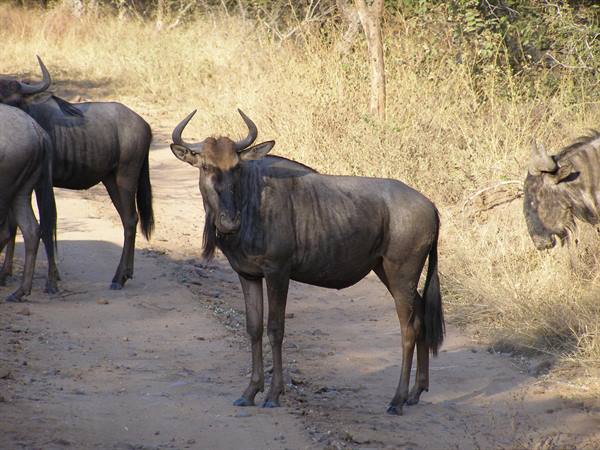
Some wildebeest
Day 1323 Jun 2006
A whole day in the savannah
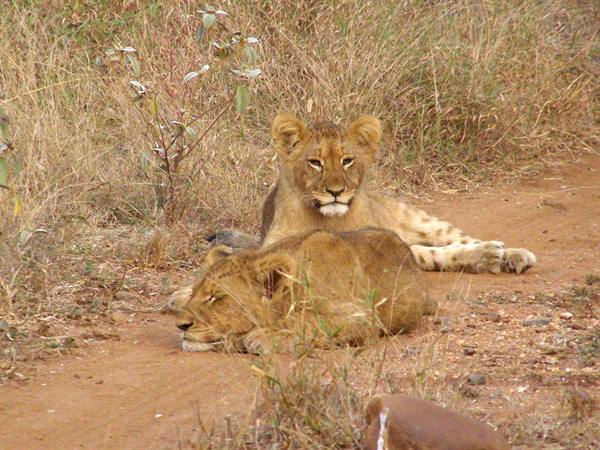
Around 6 in the morning our tracker comes to wake us, but we were already ready, and after drinking a bit of tea we climb back into the jeep for the morning safari, it's quite cold, the first animals we encounter are two jackals. Then our ranger takes us back to the trail where the previous evening we had crossed paths with the two lionesses, and as if by magic as soon as we arrive we immediately see that the whole pride is there. The leader, a young male, two cubs and two lionesses. The size of these felines is impressive, as are their tracks which reach about the width of our jeep's tire tread. We stay still for more than half an hour admiring these fantastic animals and then we set off again.
It's time for a snack, and having reached a clearing we set up camp. Shortly after we spot a group of impalas that are fighting with their horns for the position of dominant male of the herd.
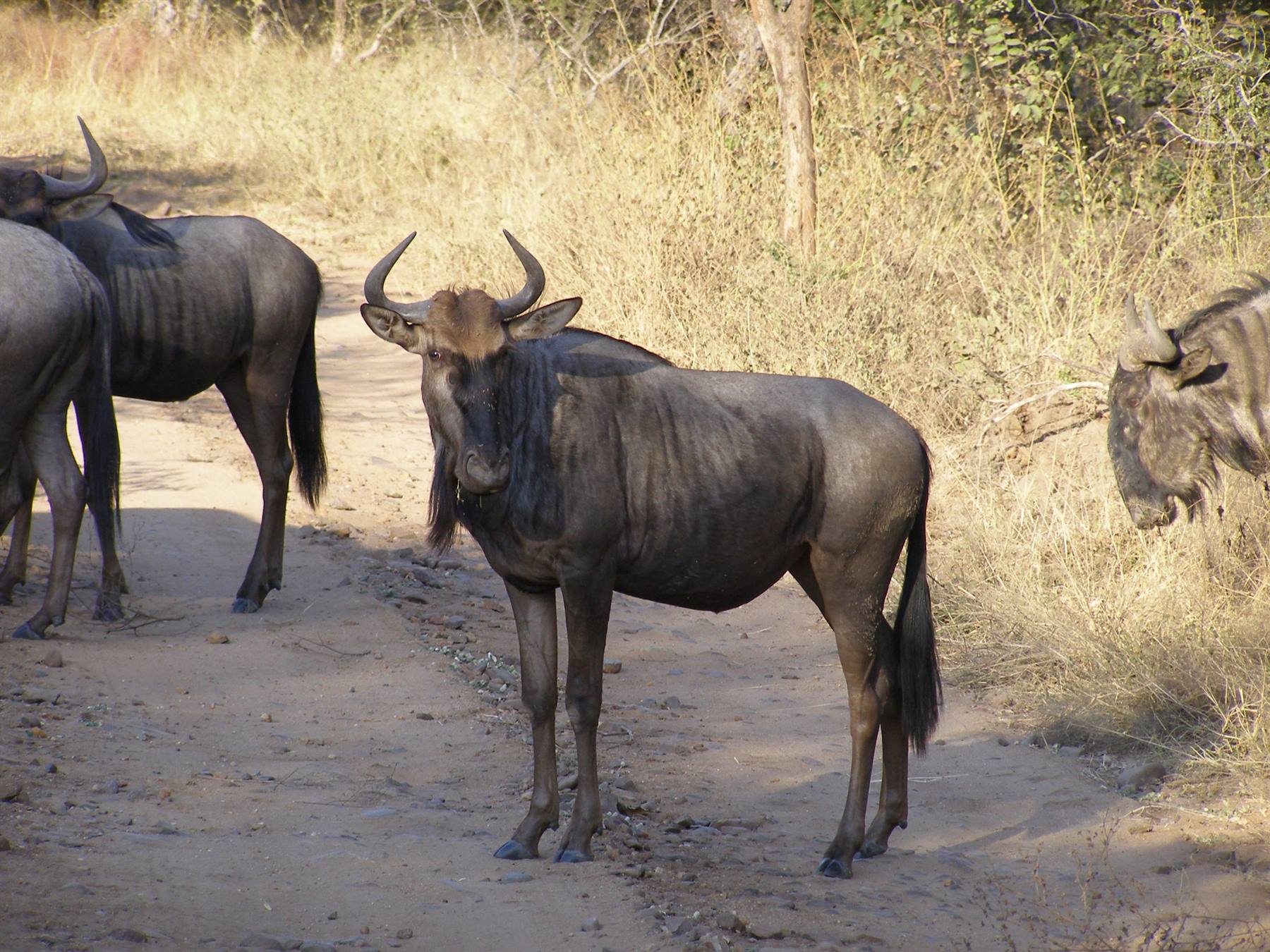
We then spot a large antelope, a group of warthogs, giraffes, elephants again, wildebeest, and many other animals.
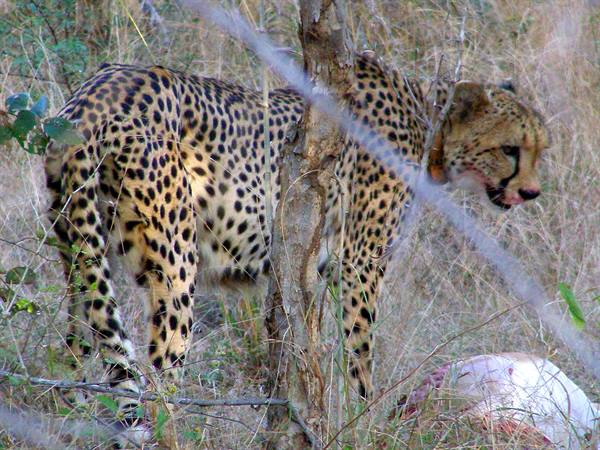
Then all of a sudden our tracker spots in the middle of the bush a suspicious movement, and after some maneuvering we realize that a cheetah is calmly consuming its food, unfortunately it's an impala, the sound of breaking bones gives you the chills. Unfortunately the position isn't the best so the photos aren't exactly crystal clear.
For dinner they build a big fire where the meats will be cooked that afterwards we'll all eat together cheerfully.
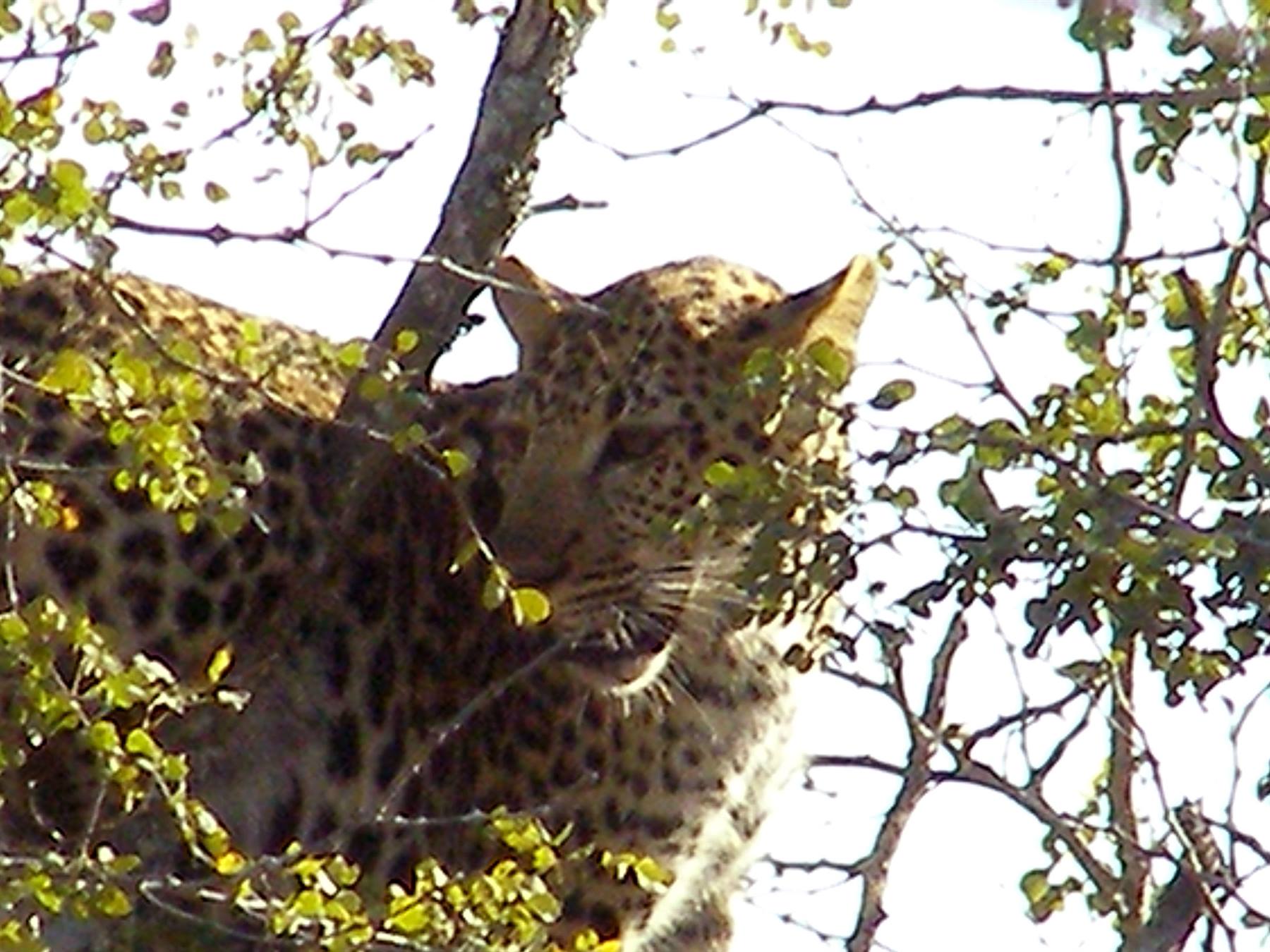
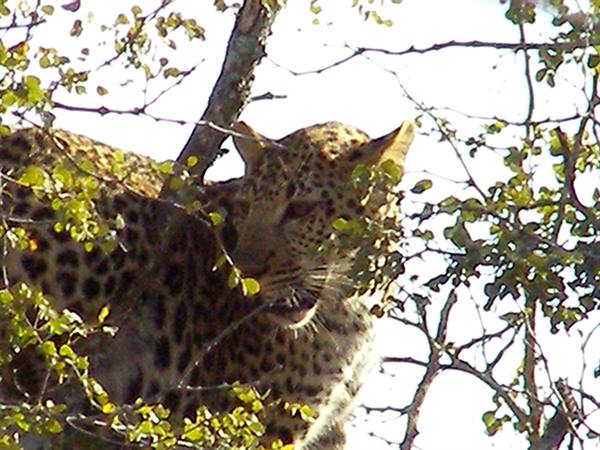
The leopard
Day 1424 Jun 2006
Our last day in South Africa
Dawn in the savanna is as spectacular as sunset, and the quiet of these places makes you feel free. Shortly after, again at the same little lake, we have the chance to glimpse a hippopotamus resting in total relaxation.
We're now on the way back, also because we've been out for almost two and a half hours, but suddenly we have the luck to admire a leopard right at the top of a tree, our ranger who had been in South Africa for about a year had never seen one, and having grabbed her camera she started taking numerous photographs, as all of us did, for that matter.
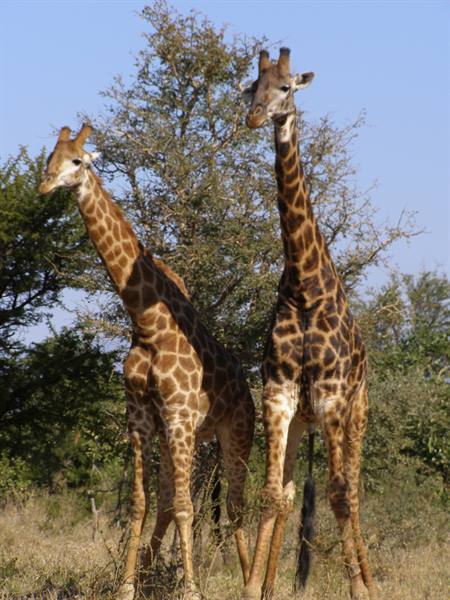
The last animals we see are these two magnificent specimens of giraffes, which let us approach without fear, so that we could see them up close.
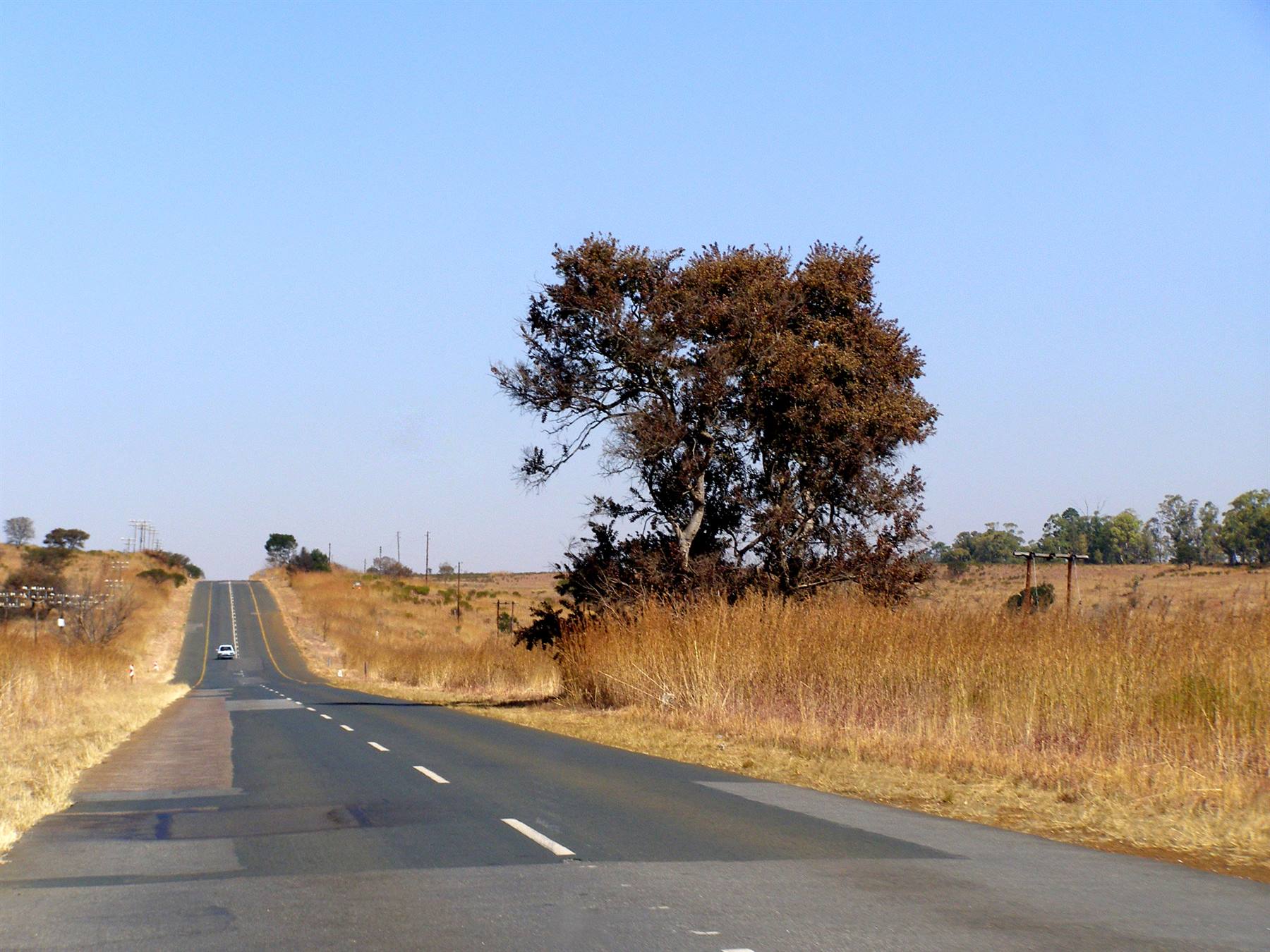
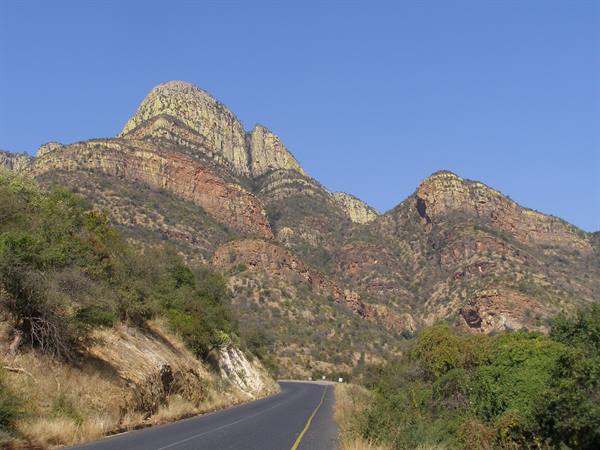
We pack our bags for the last time, and after a very abundant breakfast, we reluctantly leave this corner of paradise and get back on the road to reach Johannesburg, also because we have quite a few kilometers to cover before reaching the airport, while before us rises spectacularly the great mountain range that leads to the high veld.
During the stretch of highway that separates us from Johannesburg, and precisely at Withbank, we stop at a service area to eat something and unfortunately we get tricked by a group of men who steal our ATM card. This unpleasant mishap must not ruin our vacation, even though for a moment I was truly furious. But then given the situation and having managed to block the card from Italy, we got back on our way.
By now we're covering the last kilometers that separate us from the airport, while behind us we leave not only the kilometers traveled so far, more than 3500, but the indelible memories that we will carry forever in our hearts.
This magnificent place with its extraordinary people will remain forever alive in our memory and surely, and we are absolutely certain of it, this is not at all a goodbye but a see you again.








0 reader comments