Mossel Bay, Plettenberg Bay, Tsitsikamma, Port Elizabeth
When
17 Jan 2005 – 23 Jan 2005 7 days · trip of 2005
Who
ALBERTO GREGORI · @macgreg · CASTIGLIONE D'ADDA
How
Travel diary
The story · 3 days
The name Garden Route refers to the stretch of coastal road that runs from Mossel Bay down to Port Elizabeth (350 km), although the most characteristic part is much shorter. The Garden Route, one of South Africa's main attractions, is portrayed as a road that offers panoramic views continuously. In reality the road often runs far from the sea, and to get the best views you have to leave the main artery to reach the most fascinating places. To be honest I had a different idea of this area, I expected a much more scenic road.
That said, the beauty of the Garden Route remains, letting you cross a stretch of indigenous forest that is always green and surrounded by flowers in every season close to the Indian Ocean, and reach places that offer unrivalled views, between white beaches, jagged coasts, mountain passes, lagoons, lakes and waterfalls, all protected by efficient national parks, the Wilderness one and the more famous Tsitsikamma NP. I repeat, all these wonders are not visible by driving the Garden Route alone; short or longer and more tiring detours by car or on foot are often needed. There are two ways to visit the area: with your own car, following the road, or using a steam train that in a day covers part of the return route between George and Knysna: the Outeniqua Express. At least 4 days are needed to appreciate the places.
My guide and travel diary on South Africa:
Day 117 Jan 2005
The stretch of coastal road that starts from Mossel Bay and goes all the way to Port Elizabeth (350 km) is called the Garden Route, although the most characteristic stretch is much shorter. The Garden Route, one of South Africa's main attractions, is painted as a road that continuously offers panoramic views. In reality the road often runs far from the sea, and to get the best views you have to leave the main artery to reach the most fascinating spots. Honestly I had a different idea of this area, I was expecting a much more scenic road.
That doesn't take away from the beauty of the Garden Route, which lets you cross a stretch of evergreen native forest surrounded by flowers in every season right beside the Indian Ocean, and reach places that offer unparalleled views, among white beaches, jagged coasts, mountain passes, lagoons, lakes, waterfalls, all protected by efficient national parks, the Wilderness one and the more famous Tsitsikamma NP. I repeat, all these wonders are not visible by travelling exclusively along the Garden Route; detours by car or walks are often necessary, which can be short but also longer and more tiring.
There are two ways to visit the area: with your own car, following the road, or using a steam train that covers part of the round trip between George and Knysna in a day: the Outeniqua Express. At least 4 days are needed to appreciate the places.
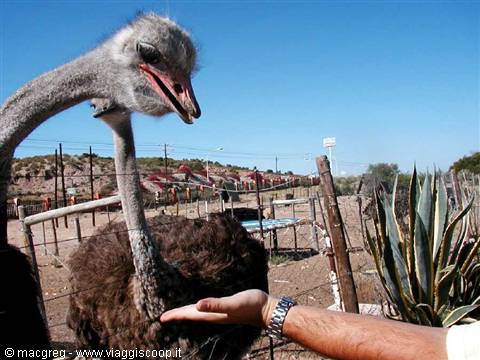
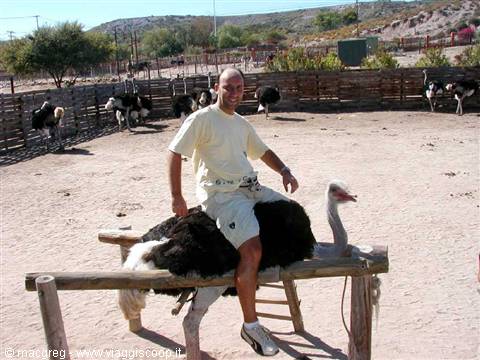
In reality, the gateway to the Garden Route can be considered the town of Outdshoorn, about 80 km inland, in a desert and rocky area. Here it feels like being in the Far West, the restaurants look like Saloons, but instead of horses, the farms are famous for hosting...ostriches. There are many farms you can visit to get to know these curious animals up close: the short tour lets you understand what products can be obtained from ostrich farming, you can walk on the eggs to understand their strength, feed them, you can even ride an ostrich and watch a race. From Outdshoorn you cross the Outeniqua mountains through a spectacular mountain pass, to reach the Indian Ocean, where you come across the Wilderness NP, established to protect the delicate ecosystem of the area, with lagoons that end in the sea, lakes and very white beaches, a paradise for birdwatching enthusiasts.
Continuing on you reach Knysna, a place famous for oyster farming in its characteristic lagoon, separated from the sea by two enormous rocky peaks called "The Heads". A winding road lets you climb to their top and admire a splendid panorama.
Plettenberg Bay, Robberg Beach
Day 218 Jan 2005
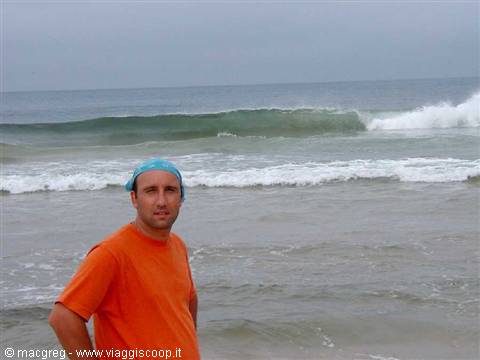
Continuing on you reach Plettenberg Bay, jewel of the coast, comparable in fame to our Portofino or the Costa Smeralda. It's here that we decided to spend 3 semi-lazy days, in a splendid B&B a few metres from the sea (Cottagie Pie, triple with breakfast about € 100.00 with extra-luxury hotel rooms and service). Plett, as it's called, is truly incredible: the centre is on a little hill overlooking the sea, and at its feet there are 3 fantastic beaches, two of which are over 3 km long. On the beach you're practically almost alone all day long. The sea isn't very clear because of the big waves, but it's still extremely clean and unspoiled and the setting is magnificent.
The beach lends itself to long walks among the shells, and lets you discover still untouched environments, where the flowers end right by the sand, the seagulls on the beach far outnumber the beach umbrellas, and the waves continuously carry in the little sea snails that hurry back into the water. Often, scanning the horizon, you see dolphins jumping in the ocean.
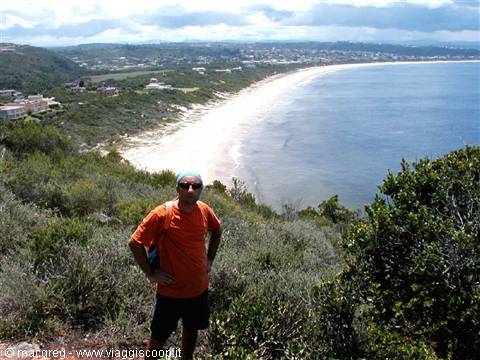
Plett's bay is dominated by the Robberg Peninsula, a promontory that stretches into the sea for 2 km. It's a must-stop for whales, which in winter make their long migratory journey.
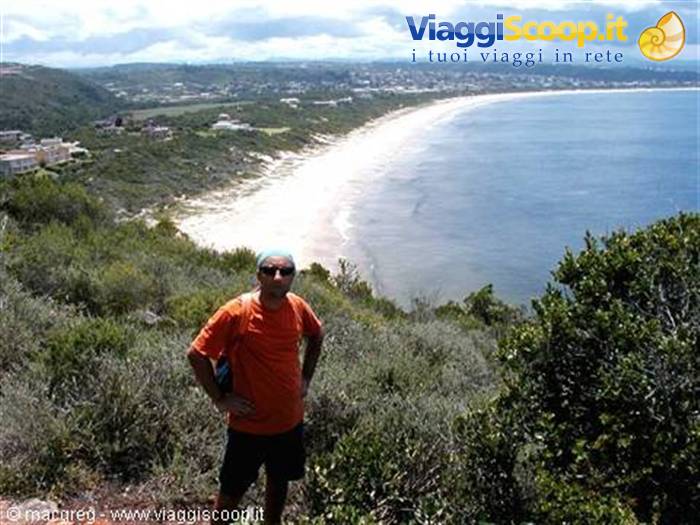
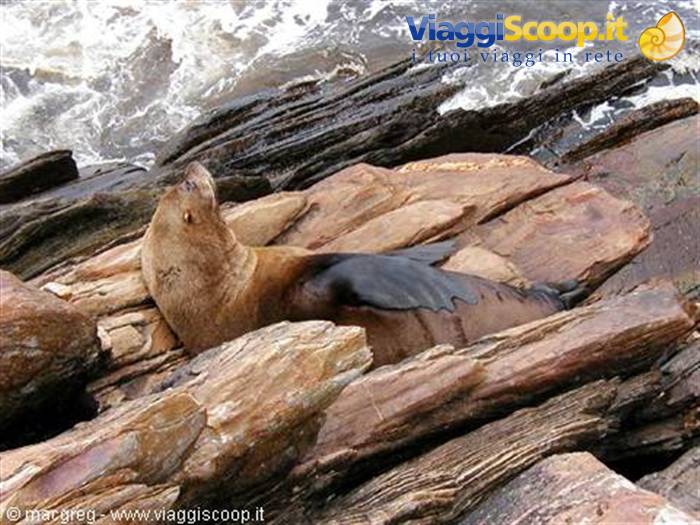
Circular routes allow for an unforgettable trek. The walk starts from the parking lot, then climbs into the mountains where you overlook the whole Robberg Beach and find yourself right above the sea. The seals seem to call you, the view is unparalleled. You then cross the mountain and find yourself in the middle of white dunes that reach all the way to the sea, where a strip of sand separates two seas. You can treat yourself to a swim in the waters that at this point are a bit chilly, but it will be an unforgettable and solitary swim, accompanied only by the call of the seagulls. (duration 2.30 hours).
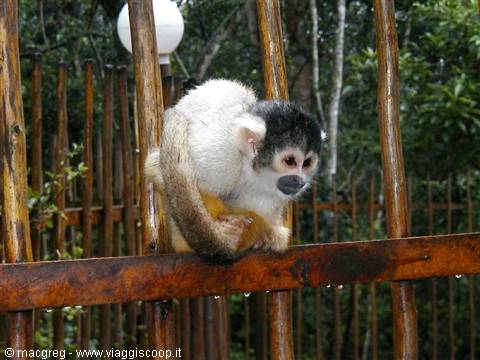
Near Plett, a visit to Monkeylands is a must, a park established to introduce monkeys into their natural environment. With a walking safari through the thick forest, it's possible to admire a large number of primates, some very curious ones that accompany you on the walk.
Tsitsikamma NP
Day 322 Jan 2005
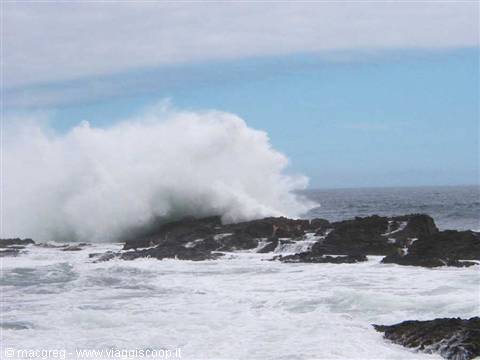
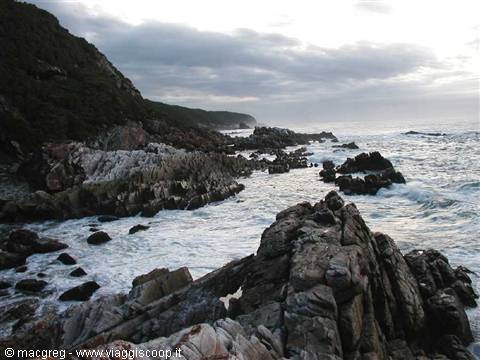
The last stop of the Garden Route, heading east, is the Tsitsikamma N.P., which protects almost 60 km of coastline and mountains entirely covered by forest that reaches all the way to the sea. The sea in this stretch is magnificent, there are no beaches but rocks, the waves crash against the boulders and create sprays up to 10 metres high. The park's chalets, entirely made of wood (€ 100 family chalet for 5 people), are located a few metres from the sea, and grant an intense moment in contact with nature and the immense roar of the ocean. In the evening you can dine with a brai (grilled meats, a typical South African dinner) directly on your own terrace facing the ocean with your own barbecue available.
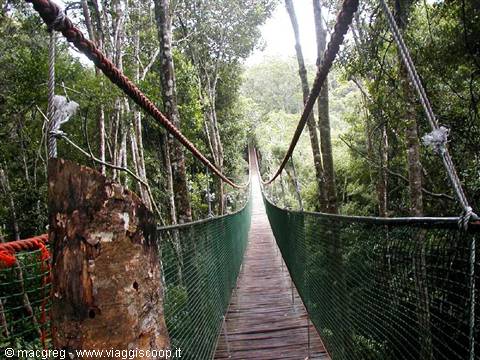
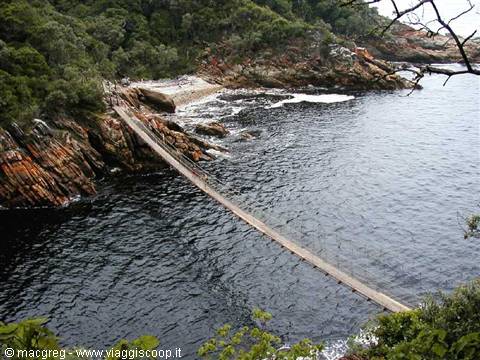
There are numerous trails to walk in this area: the most accessible is the Mounth Trail, one hour (round trip), which crosses the forest until it reaches a suspension bridge where the Storm River meets the sea.
From here also starts the most famous trekking route in South Africa: the Otter Trail, a trail lasting 5 days, to be booked a year in advance, which lets you cover almost 50 km of coastline.
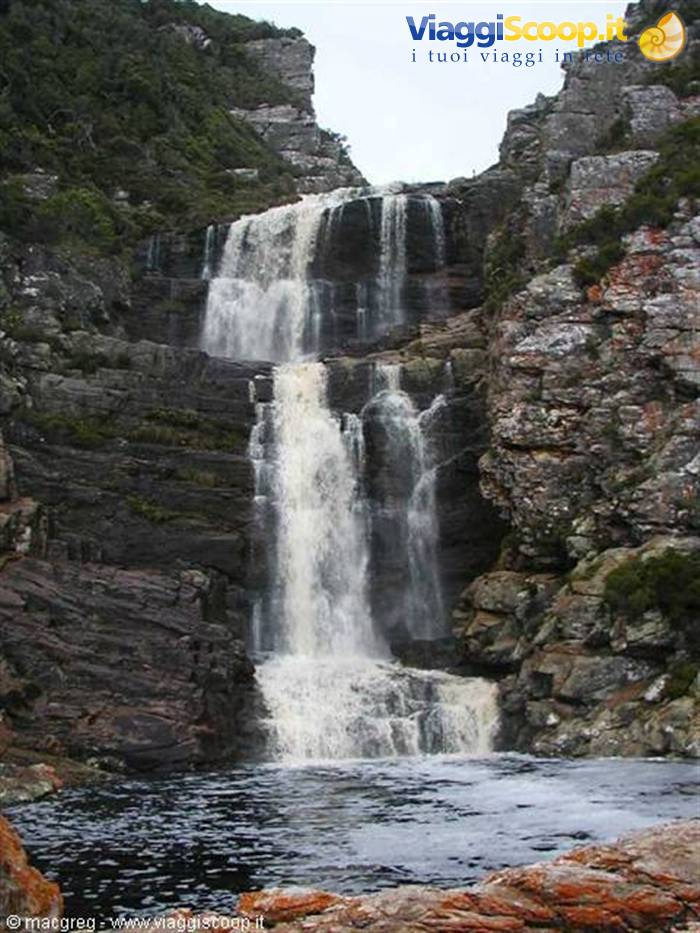
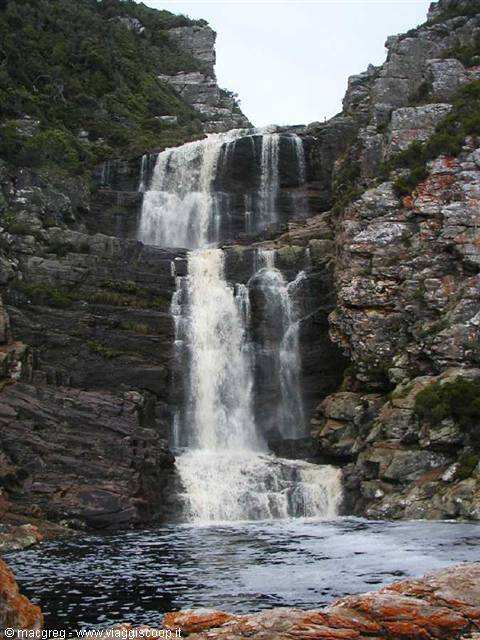
The following morning, wake up at dawn (5 o'clock, also abandoned by my wife who withdrew out of laziness), to walk the first stretch of the Otter Trail which reaches a waterfall that plunges directly into the sea. At this hour the colours of the dawn are exceptional despite the cloudy weather, the absence of other people makes the route electrifying and relaxing: a few unforgettable moments, you and nature, an encounter that should be rediscovered more often.








0 reader comments