The story
A month between Senegal and Guinea.
It's my twelfth trip to Africa, yet the wonder in front of the colours, the light and the contrasts remains untouched; just as it is always hard to come home, with a heart full of melancholy and the urge to set off again as soon as I can!
We don't travel as tourists, but as volunteers. For six years we have been committed to developing projects for the affirmation of the fundamental rights to health, education and a life of dignity in four regions of Senegal. In Dakar we have a small rented house, shared among about ten of us; in the other regions we stay as guests with the local communities, so we simply have to adapt to the living conditions of the place. These are villages without electricity or running water.
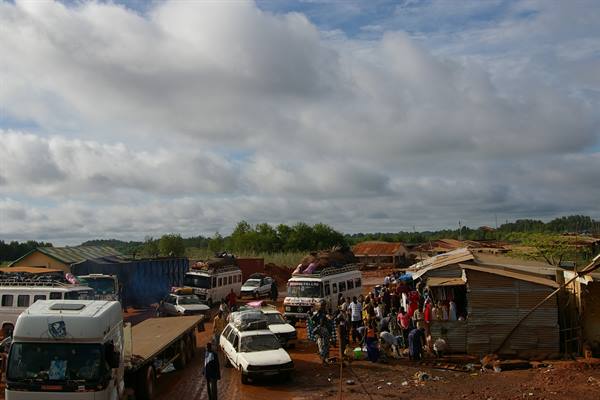
We get around strictly on local means of transport: taxi de brousse, ndiaga ndiaye and car rapides... the journeys are endless and far from comfortable, but at least we are close to the people. We travel to monitor the state of the projects, to meet the children of the distance-adoption programme, to organise new activities.
During this month we survived all the Muslim and Catholic holidays, the three days of mourning for the death of the Grand Marabout of Touba, the threats of a general strike in Conakry and the start of the Africa Cup of Nations... and we managed to complete all the activities we had set out in our calendar. It isn't easy to describe the encounters and the emotions; we'll try to do so through our activities.
We started the first community garden in Casamance, at Diourou. We were able to buy the pump for the well, various farming tools such as ploughs and hoes, watering cans and various seeds. The village health centre carries on at full pace and now we want to equip it with a gas fridge to store the medicines most sensitive to heat and humidity. In Diakine, meanwhile, the village group working on the social centre project has managed to raise all the funds needed to buy the iron, and they will be able to start work on the actual construction. The library has already been completed and the first books will arrive in the coming months. In Bignona and Thionck Essyl the youth group is carrying on with its livestock and farming activities, and the projects for non-violence in education in the Kadiamor district are moving forward too, along with all the women's activities.
Now to the north of the country: new groups have been born at Kaolak, Saint Louis and in the Thiaroye district of Dakar. The women are extremely active everywhere: in Popenguine with fabric dyeing; in Sebikotane with the production of fruit juices and jams that will very soon be exported; in Parcelles Assainies with micro-gardens. The women have managed to rent a plot of land and expand their activities, growing not only lettuce but also beans and other pulses essential for a complete diet. In Dakar, too, the volleyball team's efforts to collect medicines continue, as do those of the Cité Avion community to support the poorest residents of the district. In Fatik the health campaign against cholera and the awareness-raising work in the surrounding villages have begun.
It is extremely difficult to summarise and at the same time give a complete picture of what our reality is today: a great many grassroots activities, "concrete" constructions taking shape, the lasting commitment of the communities. Our thoughts turn to the future and to all that remains to be done. Above all, the campaign to prevent and fight malaria.
Malaria is a problem that affects all of Senegal and people of every age; our aim is to involve a huge number of volunteers in direct, concrete help that joins the non-violent claim for one's rights, and in particular the fundamental right to health. The campaign will start from the places where we are already active and reach new villages and new districts, and it will run throughout 2008 with a range of activities: medical consultation days, distribution of mosquito nets, awareness and prevention, cleaning of districts and removal of stagnant water, periodic marches for the right to health. We also plan to build two new health centres and start other community gardens to guarantee good nutrition and rescue the land from neglect.
Our commitment will be enormous in Italy too: we want to bring to public attention the gravity of the problem, this slaughter that sees 2 million people die every year and that nobody talks about or cares about, and the corruption that lets some speculate and profit from the health of the poorest. We are making a documentary and we have already made contact with local radio and television stations that can give us some airtime to talk about all of this.
We are looking for many volunteers to join our campaign: there are many small actions you can take that give a deeper meaning to our lives and can save the lives of others. Sometimes it isn't easy to set aside your own problems, find the time or, quite simply, trust. But once you start you discover that by thinking of others your own problems can take on a different dimension; that in the end we do have a little time, and that it is always and only a matter of listening to your own desires.
Volunteering is good for physical and mental health; in this case the only thing you can catch is a heart-breaking Africa blues, but the remedy is always there: a little coupé décalé...
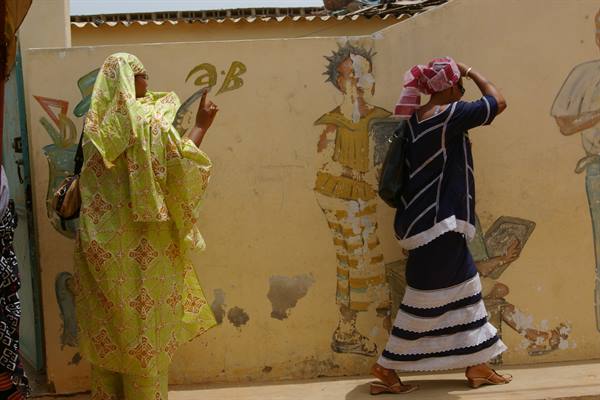
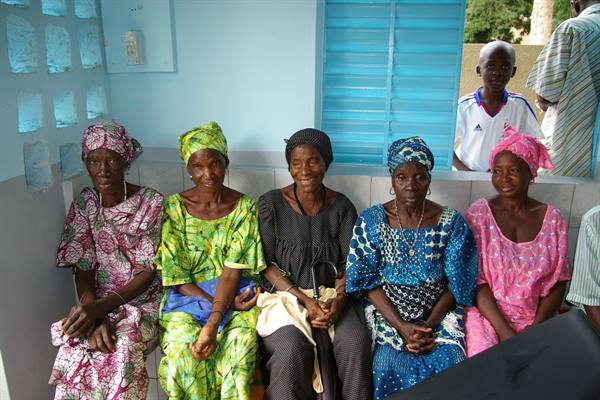
The journey's photographs
4 photographs · click to open them full screen

0 reader comments