The story
A week in Mozambique: after renting a car in Maputo, we headed north along the coastal road, the first night in Inhambane, the second night camping at Vilankulo, from where we organised the unforgettable excursion to the Bazaruto archipelago. Mozambique is a country rich in an extraordinary variety of ecosystems: wide marshlands, mangrove forests, rich marine habitats along the coasts, mountain forests between the Chimanimani mountains and the Gorongosa massif. This country is home to a vast flora that includes numerous endemic species, about 250 of the 5,600 catalogued. In Mozambique there are also 200 species of mammals, 170 species of reptiles and 40 types of amphibian, but it is among the marine species that the most interesting specimens are found, such as bottlenose dolphins, humpback whales, dugongs, loggerhead turtles and green turtles.
Another fundamental part of this country's ecosystem are its bird species, as many as 900 identified in southern Africa. Finally there are the endangered species such as rhinos, dugongs, the African wild dog, the blue wildebeest, the roan antelope and the rock python. Of all these animals, the one that has recently attracted the most international attention is certainly the dugong. This animal, belonging to the Sirenia family, is about 3 metres long and weighs roughly 150 kg; its food consists mainly of sea grasses and algae, and its closest animal relative on land is the elephant. In the past it was hunted for a long time because of its succulent fatty meat, to the point of being put at risk of extinction. Today it can be sighted near the Bazaruto archipelago, Inhambane Bay, Angoche and Mozambique Island.
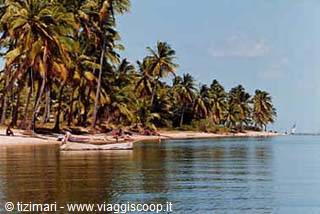
The Bazaruto archipelago, located about 15 km from the coast between the towns of Vilankulo and Invasolo, is made up of 5 main islands and many smaller ones: the islands of Bazaruto, Benguerra, Magaruque, St Carolina and Banguè. Since 1971 the archipelago has been included in the Worldwide Fund of Nature, since the ecosystem is the habitat of many protected species such as the loggerhead turtle. Moreover, these warm waters host the largest concentration of dugongs in East Africa. Large colonies of birds populate the coasts with their very long beaches, while spectacular sites for diving and snorkelling will delight diving enthusiasts; many of these sites are almost entirely unexplored.
Deep-sea fishing can also be practised, with outings organised to hunt tuna, swordfish, barracuda and black and blue marlin, always with respect for nature and the surrounding environment, preserving its habitat.
The journey's photographs
4 photographs · click to open them full screen



1 reader comments
Tutti splendidi i tuoi viaggi negli angoli remoti del pianeta. Complimenti!