On the road among mountain passes, oases and deserts
Morocco is a truly extraordinary country that strikes you for its variety of thrilling landscapes: the southern region in particular offers a mosaic of unusual and extraordinary images and a sensational kaleidoscope of colours. Starting from the fascinating and chaotic Marrakech, you cross breathtaking mountain passes, traverse delightful oases that appear like mirages amid arid plains, to end up in the majestic and dramatic Sahara desert, with the tall immaculate dunes that give the most exciting feeling of the whole trip. The ancient ochre-coloured kasbahs appear as if by magic among the bright green of the palm groves, while the snow on the highest peaks contrasts strongly with the desert landscape and the warm spring temperatures.
Framing this postcard are slices of everyday life at the edge of imagination: in some places it feels like being catapulted back over a century, living conditions are really difficult, but the kindness and smiles of the people are truly unique and unusual.
Morocco offers an excellent value for money and the possibility, with just a three-hour flight, of finding yourself in a reality completely different from the one we're usually used to and spoiled by. The Easyjet flight from Malpensa (06:30 - €55) forces us to get up at dawn, but gives us the chance to arrive in Morocco and have the whole day available, considering that it's a very intense day. After the queue for the document check, which I expected to be longer, we head to the Europcar desk to pick up the car that will accompany us for the whole week (€250 – 7 days, Citroen C3). By 9:30 we already have our vehicle, with the bodywork already nicely dented and interiors certainly not luxurious. So much the better, we won't have to worry about any scratches or flying stones...
Leaving Marrakech in the direction of Ouarzazate, we can already guess the reason why Morocco's roads are considered among the most dangerous in the world: along the whole route we'll have to reckon with dizzying hairpin bends, enormous lorries, donkey-drawn carts, children and people walking on the road and then....it seems the national sport is to deliberately and with extreme phlegm cross the road when a vehicle is about to approach!!!
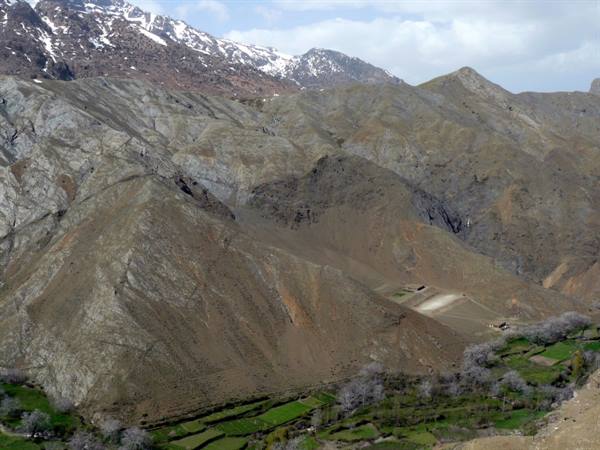
The thermometer already reads 24 degrees: the plain soon gives way to the first climb that crosses a fairytale-green valley, with dense vegetation. You keep climbing faster and faster and the vegetation gives way to splendid, solitary snow-capped peaks, precipices and stunning canyons and majestic high-mountain landscapes, until you reach the famous Tizi-n-Tichka Pass at 2260 metres. In some stretches you proceed at an average speed of 30 kmh, the hairpin bends are narrow and the climb very steep. We make a few stops along the way to take photos; in fact the landscape is so beautiful that you should stop every kilometre, and it will be like that for the whole trip. The descent towards Ouarzazate is gentler and you can keep up a higher speed: we reach our hotel after about three and a half hours of actual driving, stops excluded.
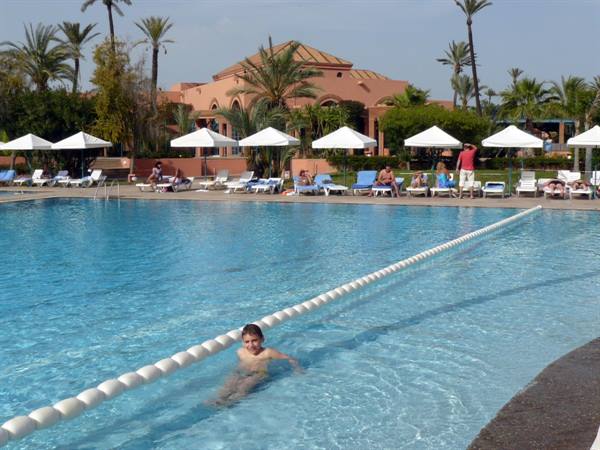
The hotel, the Kenzi Azghor (€50 with breakfast on booking) is nice and offers a lovely pool, and given the beautiful warm day (26 degrees, we're at 1200 metres altitude), we decide to relax a bit before going out for our first visits. The sun is scorching, the water freezing, it must be 16 degrees... but no one can stop little David and after two minutes he's already in the water yelling about the cold!!!
We go out in the late afternoon and visit the Atlas Studios, where the sets used for numerous films, such as Tea in the Desert and Asterix, are located. The place is a bit of a rip-off and the €5 entrance fee is exaggerated. The sets are abandoned; what saves it is the reconstruction of the Egyptian times and the splendid view over the desert.
On our way back to Ouarzazate we take the secondary road that crosses the long town oasis and passes by the evocative kasbah of Tiffoultoute, which with the colours of the setting sun cloaks itself in red. For dinner we decide to stay at the hotel since we're quite tired (the alarm went off at 3) and we settle into the hotel's desolate restaurant (we're the only ones, then another 7-8 people arrive) which offers a scant buffet: rice, grilled chicken, meatballs, vegetables, a few desserts, but at least we only spend €20 for 3 (I recommend paying in cash directly at the restaurant, it seems to cost less than charging it to the account).
Taourirt
Day 215 Mar 2009
Ouarzazate – Zagora
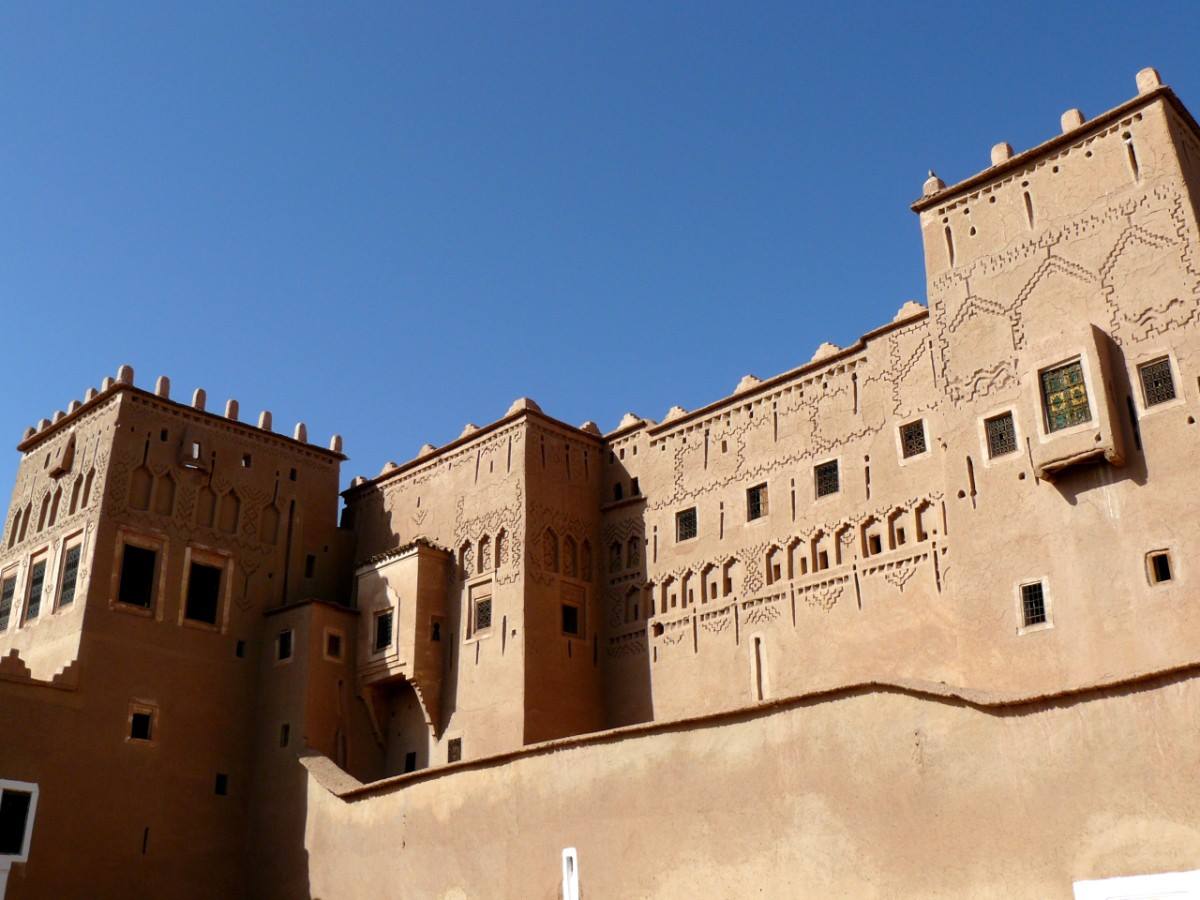
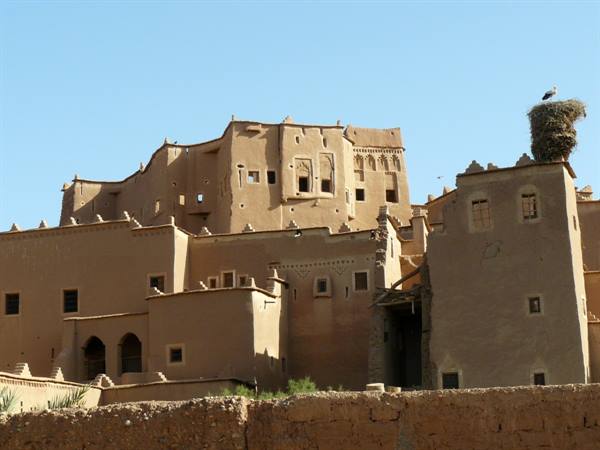
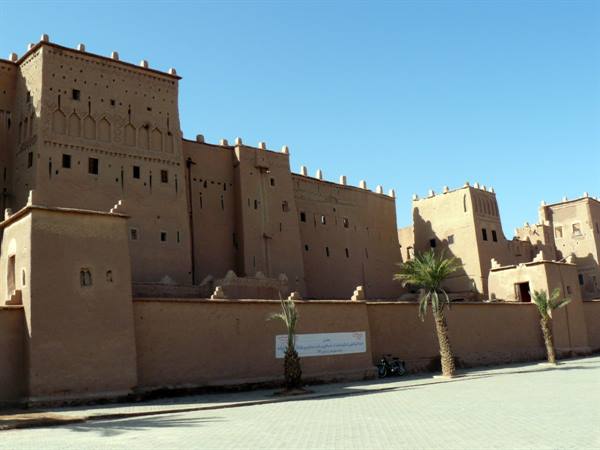
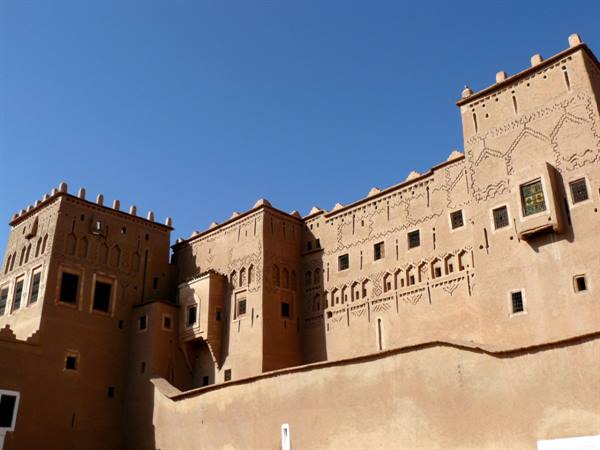
A splendid day, blue sky and not a single cloud. The view from the hotel terrace embraces all the mountains and the palm grove. We walk to visit the nearby kasbah of Taourirt, on the edge of the town centre. On arrival we find a boy who offers to guide us around the part of the kasbah where people still live. We take a beautiful tour of all the little streets, we can peek inside the primitive dwellings and admire how everyday life unfolds in this place: the women wash outdoors, there's no running water, only electricity. We walk along all the walls with beautiful views of the clay towers and at the end we find ourselves at the entrance of the restored touristic kasbah. We say goodbye to our little guide, who jumps for joy with a €3 tip, and enter the kasbah (€2).
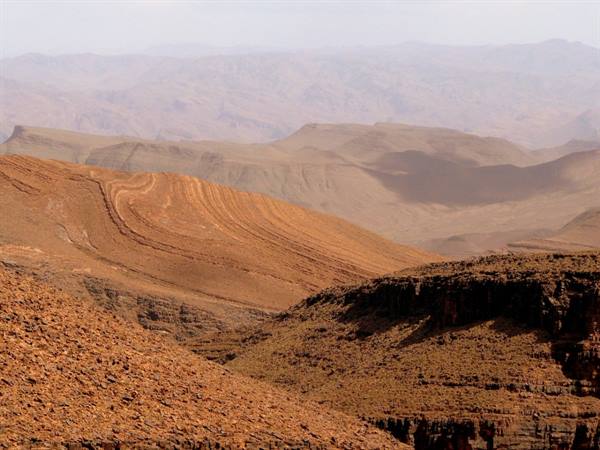
The courtyard looks out onto wonderful structures, tall crenellated towers that look like sand constructions, and the contrast with the intense blue of the sky is beautiful. The interior is a veritable maze of corridors and rooms, some of which are finely decorated. At a certain point we even manage to get lost, we ask an attendant who asks if we'd like to go up to the terrace. So he opens doors for us that are not accessible to tourists and takes us upstairs, where we admire a wonderful view. Tip and thanks. We set off from Ouarzazate in the direction of Zagora and cross another mountain pass, not as high as the Tizi-n-Tichka but even more wild and spectacular, with rocky mountains smoothed by the wind, spectacular canyons that in shape recall, on a much reduced scale, the Grand Canyon.
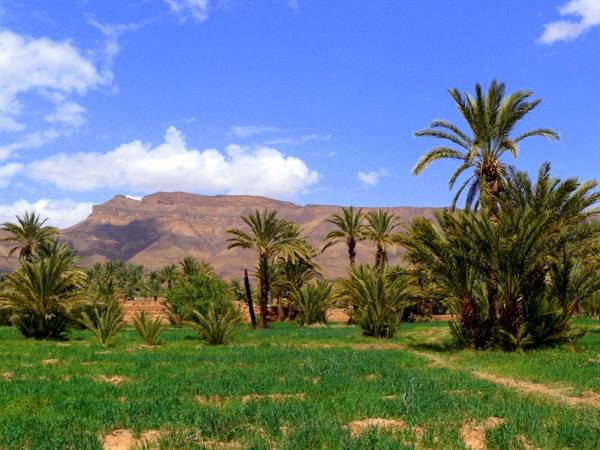
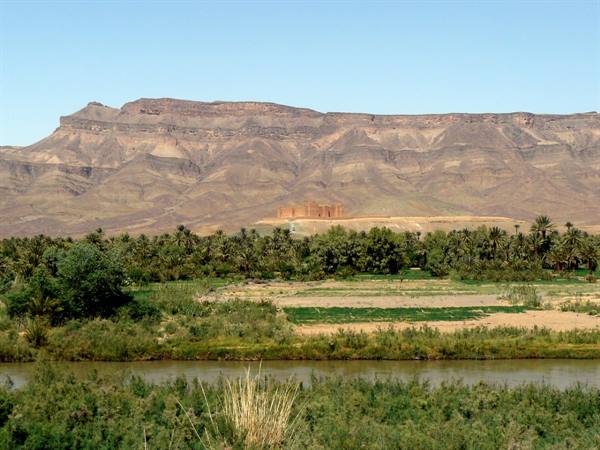
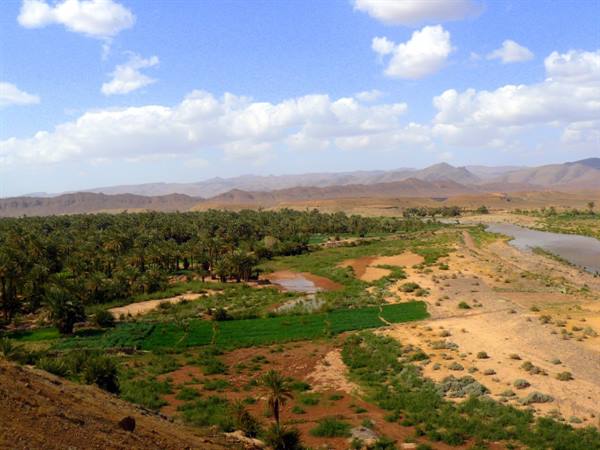
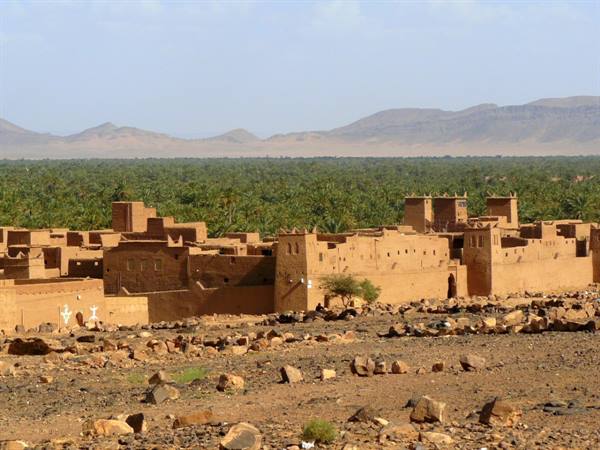
We stop for lunch at a little restaurant in Agdz, where we eat in a lovely garden under umbrellas that shelter us from a sun that splits the stones (temperature around 28 degrees): grilled skewers served with mixed vegetables and soft bread, two portions are enough for all three of us (€12 with drinks). We set off again and suddenly, from the aridity of the landscape encountered so far, the verdant Draa Valley appears as if by magic, stretching for over 80 kilometres. Along the banks of the Draa river rise lush palm groves, set against imposing reddish-coloured mountains: the landscape is truly enchanting, made even more stunning by the numerous kasbahs and ksour that seem perched among the oases. We make our first stop at the ksar of Amenougalt, which dominates the landscape from the top of a small hill, with the village below entirely made of clay.
The ksour had been built to regulate access to the trade routes and the caravans arriving from the desert. Right afterwards we park the car on the road and take a pleasant walk through the little streets inside the palm grove: you can observe the various crops, the systems for channelling the water that feeds the oasis, the women washing in the river, the children riding mules who come up to you for a sweet, a photo, a smile. We set off again by car and stop right after because we see a group of children and we have some sweets to hand out: they pounce on us, climb on the bonnet, almost come in through the window, shouting bon bon, bon bon.... little David is frozen, strong sensations for a child of 8 years of age not at all used to scenes far removed from our daily reality.
We continue our journey but the beauty of the landscape forces us into pleasant and continuous stops to admire an incredibly beautiful landscape: we pass various kasbahs, such as those of Timiderte, Idgdaoun, Tinsouline, some panoramic viewpoints that always offer different and superlative views. We arrive in Zagora and reach our hotel, the Ksar Tinsouline, which is really very beautiful: it looks like a genuine clay ksour, typically Moroccan for this region, with an enormous palm grove, a lovely pool area and an elegant restaurant (€69 for the triple in half board, Planigo).
We don't waste time and go to catch the last sun of the day; here too the water is freezing but we.....in! For dinner we have half board included and we eat divinely: the restaurant is open only for us three, but the menu is excellent, you can choose between 5 starters, 5 main courses and 5 desserts: as a starter we have a tasty pasta with tomato, as main courses two chicken and veal tajines, excellently presented and cooked, while Davide ends up with an immense cutlet with chips. We finish with fruit salads, orange with cinnamon and an exquisite coconut cake. Here too, an impressive quality-price ratio!
Tamegroute
Day 316 Mar 2009
Ouarzazate – dune di Erg Chegaga
Here we are at the most awaited day of the whole trip, the one that will take us into the majestic Moroccan desert as far as the dunes of Erg Chegaga. But let's take it in order: we set off southwards towards the border with Algeria and stop at the locality of Taemegroute, which surprises us positively. We're immediately welcomed by a guide who asks if we want to be accompanied: here an escort is practically indispensable if you want to enter the heart of the village, navigate the labyrinth of tunnels and really understand how life unfolds in this remote place, where existence is truly hard and people have to struggle with the heat, with the advancing desert, with hygienic and sanitary conditions bordering on indecency.
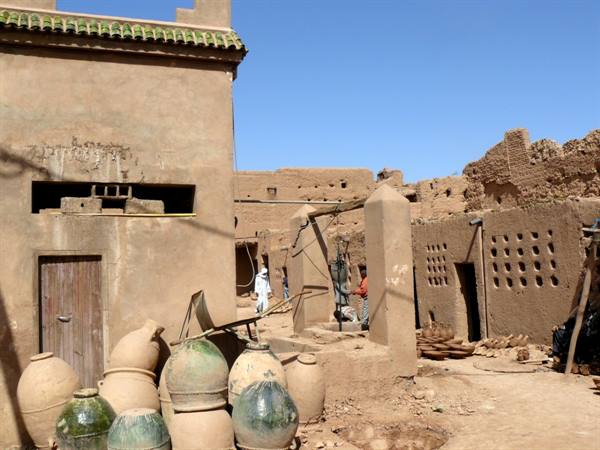
To Taemegroute, an important centre of Islamic culture and pilgrimage, many pilgrims come to implore healing before the tomb of Mohammed Bou Nasri, who also founded the Quranic Library that we go to visit. We find a delightful old man who explains the history of the ancient manuscripts to us in Italian and keeps joking affably with Davide, pats him on the back, takes his hand, pulls him, makes him repeat the explanations... a real hoot. We then make our way into the heart of the village, descending into the tunnels where people live: down here, our escort explains, when the outside temperature exceeds 50 degrees you can survive with the thermometer not exceeding 35. Taemegroute is famous for its pottery production: we visit the workshops, the people at work, the open-air kilns, truly very interesting.
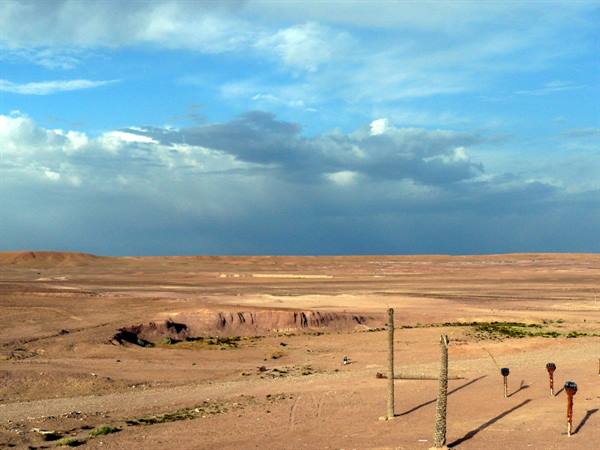
We set off again and right afterwards we find ourselves facing the small but evocative dunes of Tinfou, which appear out of nowhere from a rocky desert. We cross another pass that breaks up the desert panorama; the landscapes are always extremely spectacular. Between Zagora and M'hamid, where the tarmacked road ends, there are about 100 km, the road is single-lane and when you meet a vehicle, one of the two has to get off the asphalt: rest assured it will always be you....because the others don't move an inch. We arrive in M'hamid around midday and have lunch in a hallucinatory snack bar: 4 outdoor tables while inside, dilapidated walls, a sink where not a drop of water has flowed for who knows how long... and a fridge. The menu consists of 5 dishes, the first 3 are not available: only tajine (made of what??) and skewers remain: we opt for the skewers and sit down.
After 30 minutes we see the boy from the bar dash off on his bicycle... he comes back a while later with the charcoal. he starts lighting the barbecue and cooking the skewers.....oh my!!!
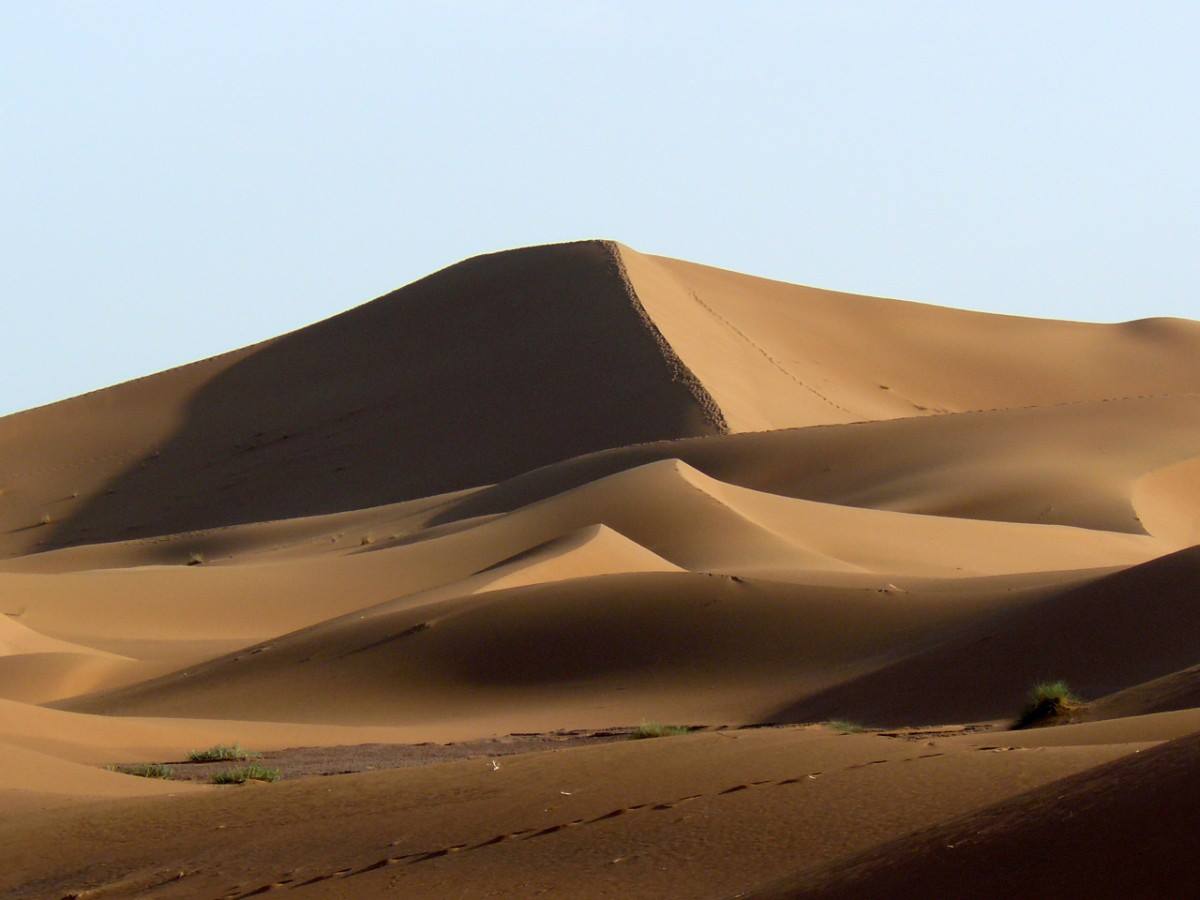
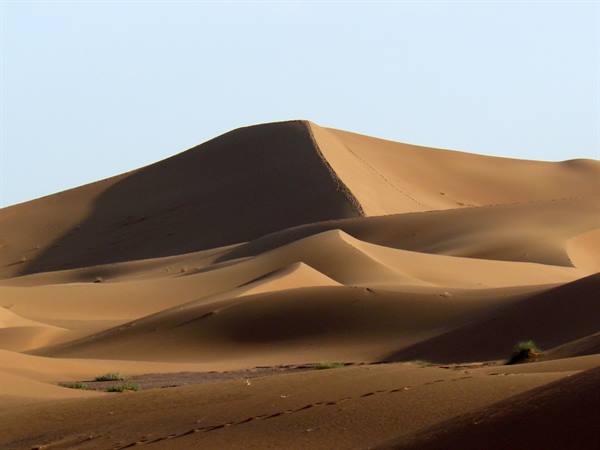
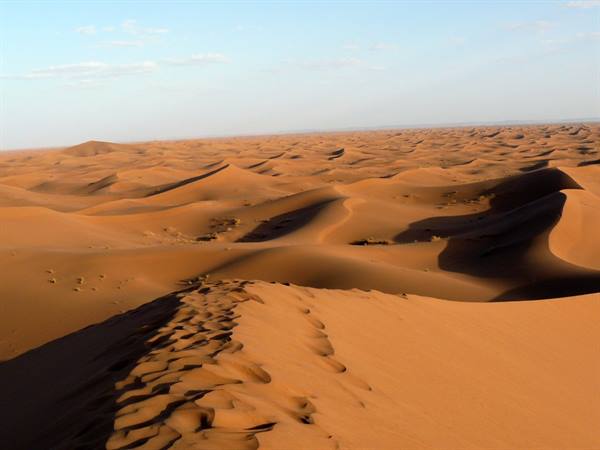
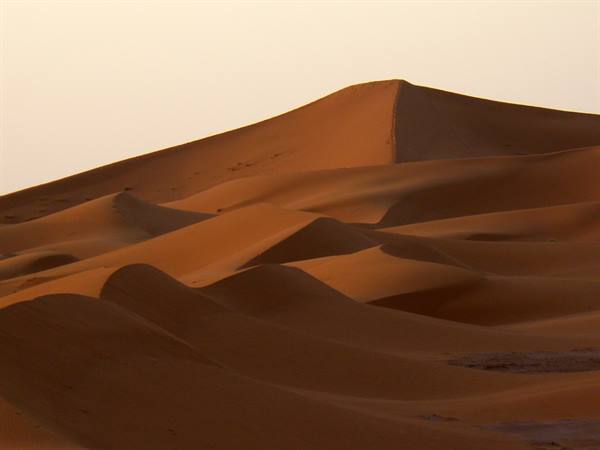
There are two places in Morocco that offer the chance of a close-up experience with the majestic Sahara desert: the first, the better known one, travelled by the main tourist routes of tour operators and organised groups, is Merzouga. Easily accessible from the main road, it offers numerous possibilities for excursions and overnight stays, so much so that the tourist is immediately pounced on by excursion touts, and you'll very likely find yourself crossing caravans of tourists in the middle of the desert... in short, a bit too little desert to be called that. But there's another place in Morocco, much less known and barely mentioned by the guidebooks: it's called Erg Chegaga and offers a surprising natural spectacle, with the country's highest dunes reaching a height of over 300 metres.
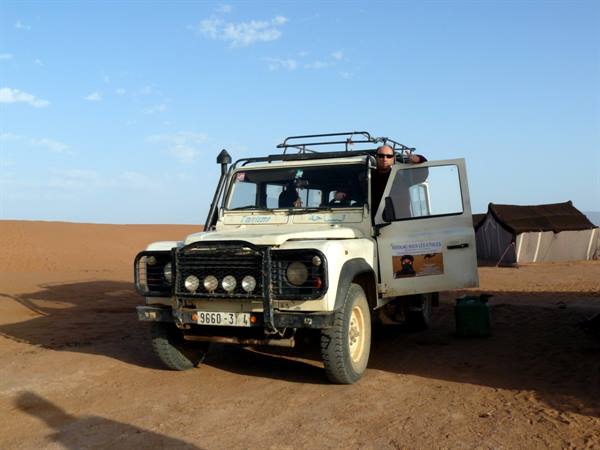
But above all, it's a place harder to reach, and this allows it to keep its charm and sense of adventure intact. To reach the Chegaga dunes you need to get to the small locality of M'hamid and continue for about two hours into the desert by 4x4. It's therefore necessary to rely on some local agency. After various careful searches on the web, here's the solution: Hassan's small agency offers eco-friendly tourism, attentive to environmental impact and made up of a team of Bedouins genuinely expert in the desert environment: Bivouac sous les étoiles. We make arrangements from Italy about the route we'd like to take and send a deposit. After a welcome with mint tea and a few instructions, we buy water for 24 hours and are ready to set off by 4x4.
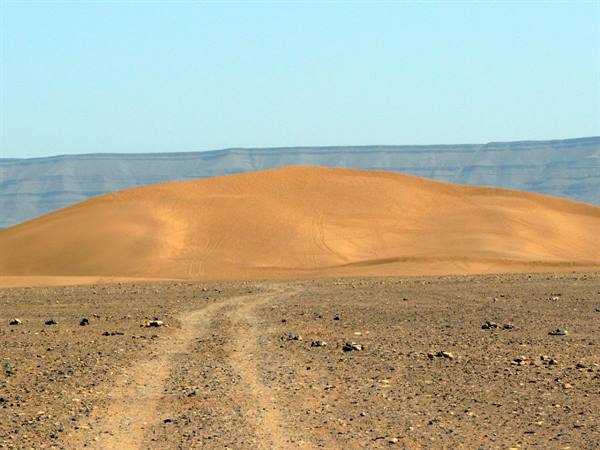
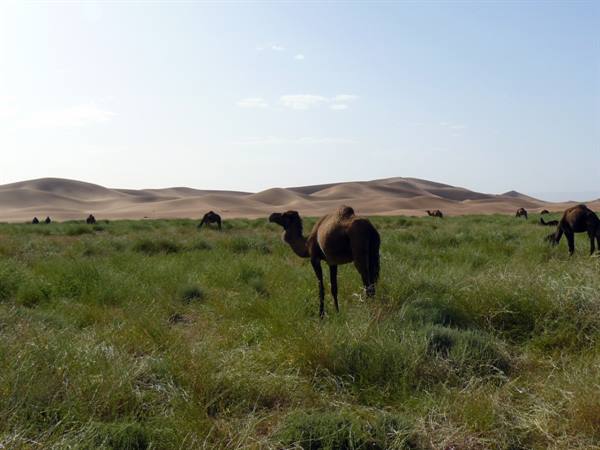
The desert environment immediately appears to us as splendid and wild, mostly rocky, with imposing mountains in the background, sandbanks and a few solitary palms. After about an hour and a half we reach a verdant oasis, where we stop and Hassan starts filling jerrycans with water from a stream flowing among the palms. I ask him what all that water is for and he replies with a smile...for the toilets, for the car...for the tea, for dinner. I pat him on the shoulder and tell him that the water for the tea and dinner I'll provide myself... We continue for another half hour until we glimpse the incredible dunes in the distance: the environment is incredibly fascinating; at the foot of the sand dunes rising majestically stretches a verdant meadow where dromedaries graze: it almost looks like a painted landscape, unreal.
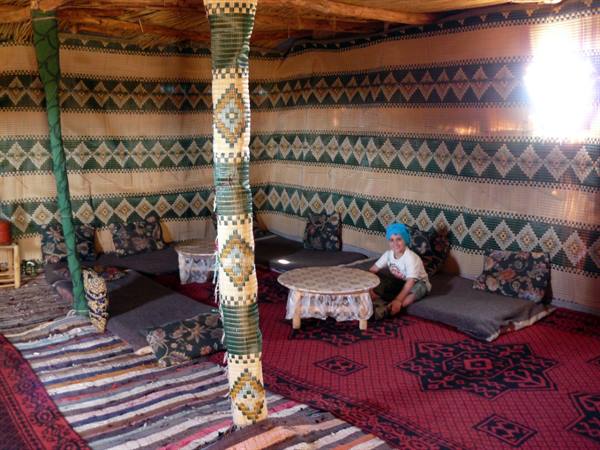
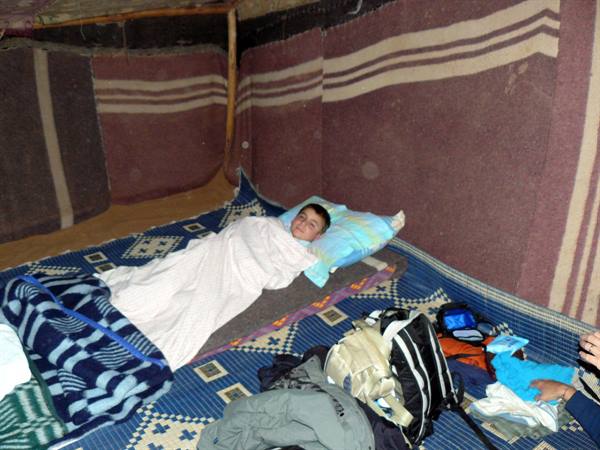
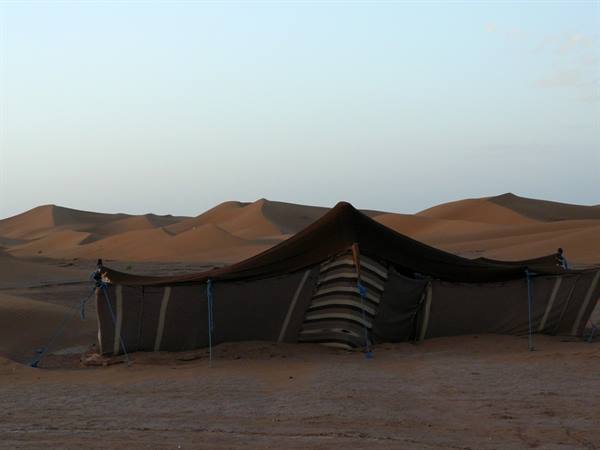
Here we are at the camp where we'll spend the night: there are the three of us and 5 Bedouins who will take care of the camp. They show us the kitchen, the tent for dinner and ours for the overnight stay, inside which in the afternoon it's infernally hot while outside the temperature is around 28 degrees. I'm surprised by the toilets: I was expecting a squat toilet with a hole and instead here are 4 WCs popping out of the sand connected to a water tank that even offers a shower... incredible! We're surrounded by sand and dunes, perhaps we're the only tourists this evening in a 50-square-km expanse, the feeling is simply electrifying. After another boiling mint tea (I checked...they used my water!) we're ready for the long walk in the sand that will lead us to the top of the highest dune to admire the sunset.
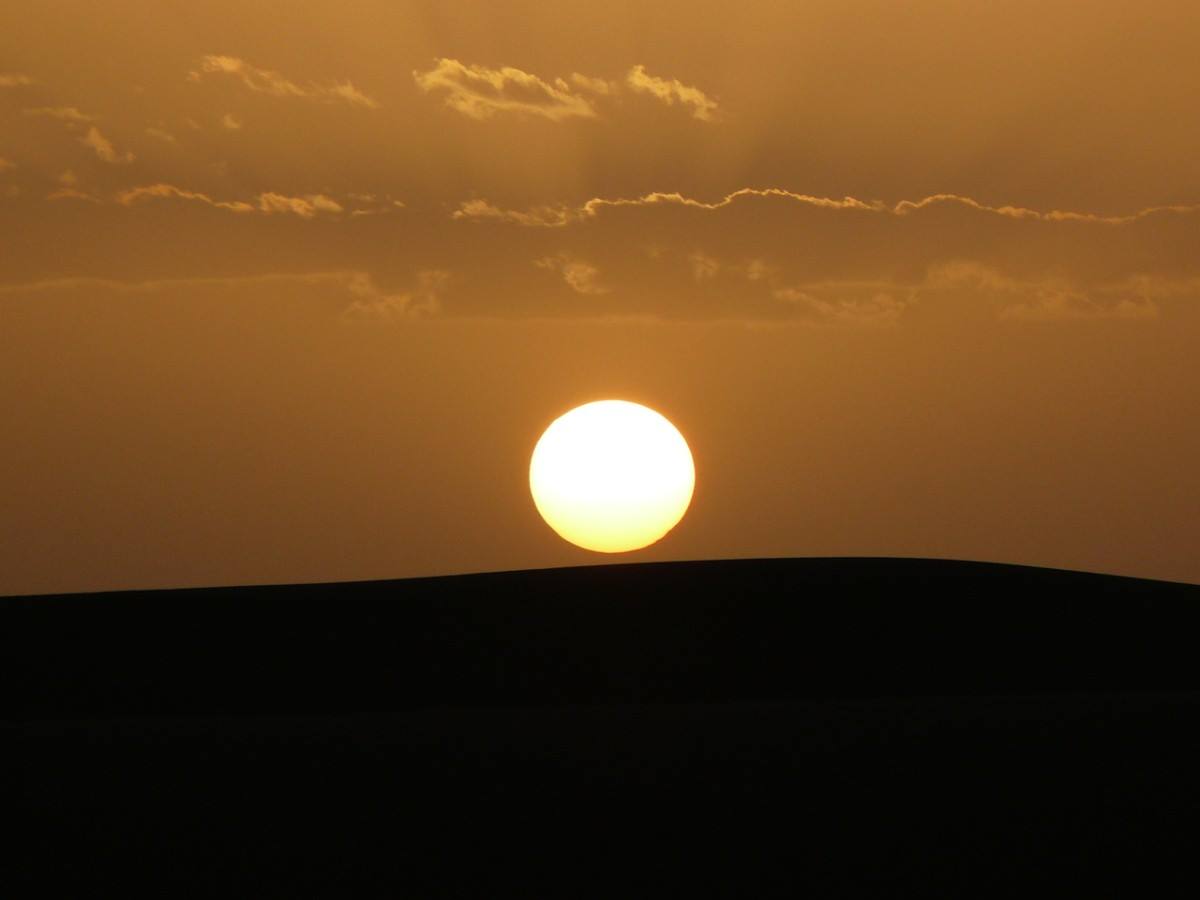
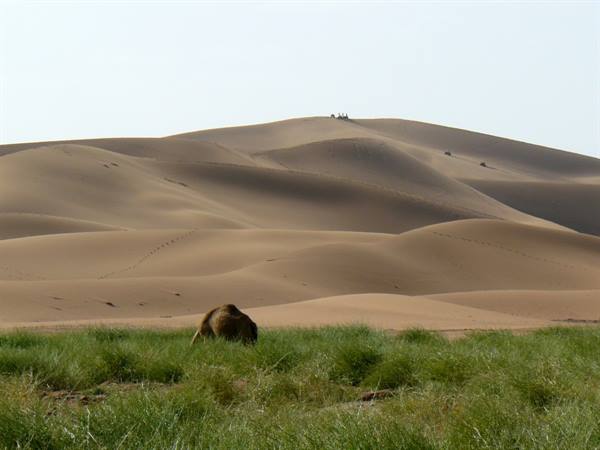
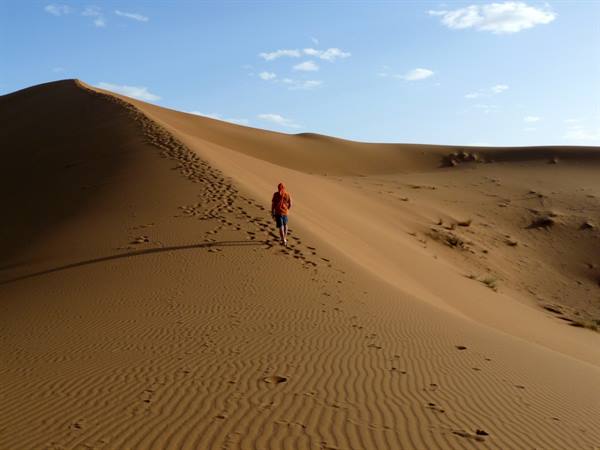
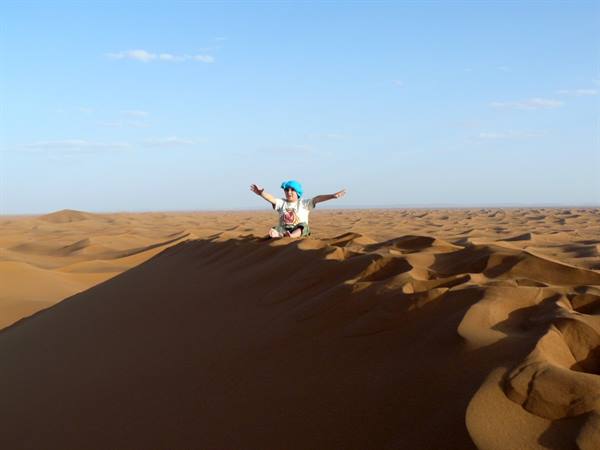
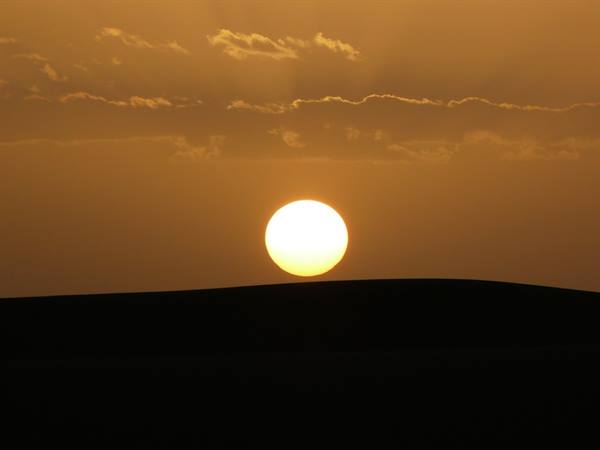
It takes us about an hour during which we climb several dunes, from the top of which each time a breathtaking view appears, nothing compared to the one offered by the great Chegaga dune: a boundless view over a sea of endless dunes that fade into the horizon. The sun begins to set, making the environment surreal. We savour this unforgettable moment sitting in silence, broken only by the shouts of Davide, who starts running up and down the dunes until he can't take any more. We return to the camp and get ready for dinner, which is served to us in the main tent. You sit on big cushions, dine by candlelight and an oil lamp, with soup and beef and vegetable tajine. The evening passes pleasantly with songs, dances and drums from our now-friends the Moroccans, who offer us the best of their tradition.
It's time to go to our tent for the night; we go outside and admire another incredible spectacle: there isn't a single inch of sky not occupied by a star, so bright that they let you glimpse the dunes in the darkness. The night immediately turns cold and we cover ourselves with all the blankets we have available.
Chegaga dunes
Day 417 Mar 2009
dune di Erg Chegaga - M’hamid – Ouarzazate
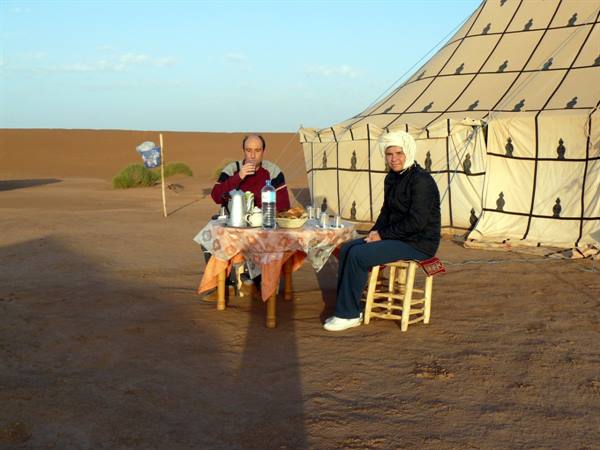
We wake before dawn and witness another moment so simple yet so wonderful: the sunrise from the dunes. We already have breakfast ready on a little table in the open air among the dunes, next to the tent: bread, jam, orange juice, cheese, milk and mint tea. Suddenly a light wind picks up and slowly begins to move the sand under our feet. Visibility soon becomes reduced... A sandstorm is brewing. We're ready to set off and quickly leave the dunes behind us: we stop for a last goodbye and notice that above the dunes the sky is starting to turn brown, the storm is looming even though they tell us it's a very light one. For the return to M'hamid we take a sandy track among lower dunes, where we often have to stop to find a way through for the jeep.
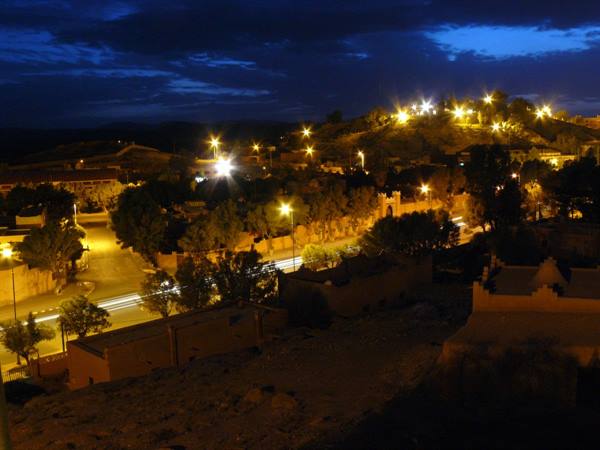
Another two hours and here we are back at the starting point; we say goodbye to our travel companions who proved extremely competent and courteous, pick up our car and head on to the next destination in Morocco, with the boundless, enchanting and incredibly gripping desert still in our hearts. We get back in our car and drive the road in reverse towards Ouarzazate, once again admiring the wonders of the Draa Valley, where we make a few more stops, after which we return once more to the Kenzi Azghor hotel and take a stroll around the town centre, consisting of an enormous square surrounded by bazaars, restaurants and clubs.
Chegaga dunes
Day 518 Mar 2009
Ouarzazate – Marrakech
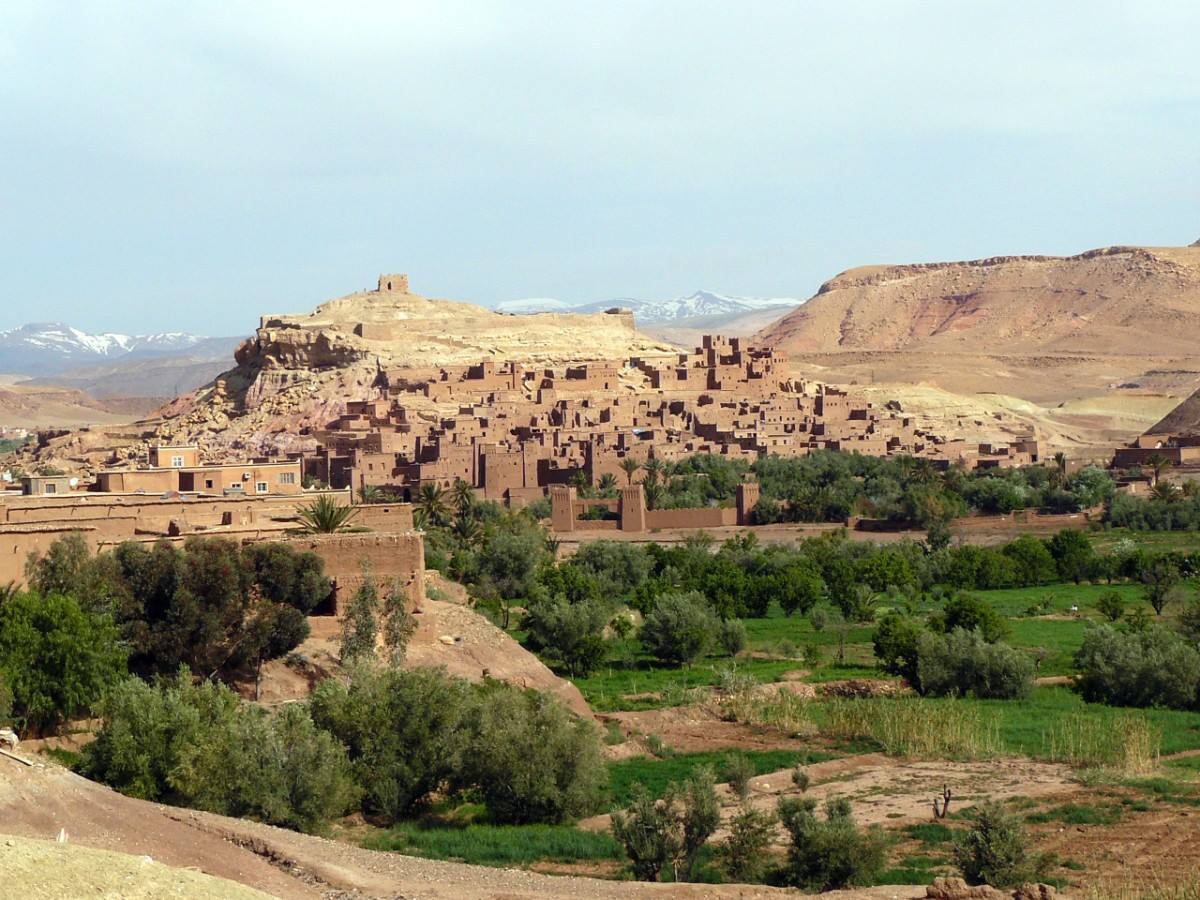
We set off early because we want to be among the first to arrive at Ait-Ben-Haddou, the most picturesque, best-preserved and most visited kasbah in Morocco. I had read about this place that it's so crowded with tourists and locals trying insistently to sell every kind of goods and service that you can't fully appreciate its beauty. Perhaps because we arrived quite early, around 9:30 in the morning, at which time the buses full of tourists hadn't yet arrived, we didn't get that feeling; on the contrary, it was a place we visited in extreme peace and quiet, only occasionally invited very politely to step in and have a peek at some shop or dwelling. The road leading to Ait-Ben-Haddou branches off the main road and runs for about ten kilometres through a verdant valley.
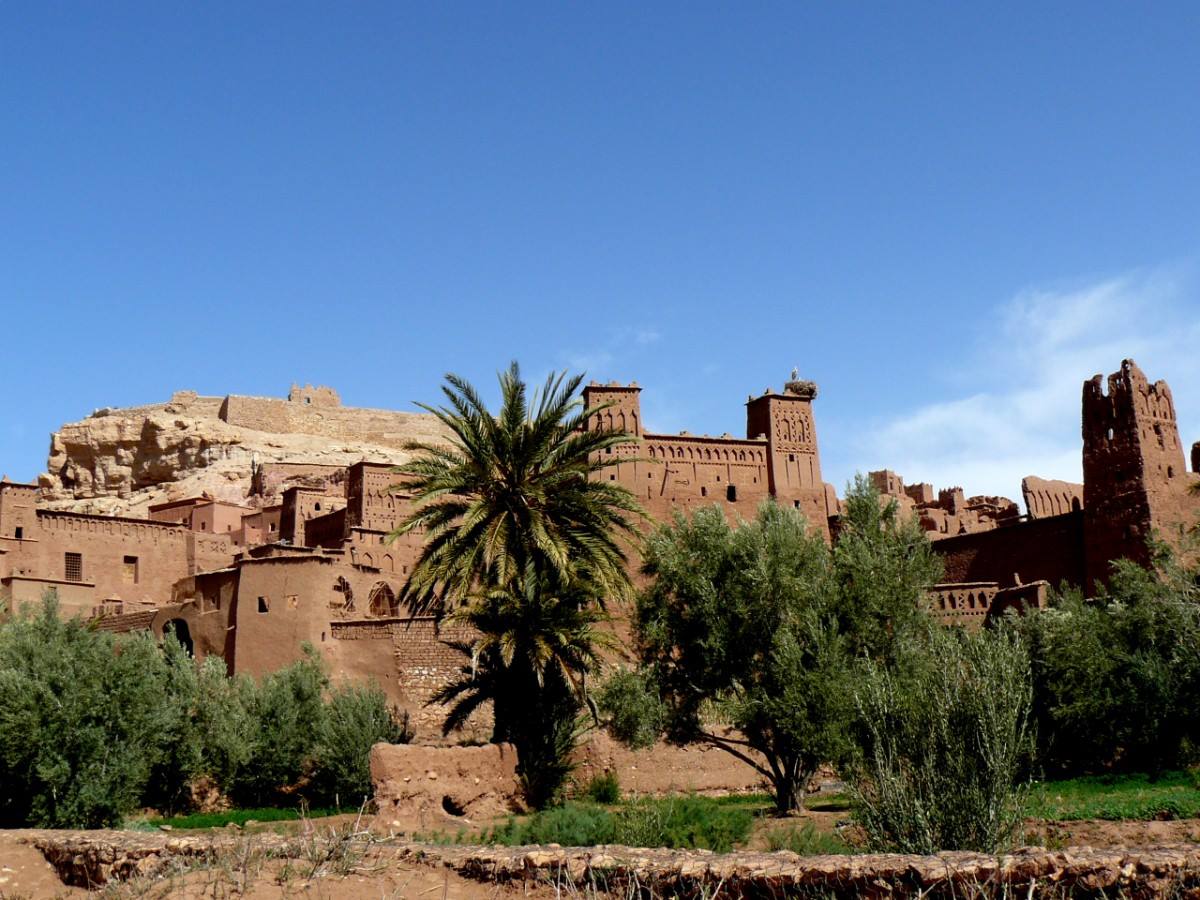
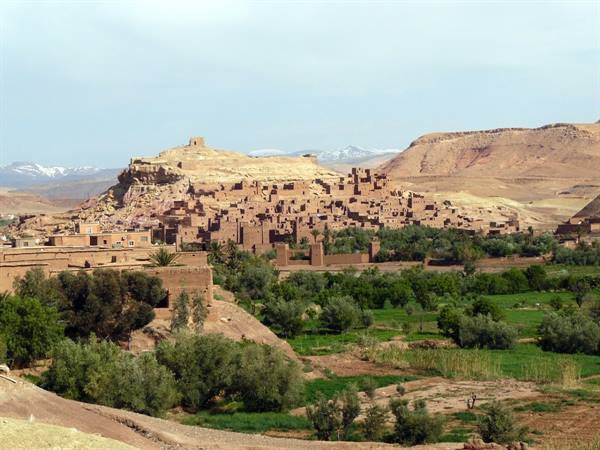
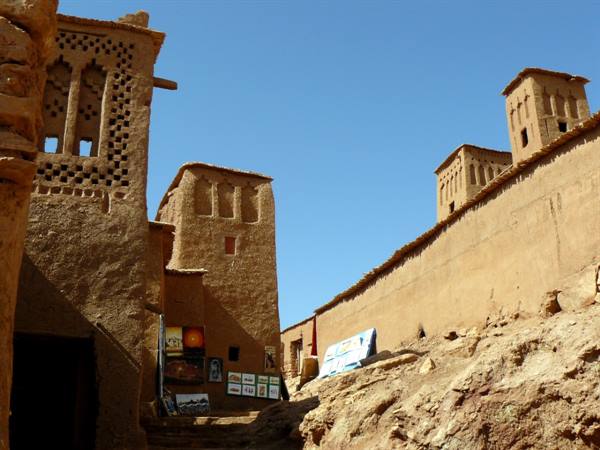
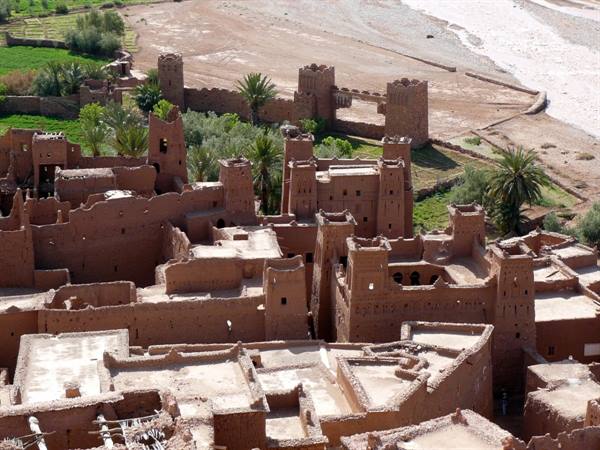
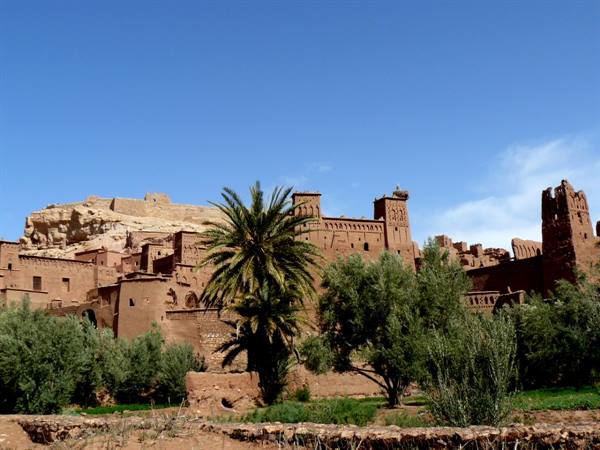
The Kasbah appears as if by magic after a bend, perched on the side of a reddish sandstone hill, with clay crenellated towers rising towards the intense blue of the sky; it really is an enchanting sight. We park in the detached town centre and walk down towards the river, which at this time of year is in full flood: the only way to cross it and reach the kasbah is to get on a donkey and negotiate the crossing with the boys.
We get it for €3 for three return and start fording the stream...The boys signal to us to enter the kasbah from the back, so as not to pay the entrance fee (a good €1 saved) and we climb up the hill until we reach the highest point, where there are some ruins, but above all where you can admire an unforgettable view: at our feet the typical buildings of Ait-Ben-Haddou rise majestically, looking almost unreal, imposing towers loom over the dwellings huddled one against the other, mud and earth create a fascinating whole, the river separates the settlement from a dense palm grove with snow-capped mountains in the background. We descend through the maze of narrow little streets that sometimes end in covered passageways and fortified castles, with walls carved with elegant geometric designs and elaborate clay arches. I have the feeling of walking through a kind of enormous nativity scene.
By now only about ten families still live in this place: a lady invites us into her home, a cramped room with carpets for sitting, a tiny kitchen and a little courtyard with two goats. She offers us mint tea, shows us photos of her beautiful little granddaughters, we take one together and she gives us her address so we can send it to her. Continuing down towards the valley we reach the foot of the majestic Ksar, one of the best preserved in Morocco. Ait-Ben-Haddou has several times been used as a natural set for some films, including Lawrence of Arabia, which is why numerous restorations have been carried out, and this extremely delicate jewel has been able to preserve itself intact down to our own days and today is rightly protected by the World Heritage list. An extremely fascinating and characteristic place that will be impossible to forget.
We drive back over the Tizi-n-Tichka pass, where a very strong wind is blowing today. We stop at the pass where a likeable vendor manages to palm off on me two useless fossil minerals, but in the end he huffs and says it's been tough with me and that I'm the one who gained from it....yeah, right. We quickly reach Marrakech, easily find the turn-off for our resort, the Coralia Palmariva (€60 in half board, plus €25 for the all-inclusive supplement for 3 to pay on site, booked on the hotel's website) and settle by the pool to enjoy the warm rays of the sun, today a bit dimmed by the haze.
Ait-Ben-Haddou
Day 619 Mar 2009
Marrakech
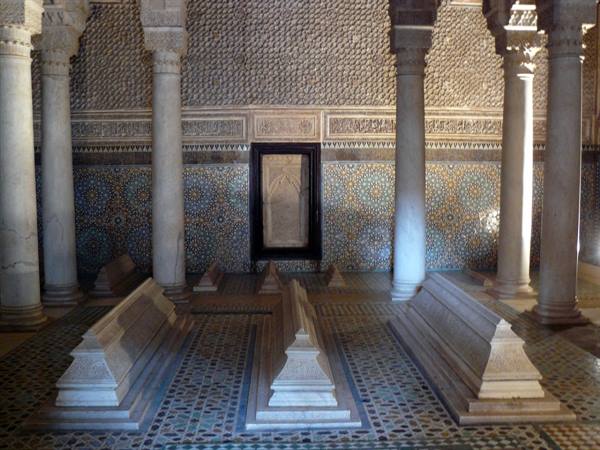
We negotiate with a taxi outside the resort for a ride to the Medina (€7), right to the Saadian Tombs. It's early morning, around 9:15, and the place (€1) is already very crowded with groups of tourists. Moreover, the most spectacular tombs are only visible through a small opening and a bit of a queue forms to wait your turn. They're richly decorated, a real shame you can't admire them more calmly. We come out and look for the direction to the Palais el Badi (€1), which from the map seems right next to it but we wander around a bit, seemingly going in circles..., before finding it. The remains of the majestic palace are a bit too much in ruins, very little of it is left but the dimensions are impressive. There are better places, in any case. From the walls you can observe numerous storks with their enormous nests.
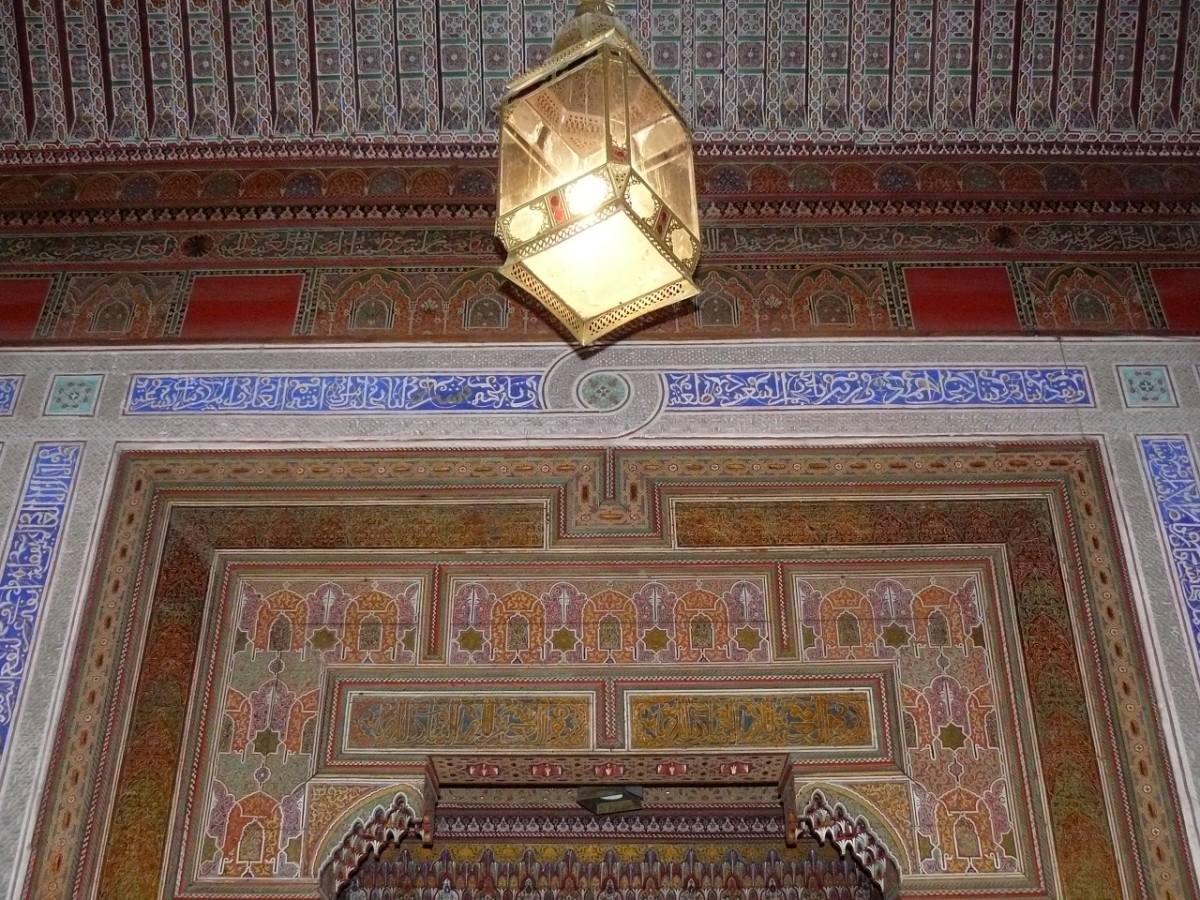
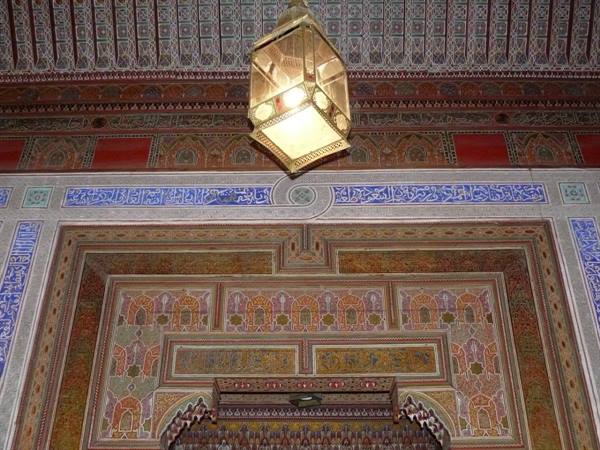
At the exit, some boys, who have very likely skipped school, accompany us to the next destination: the refined Palais de la Bahia (€1). The palace is very beautiful, the dense Moorish-style decorations recall the Alhambra in some way, but the place is decidedly crowded and it's difficult to fully grasp its beauty. Beautiful are the marble floors, the zellij tiles, the main courtyard full of citrus trees from which you enter the various rooms, the cedar ceilings painted with arabesques. The classic thousand-and-one-nights palace. From the palace, we take the long secondary road that crosses the Medina, past makeshift butchers with meat hung outside and live poultry in the back, fruit markets and a lot of works that don't let you walk easily.
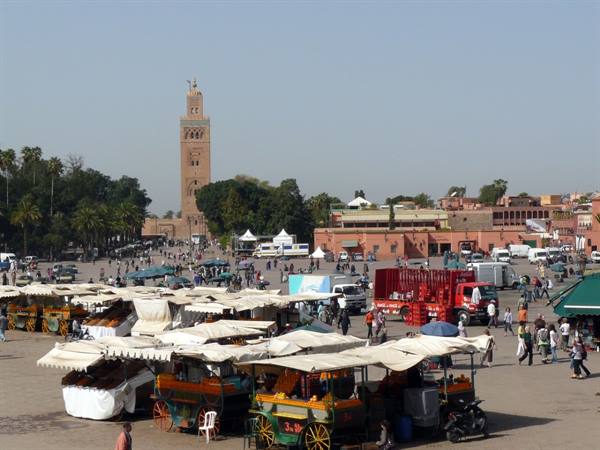
We arrive at the famous Djemaa el-Fna square, which during the day is a bit disappointing: we're immediately pounced on by vendors, snake charmers (I find myself with a snake around my
Palais el Badi
Day 720 Mar 2009
Marrakech
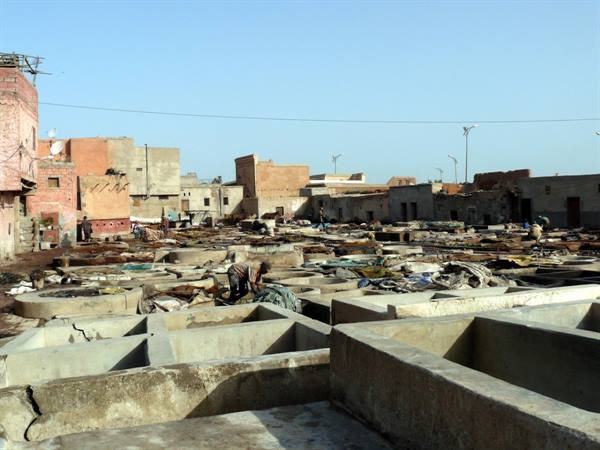
With the usual taxi, which by now knows us, we have ourselves taken once again to the Medina, this time to the east side, exactly at the Tanners' Quarter. A character immediately comes up to us with a little bunch of mint and asks if we want to go into a tannery: the mint serves to mask the incredible stench coming from the vats, I've never smelled anything like it. Only I manage to go in, and I do the round of the vats: people are immersed up to their knees in these vats where pigeon droppings are used as a natural acid. Impressive. Once the tour is over the guy asks me for an outrageous donation, 10-15 euros. I talk him down to 4 euros, telling him he even owes me a drink… We set off toward the center with the smell still under our noses, and reach the Ben Youssef Madrasa, one of the most extraordinary places in Marrakech.
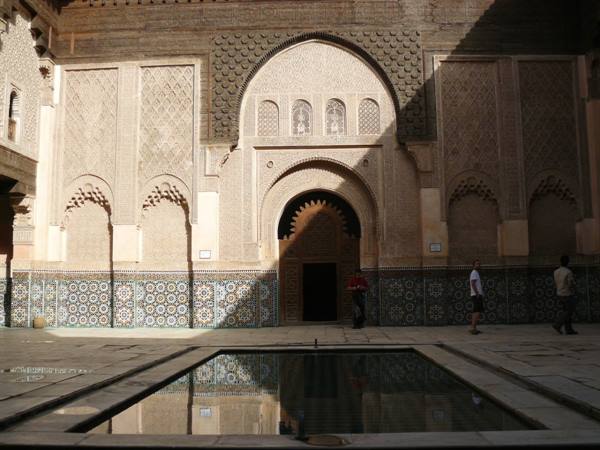
(combined ticket with the Marrakech Museum and Koubba Ba Adiyn € 6). Perhaps because of the absence of tourists, the place presents itself with incredible peace and the finest beauty. It is one of the most important Quranic schools in the country and could accommodate, though I still haven't figured out how and where, 900 students.
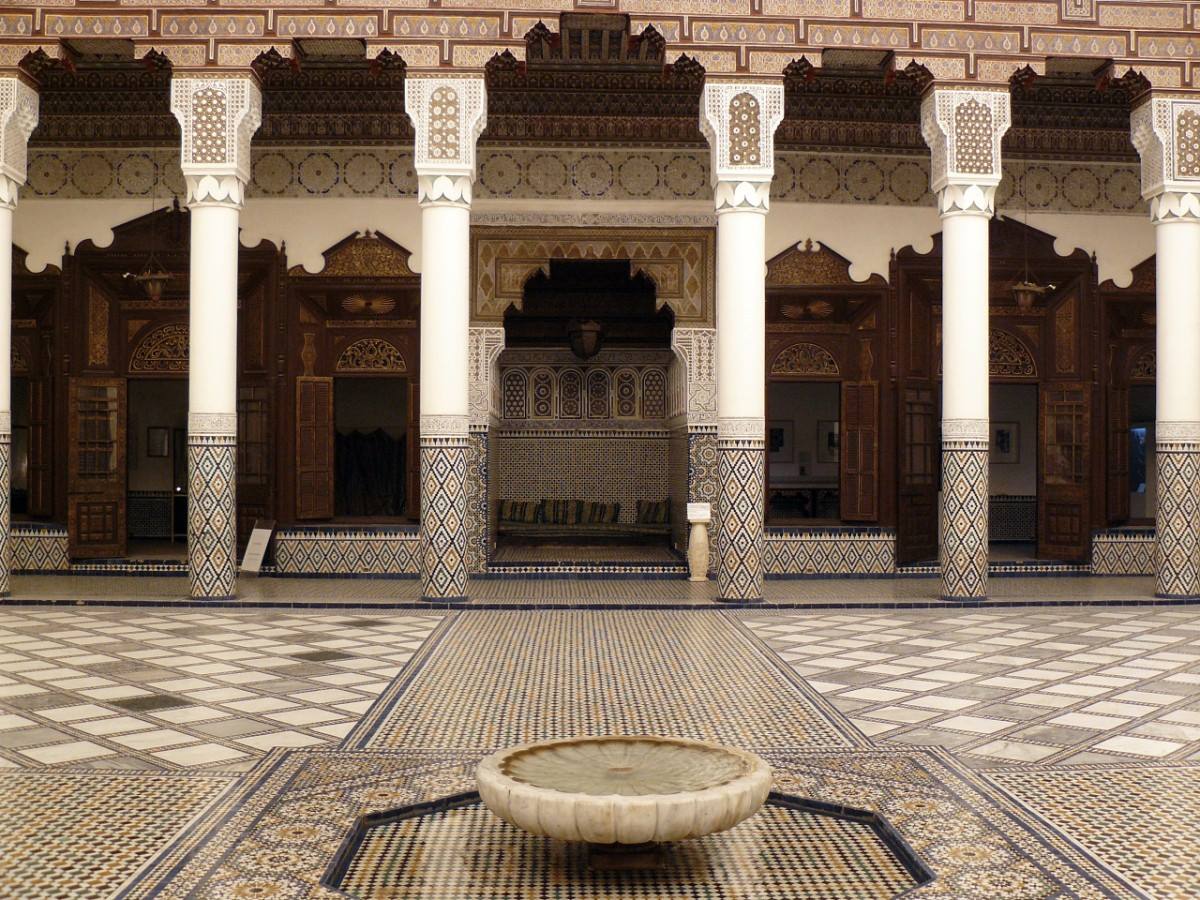
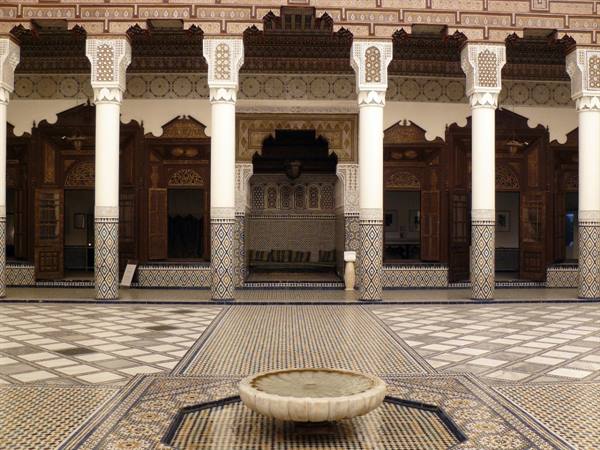
The courtyard is truly astonishing, with a large basin in which the walls are reflected, sumptuously decorated with zellij tiles and a great deal of stucco. From the courtyard you enter the beautiful Mihrab, the prayer hall. On the way out we give only an external glance at the Koubba Ba Adiyn and head toward another splendid palace, the one housing the Marrakech Museum, which, besides the important exhibitions, strikes you with its Moorish-style elegance, where the three marble fountains in the center of the main hall stand out. We head toward the center of the Medina, but it's not easy to find your way through the streets that seem like a labyrinth, and even with map in hand, you constantly have to ask for directions. We suddenly find ourselves immersed in the magical atmosphere of the great souks of Marrakech, among the most fascinating in the world.
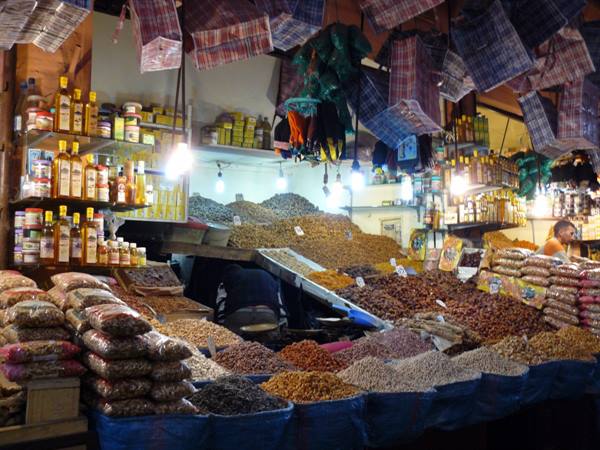
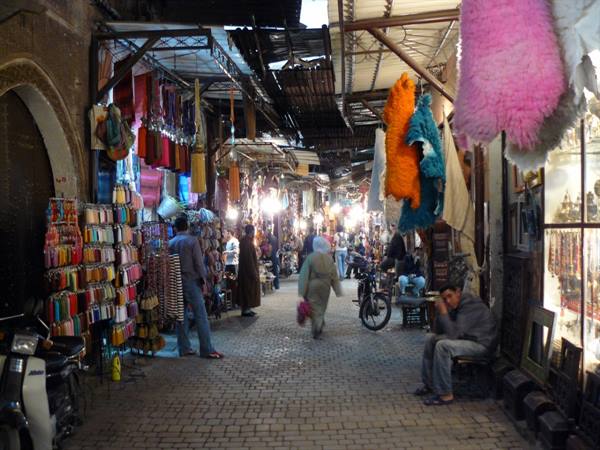
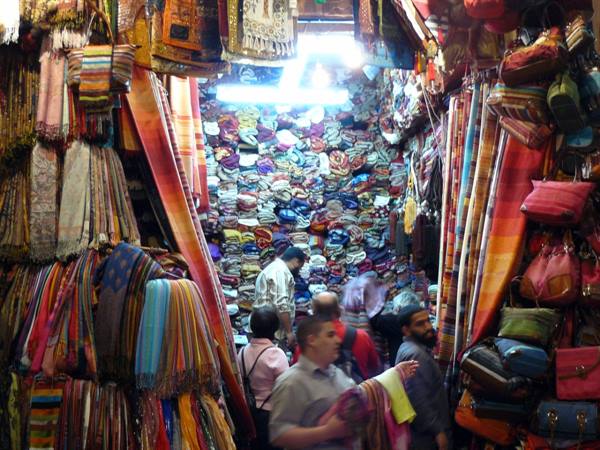
They are divided by type of goods, so you pass in order through the souk of leather goods, then that of slippers, of metal objects, of wooden baskets, and of hides. The most touristy part is a long covered avenue with every sort of product. To make a purchase you have to arm yourself with patience and embark on a long negotiation. We finally emerge again at Djemaa el-Fna square, which by now we know very well, but I promise myself to come back in the evening when it transforms. In the evening I therefore return to the Medina; this time I leave my wife and son and reach the center alone. I cross the entire Medina on foot from north to south, and in the streets confined to the northern part you don't encounter a single tourist. The Medina seems to never end; I walk for about twenty minutes before finally finding myself in the souq.
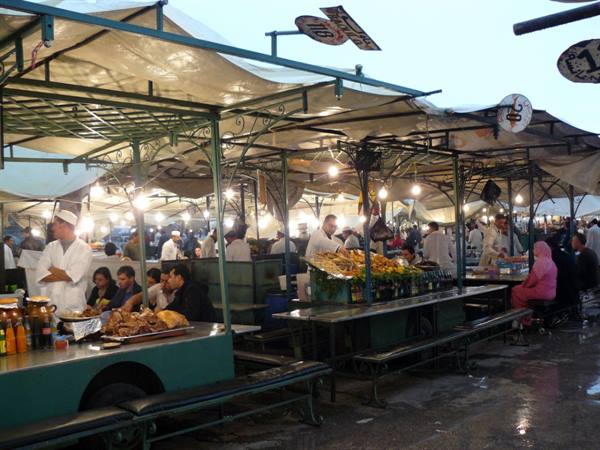
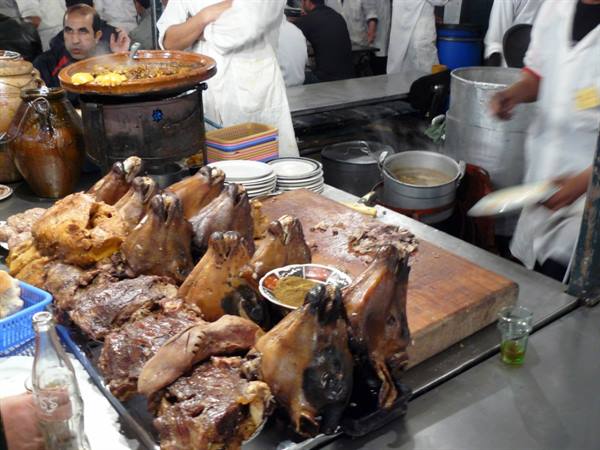
In the evening it's overrun by tourists, but you just have to leave the main covered gallery and go into the side alleys to find yourself surrounded only by locals. By now it's dark and suddenly a violent storm breaks out: I arrive at Djemaa el-Fna and the square, which by day seems a little bare, is overrun by an impressive number of food stalls offering every sort of fare, amid fumes and aromas that invade the air: tajine, skewers, couscous, fish, and above all the notorious grilled goat heads, with their brains. A truly surreal atmosphere, a fitting finale to this extraordinary week lived intensely in close contact with a population whose customs and traditions are completely different from ours, but with a friendliness and kindness that was truly unexpected.
museo de Marrakech
Day 821 Mar 2009
Travel tips
Morocco is a place that, with a minimum of experience, you can easily visit on your own, even with children in tow. Apart from the roads, other safety problems are practically non-existent: you will always have someone ready to help you and offer themselves for any kind of service, but if you want, it is enough to explain that you are not interested and they will immediately leave you alone: of course, if you are alone, every 10 meters there will be someone asking if you need anything, if you need a guide, if you want to come in and take a look at the shop, etc. No merchant will be offended if you don't buy anything, no guide will answer you rudely if you refuse their service: should you accept, maybe negotiate the price first. Always carry small change, often the kids ask you for a few dirhams even for simple directions.
Walking around the kasbahs with a guide becomes almost indispensable, it is impossible to find your way through the narrow alleys and moreover on your own you will see very little and you will be looked at with suspicion if you venture into the more private places where daily life takes place. Always ask before taking a photo of people, never of women, and in any case they will always ask you for a tip.
Be very careful in the car, always pay attention to the road without ever getting distracted, even outside the small towns you will always meet people walking along the edge of the road. Always honk your horn and keep your foot constantly ready on the brake!!!
In some places hygiene is precarious, the usual recommendations apply about raw vegetables, fruit to be peeled, water, etc. Always check the fuel level, don't go below half. If you want to see the most authentic desert, go to M'hamid and organize an excursion with a local agency. We never found very dirty toilets but in some there is no flush, you have to fill a bucket and wash. No particular problem for children, they will be very captivated by everyday aspects, by the incessant noise of Marrakech and its square, by the charm of the desert and the kasbahs, even if some scenes are a bit strong. My son was hesitant about the night in the desert in a tent, in the end he had a lot of fun. If you have children, I recommend 3 days in Marrakech in a nice resort, with the possibility of alternating cultural visits with afternoons of relaxation and fun.
When you return the car to the airport, there are no signs. Park in the paid parking lot and take the ticket to the rental desk. The ideal period for a trip to southern Morocco is March-April and October-November, hoping not to be unlucky. For the desert: glasses, headgear, heavy sweatshirt for the night, toilet paper, if you have a small flashlight, lots of water and….a spirit of adaptation!





0 reader comments