The story
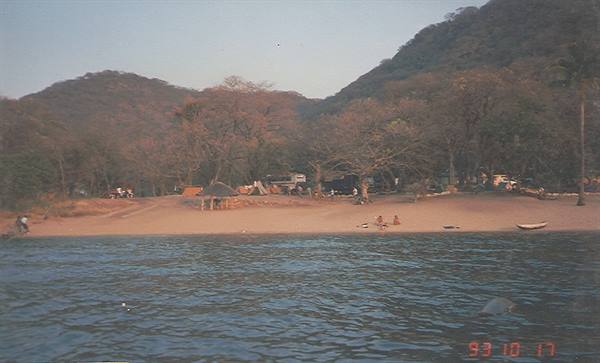
Malawi Malawi is a tranquil African state, inhabited by tranquil people, and governed by normal presidents, re-elected without force. But to enter you have to respect a few rules, like covered shoulders for women and no piercings anywhere and no punk hair. At least that's what it was when we were held up at the Tanzanian customs; inside, I think one can do as one likes. Who's going to come up to you in the street and tell you you've got a tongue piercing? It used to be called Lake Nyasa, now Lake Malawi; it's as big as a sea and runs the whole length of the country from top to bottom. We camp in the northernmost part of the lake at Karonga, where early in the morning black women with containers on their heads head for the lake shore, and the husbands are returning in wooden boats from the night's fishing.
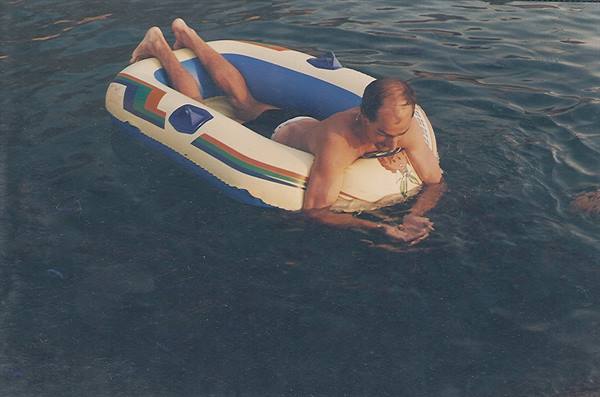
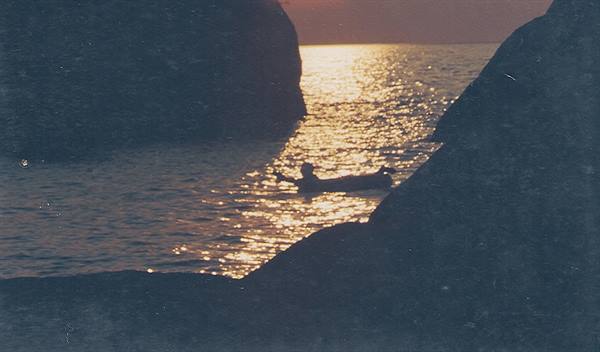
Here swimming in the lake isn't advised, given the presence of the bilharzia bacteria. But in the following days in the middle of the lake, and above all when we stay at Monkey Bay for a few days, there swimming really can be done, and how. Nicola and I are always in the water; one day I even do my first scuba dive in a freshwater lake. The feeling of not having salt on your lips is very pleasant. At 12 metres you can still see plenty of tropical lake fish. The fish eagle is the master here and catches fish with its talons non-stop. The vervet monkeys are too cute; they do pirouettes on the beach and I film them for quite a while. The little coloured lizards on the round rocks also get taken home to Italy on television.
At the campsite of this tourist spot we find some South Africans but also some white Malawians; evidently this is renowned throughout Malawi for holidays, since there's no sea in this country. Unfortunately we don't go to see the national park, too far off the beaten track and in the mountains. The country's economy is mainly based on agriculture; tobacco, tea and sugar are the most exported products. Our means of transport, the Truck Africa truck, also stops at Lilongwe, the capital, where at last Nicola, after two weeks, calls his mummy, who gives him an earful for the long silence, and I add to it; he's a real rascal, this lad from Valeggio sul Mincio, VR.
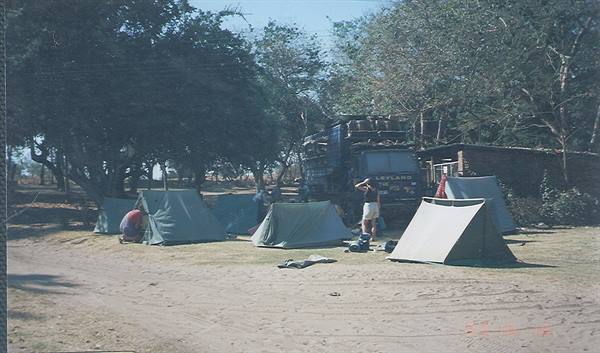
His little bike that he'd brought from Italy, which had been stripped down by the many black people who used it, and which he wanted to throw away, was instead, on my advice, bartered at the souvenir market of Lilongwe for a chessboard. After all, they repair it on the spot and will use it for the next twenty years. That evening we camp at the edge of the town; here at the campsite we find another Truck Africa, those of the Guerba Expeditions company. We'd already met other times during the long two-month journey that takes us from Kenya to South Africa; in fact the routes are equivalent, and now and then we run into each other again. The drivers are two girls who, with our two drivers, slip off every time. And in this case, that evening around midnight, three metres outside my tent, blind drunk.
Yes, because they have to stuff themselves with beer when they're not driving; otherwise where's the fun? The next day, after breakfast, I see that the Guerba lads, after washing the dishes, dry them by holding them in their hands and waving them back and forth until they're dry; they say it's more hygienic that way. Well! We all climb onto the truck after putting in the special compartment the big grill we use to cook steaks and put the pots over the fire, and set off for Zambia, where we arrive about an hour later. Along the road, driving on the left, we see scenes of the locals' lives: for example they cut the grass with a kind of machete, bent over with their backs, and the women sweep the ground too with a broom, also bent over with their backs. It must be a punishing tradition. Bye bye
The journey's photographs
5 photographs · click to open them full screen

0 reader comments