I left my home at 1 a.m. on 10 January. I'm with a friend and we're driven to the station by an acquaintance whom we pay for his taxi service. By train we reach Roma Termini, where we change for Fiumicino airport. Here, after checking in, we meet a couple of friends from the Sorrento peninsula with whom we will make the journey together. At 11.30, more than half an hour late, the Kenya Airways plane takes off for Nairobi, where we land at Jomo Kenyatta airport at around 19.00.
Day 110 Jan 2000
Arrival in Nairobi
After landing at Nairobi's Jomo Kenyatta International Airport, once we've cleared customs we meet the Watamu tour operator with whom we booked the safari from Italy. We are introduced to the Italian-speaking guide and the driver. The off-road vehicle we'll be using for the tour is a big Land Rover, sturdy, spacious, but offering poor visibility ahead. Luckily the roof opens and from there we'll be able to observe the nature of the Parks. The guide speaks rather uncertain Italian and is completely unprepared on the animals, but it's also true that this tour cost decidedly less than what we would have spent with an Italian agency. The safari will only begin tomorrow; for tonight an overnight stay is planned at a tented camp in Nairobi.
Contrary to what we expected, however, the Upper Hill is not at all a tented camp but a campsite equipped with military tents and a few wooden huts that they call banda here. We hope that this very spartan type of accommodation is only for tonight while waiting to begin the tour. We have dinner at the campsite's inn with a pizza whose cooking takes more than an hour; luckily we had eaten well enough on the flight. The Upper Hill is a facility frequented mainly by backpackers and here we meet an Italian who is taking part in an overland tour in a reinforced bus that started from the Middle East and will reach Cape Town in South Africa. We go to bed with the help of a flashlight I brought from home; it will also be useful during the night to go to the building where the shared bathroom is located. Given the situation we skip both the shower and putting on pajamas.
I sleep in a banda with my fellow townsman, the couple of friends in a military tent. Luckily there is no lack of a mosquito net though it's torn in several places and therefore almost useless.
Amboseli(Kenya) and Kilimanjaro(Tanzania)
Day 211 Jan 2000
Masai Mara
Wake-up call at the first light of dawn and then off we go, without even having breakfast, toward the Rift Valley. Nairobi is located on a plateau overlooking the Rift Valley, a long fracture in the Earth that begins at the Dead Sea in the Middle East and ends in Mozambique. We see the Valley from a panoramic point before descending from the plateau. The landscape is dominated by the profile of the Longonot volcano, whose crater can be glimpsed. Once down in the valley we head to Narok, where we stop for a few minutes, then continue toward the Masai Mara. From Narok our route begins on a dirt road full of potholes that some boys with shovels try with difficulty to fill with gravel in exchange for some money that the drivers hand them through the window. Luckily our off-road vehicle is sturdy and the potholes are sufficiently cushioned by the shock absorbers.
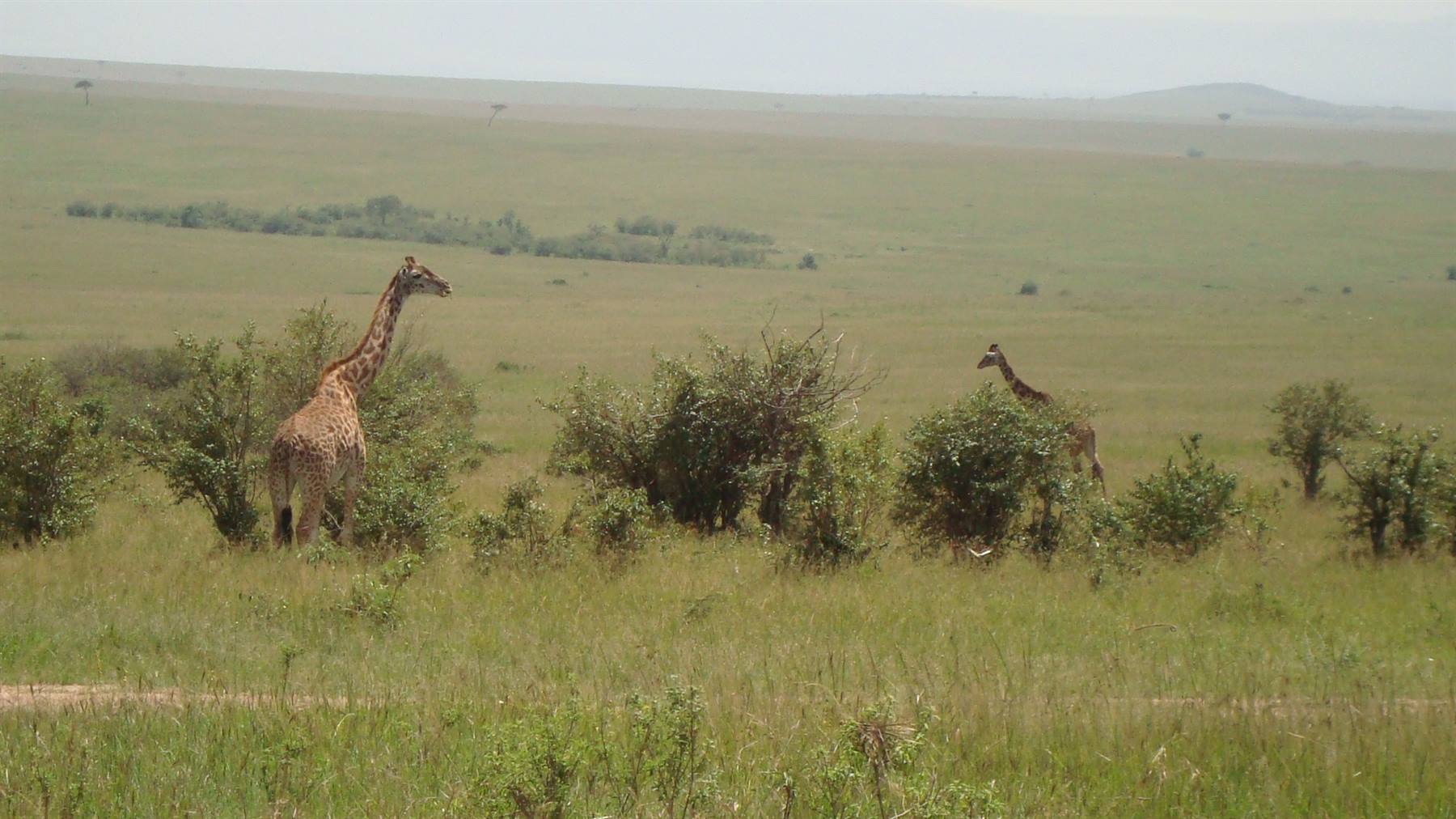
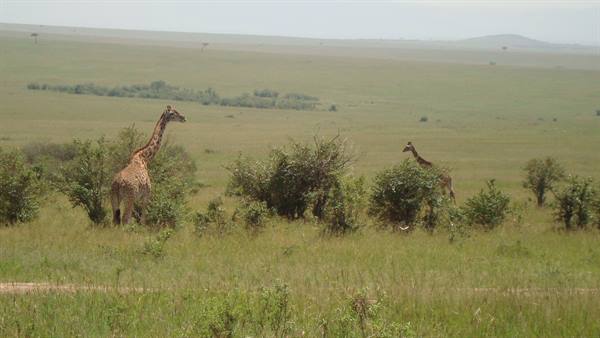
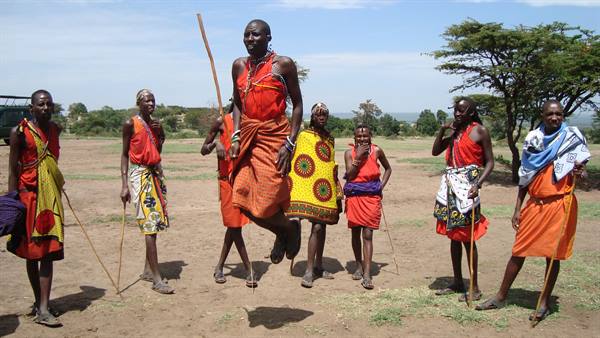
Along the road to the Reserve we see the first giraffes, a few disoriented wildebeest and some Masai villages. Upon reaching the entrance of the Reserve our vehicle is surrounded by Masai women trying to sell us their handicrafts like figurines and masks. Here, to buy, a long negotiation is necessary; the Masai always start from a very high price, it's up to us to balance it with a lower offer and generally an agreement favorable to both is found. Right after the entrance to the Reserve we stop for a visit to a Masai village. The village chiefs ask us for 10 Euros each; the guide explains that they are used to maintain the school and the medical center. The village is surrounded by a circular enclosure of intertwined acacia branches that serves as protection against wild animals. Inside the enclosure are numerous small huts whose walls are made of animal dung.
A single small slit lets in the light. We enter one of these huts through a narrow entrance; welcoming us is the head of the household who tells us about his wives and the tests of courage a Masai must face to become a Moran, that is, a warrior. The tests of courage are easily visible in observing these people; the earlobes are cut and dangle showing colorful decorations, some are missing their front teeth as well, but this is obviously not visible, the men are circumcised. All mutilations performed without anesthetics to demonstrate the valor and contempt for pain of men and women. There are many children in the village who, unaware of the voluntary tortures their culture imposes on them, play in the shade of one of the few trees. They are like all children in the world; I take them by the hand and we do a ring-around-the-rosy, one of them even comes into my arms.
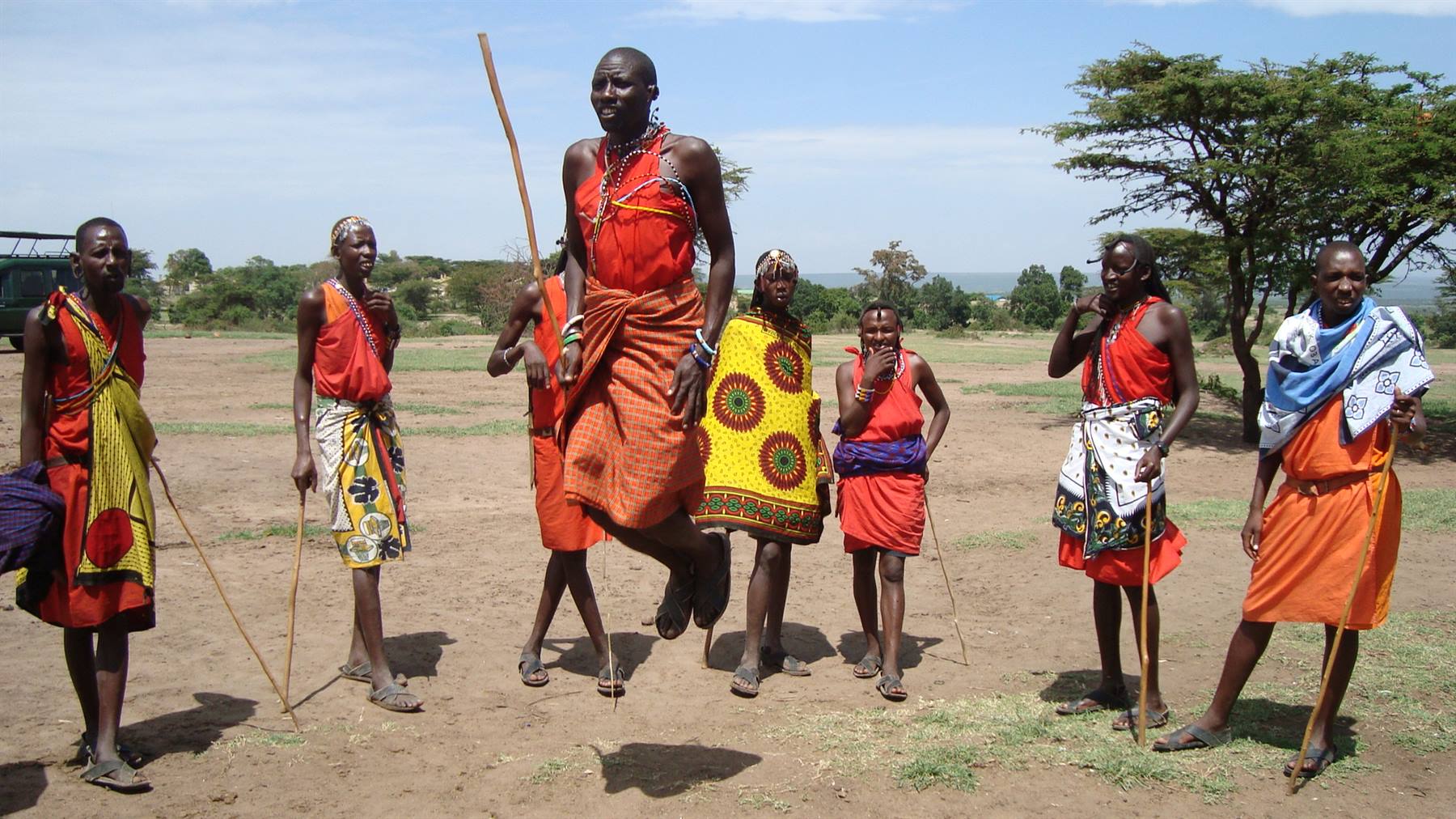
The adults show us how they manage to light a fire by energetically rubbing a piece of wood with a stone, then they offer us their collective dance based on jumping; whoever manages to leap highest is the strongest and on certain occasions has the privilege of being able to choose first among the women of the village. We leave the Masai and go to the Sentrim Camp where two overnight stays are planned. Here we are welcomed by the staff who sing in our honor the cheerful little song reserved for tourists, "Jambo Bwuana", punctuated by beating whatever they can find in their hands. It's not exactly the Tented Camp we had planned, but the facility isn't bad. Our tent is bigger than a normal hotel room, rests on a permanent stone structure and has a large bathroom with shower. The beds are large and equipped with soft linens.
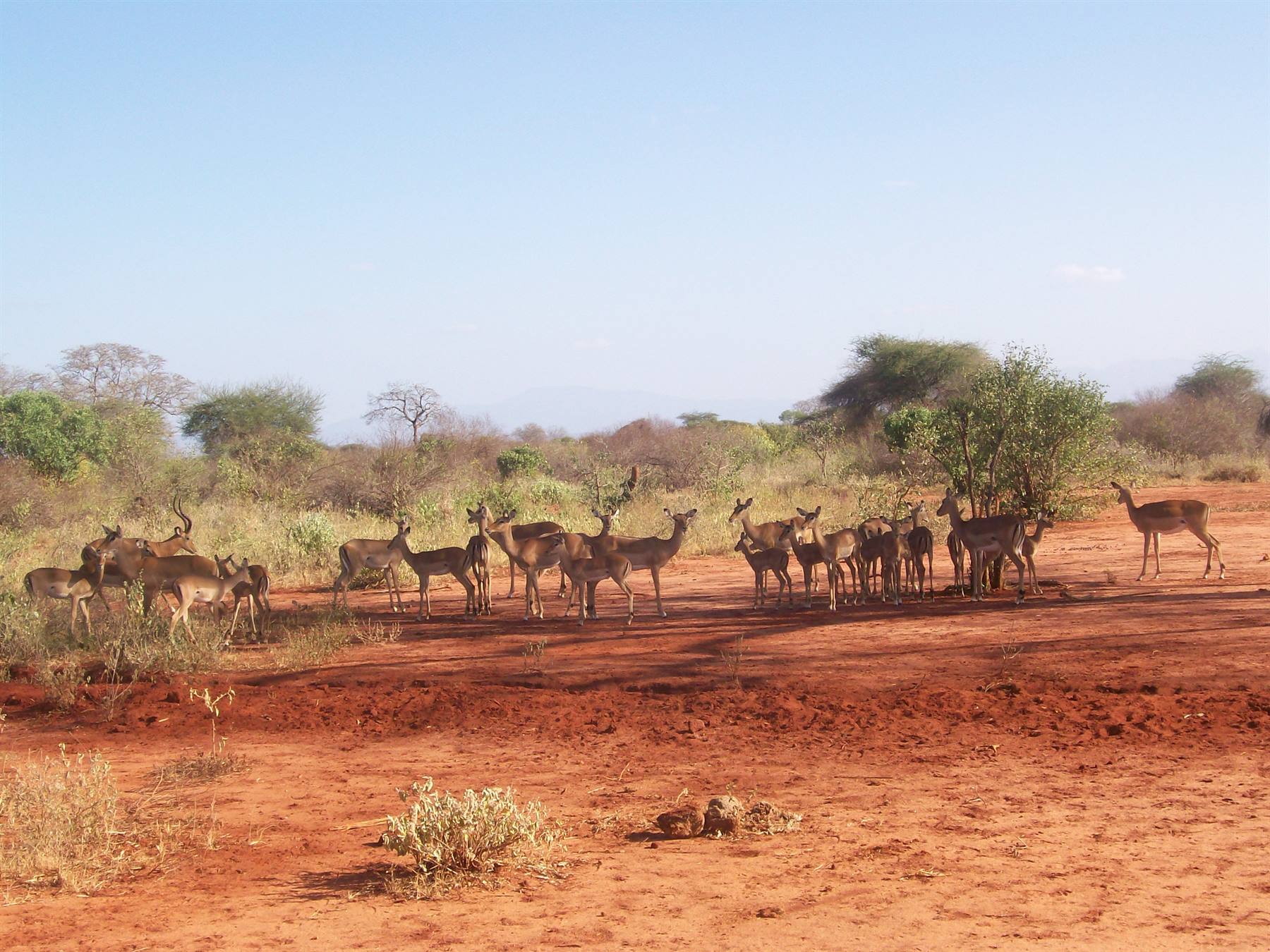
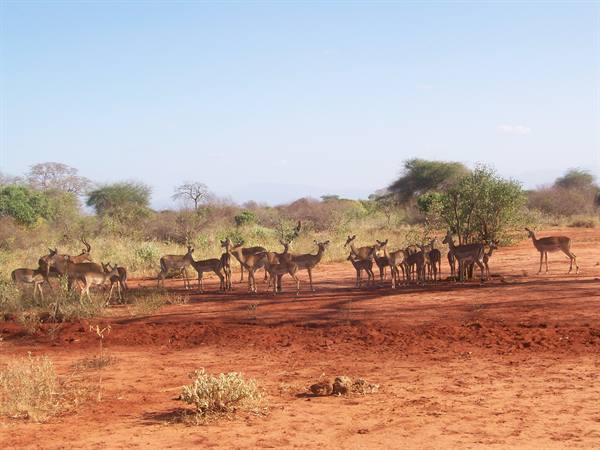
They inform us that the electricity provided by a generator is limited and that the outlets are active only for a few hours. After putting away our luggage we go to lunch in the big hut that houses the restaurant. The structure has no walls and overlooks a clearing where the pool is located. There are few guests and we have lunch buffet-style. Not that there's a lack of variety, but if you exclude the foods that at these latitudes could make you sick, there's very little left to choose from. After eating and a short rest in the tent we set off for our first game drive in the reserve and our first sightings. We visit an area of gentle hills where we spot gazelles, mice, kudu, impala, zebras and buffalo.
Our big sightings of the day, however, will be a lion crouched in the bush, a leopard we see in the distance, and a cheetah with its cub stationed near a tree on which it has secured its prey. For those of us who imagined the Masai Mara as a zoo, they will surely be disappointed, but if one realistically considers that these animals live in absolute freedom over an area of more than 1500 sq km, then one can also understand why sightings are difficult. This is in any case one of the most beautiful African reserves, the Kenyan extension of the other famous Park, the Serengeti. We return to the Camp for a short rest in the tent; a young Masai waitress, beautiful but missing her two front teeth, makes up the beds, covering them with the mosquito net. At dinner, in addition to the buffet, they also serve fresh-made pasta and pizza.
The pizza in particular is cooked on a special metal device where charcoal burns, and you can choose your favorite topping. Everything in the Camp is in safari style, the atmosphere is interesting, the lighting soft. After this pleasant day we retire to our tents.
Masai Mara
Day 312 Jan 2000
Masai Mara
During the night it rained and we had to cover up well because even though we are near the equator, the Masai Mara is at high altitude and there is a strong temperature range between night and day. After breakfast we set off on the game drive, reaching the broad savannahs of the Reserve where we see the most classic of African landscapes, stretches of grassland and every now and then a rare tree. It is not the period of the great migration but the animals are not lacking. Our driver is connected by radio to his colleagues who alert him to the sighting of a family of lions on a secondary road, where we rush. Indeed there are many of them, about twenty between cubs and adults, who do not seem disturbed by the presence of numerous safari vehicles surrounding them to photograph them.
These will not be the only lions of the day; shortly afterwards we find ourselves in close contact with a lioness crouching in the shade of an acacia; from here she slowly moves to attend to her group of cubs camouflaged by a bush sheltered by a tree. A little further on a big lion with a thick mane strolls undisturbed across the savannah and, having found a bit of shade, crouches on the ground. Indeed it is the females that hunt while the males patrol the territory. A lioness has positioned herself for the hunt but although we stop to watch her in action, no prey passes through the area. Yet the Reserve is full of antelopes, gazelles, kudu, impala, mice, African buffaloes and water antelopes; we see them everywhere but not in that area. Deep down we are satisfied that there is no prey around because it would have bothered me quite a bit to see the death of one of these animals live.
We also see the first elephants of our trip, then having reached the banks of the Mara River we spot a group of hippos from the top of its banks. These mastodonic animals are partly basking in the sun on the opposite bank of the river and partly in the water. Not far from them there is a large crocodile. Although this Reserve is famous for its numerous lions, the most easily spotted animal is the zebra; we see them everywhere. Completely absent are the wildebeest which during the period of the great migration speckle these savannahs in mass. We have a picnic lunch under an acacia in a magnificent landscape, the classic savannah of the collective imagination. We spread a blanket on the grass and eat what they prepared for us at the Camp. Not too far from us there is a sly lioness but we are near the off-road vehicle where in case of danger we could jump up quickly.
We then return to our Tented Camp just in time to avoid a very strong equatorial downpour. It rains incessantly and our tent seems to barely hold back the strong gusts of wind. Even this is pleasant, it is part of the unforeseen events of a trip based on calculated adventure. Towards evening the Masai girl comes who takes care of remaking our beds and positioning the mosquito net; she makes it explicitly clear that she would also welcome our sexual attentions; we limit ourselves to an adequate tip and a compliment. Taking advantage of a brief lull in the rain we go to the restaurant for dinner then retire to our tent for the night. It has been an intense day; the Masai Mara, besides its animals, fascinated us with its postcard landscapes. As we fall asleep it starts raining violently again.
Masai Mara
Day 413 Jan 2000
From Masai Mara to Nakuru
We wake up with the sun, go to the restaurant for breakfast and set off for the long transfer to Nakuru. The first part of the route runs along the dirt road full of potholes traveled two days earlier, which leads to Narok, where we stop. Then the road becomes paved but still bad; in many stretches the asphalt is missing, in others there are abysmal potholes. Honestly the dirt road was easier. Towards the Nairobi highlands we turn onto a road that we travel for the first time and in excellent condition; at these latitudes we have no difficulty defining it a highway even though one travels in both directions. From this ribbon of asphalt we see in the distance Lake Naivasha and the smaller Elmenteita, then we reach the city of Nakuru. We expected, as per the program, to stay in a Lodge and instead we find ourselves in an ordinary Hotel in an anonymous area of the City.
The exterior of the hotel, the lobby and the restaurant appear to be of a good standard but the rooms are cramped and dilapidated; moreover, there are works in progress in the complex. We are the only customers in the restaurant and for the first and only time during this trip they offer us an à la carte meal. Despite this, the usual difficulty remains in reconciling the taste for good food with the protection of our stomachs because diarrhea in these parts is foreseeable but undesirable. Although the room in this hotel is the only one of this trip equipped with a television, it is dishearteningly dreary, to the point that instead of going to rest we prefer to set off immediately for the game drive. We enter the nearby Lake Nakuru National Park where, despite a grey day, we are welcomed by the abundant and spectacular birdlife that populates the lake.
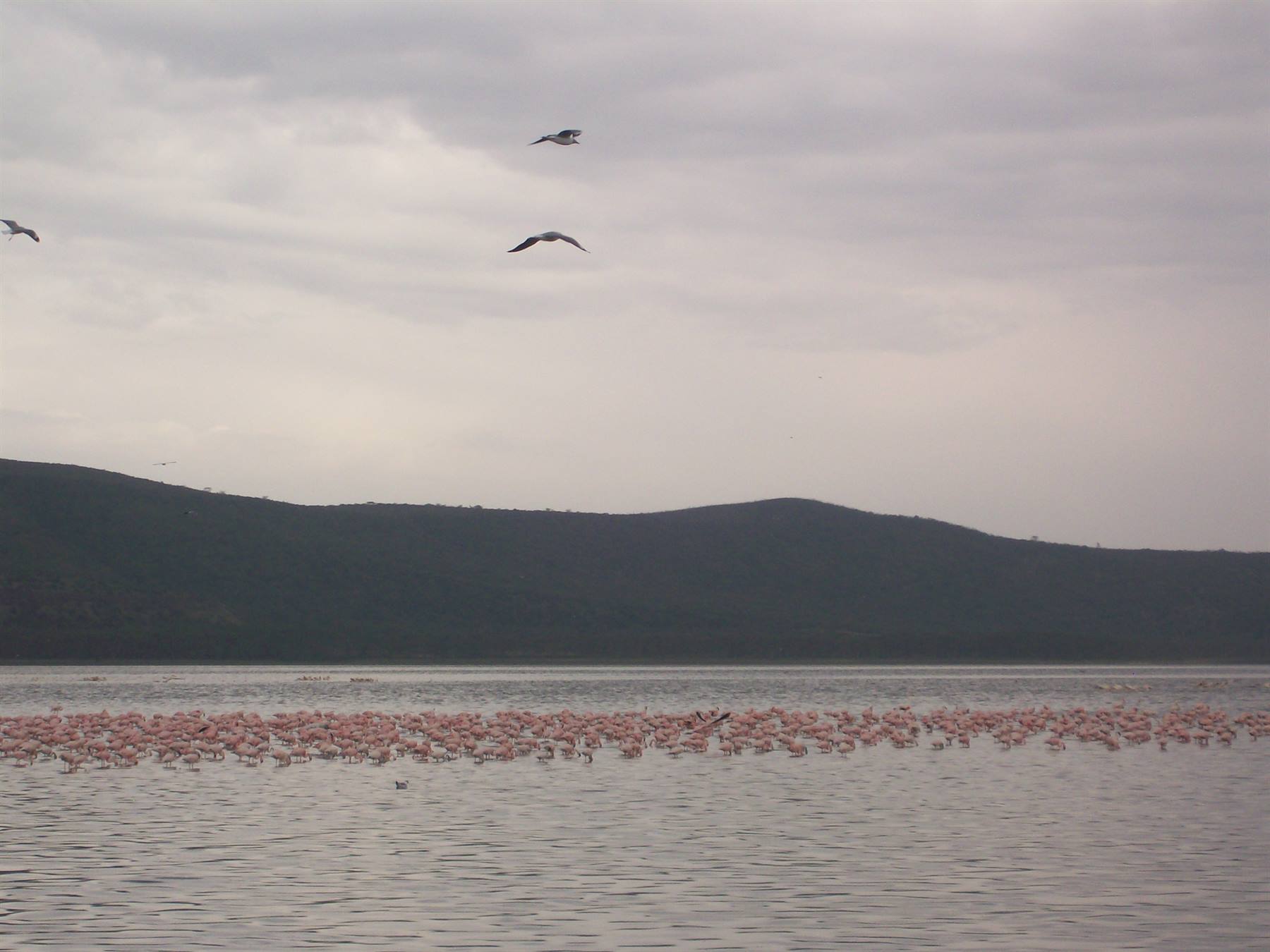
The dominant species on this saltwater body are above all pelicans and pink flamingos. To be precise, this is the place in the World with the largest concentration of pink flamingos, which cover part of the lake's surface. If the water is the domain of the birds, the shores are frequented by one of the most important colonies of white rhinos in the World. These mastodonic beasts, which in reality are not white, graze on the grass around Nakuru completely undisturbed by tourist off-road vehicles. From a height it is possible to enjoy an overall view of the lake while on the dirt roads surrounding it one finds oneself face to face with large groups of green baboons which, heedless of our passage, occupy the roadway.
In the lake we spot a hippo while among the vegetation walk giraffes of a variety different from the numerous ones seen at the Masai Mara; these are of the Rothschild breed and one notices it from the different pattern of the skin. Before leaving the Park we also notice the omnipresent zebras which in Kenya are as common as horses are for us. As we are about to exit, a park ranger informs us that not far from there a solitary lion is wandering around, so we turn back to go and photograph it in complete tranquillity. We then leave the Park and return to the Hotel where, surprisingly, we discover that in the meantime a large group of Germans has arrived. We have dinner, this time buffet-style, and retire to our room since tomorrow morning the longest leg of our trip awaits us.
Meanwhile one of my companions has telephoned our tour operator to complain about the poor quality of the hotel; thanks to this call we will obtain excellent accommodations in the following days and a free excursion to the sea, better than nothing!
Masai
Day 514 Jan 2000
Amboseli
We get up while it is still dark, have breakfast in a deserted dining room and set off at first light for the longest transfer of our tour in Kenya. We pass again near lakes Elmenteita and Naivasha then leave the Rift Valley and climb onto the Nairobi highlands. Besides the length, today's journey worries us because we are forced to pass through the chaotic center of Nairobi. Indeed in the Capital we find the disorderly automobile traffic for which it is known; fortunately our driver is a true professional, he is not intimidated and manages to make his way through the rows of vehicles. It seems that here there is not much respect for the highway code and road signs are a negligible optional. Fortunately both the road to reach Nairobi and the one heading south are of good quality and after the Capital the traffic is reduced to a minimum.
At Namanga we stop for physiological needs; the Kenyan "service stations" are large dilapidated sheds, whitewashed with lime, inside which a mandatory path to reach the bathrooms forces you to pass in front of numerous stands of artisanal souvenirs. The prices of this merchandise, despite long negotiations, are always exaggerated compared to the local economic level. The bathrooms are often nothing but a pit that disperses the excrement directly onto the ground. According to our guide, who is also recent, from Namanga we should have traveled a difficult dirt road but fortunately in the last year it has been paved and reaching the Amboseli will turn out to be an unexpected stroll. We cross a small stretch of the Park and immediately realize that here the masters are the elephants, in decidedly significant numbers.
Herds are seen everywhere even though we stop, curious, at a family of ostriches. Unfortunately despite the beautiful day Kilimanjaro is completely wrapped in mist. We leave the Park and immediately afterwards arrive at our accommodation, the characteristic Kibo Camp. The Tented Camp is very beautiful, it is full of tourists and has a characteristic safari-style setting. The tent assigned to us is not as large as the one at the Masai Mara but decent and cozy; there is a shower with hot water provided by a solar system and electric light which, however, is active for only a few hours after which we have a candle available. The beds are small but comfortable and provided with a regular mosquito net. After the buffet lunch in a large African-style hut we begin the game drive, which two of my companions skip due to the too much heat.
Having reached the south and far from the highlands, the equatorial heat makes itself felt. With the off-road vehicle we explore the Amboseli, encountering numerous elephants but also green vervet monkeys, baboons, buffaloes, water antelopes, zebras, gazelles, Masai giraffes and wildebeest. As in the other parks we see two animals that elude our passage so it is impossible to frame them with our photographic equipment: the hyena and the warthogs. The pools present in the Park are the habitat of various water birds and hippos. Unfortunately the main reason for our presence at the Amboseli continues to hide, Kilimanjaro. Another disappointment is due to the fact that we would have wanted to do the balloon safari the following morning but the places are limited and we are left out. Leaving the Park we are surrounded by the usual Masai vendors present in this area as well.
Back at the Camp we enjoy the evening atmosphere of the Kibo made of soft lights, lanterns and fires. After dinner we sit together with other tourists around a fire bordered by a circle of large stones. A group of Masai offers us its dance accompanied by chants and its stories, unfortunately in English. The Masai are not the only one of the 42 tribes of Kenya to have maintained their ancestral traditions but they are the best known because their location is in an area heavily frequented by tourists. Around the fire we make the acquaintance of a former American model who also worked in Italy for a fashion magazine and who is in Africa for a humanitarian project. We also witness amorous effusions between an elderly Italian woman and a very young Kenyan; we had heard about this type of male prostitution involving our compatriots but finding oneself face to face with it has a certain effect.
It has been a pleasant day; we go to the tent before they cut the power. Before returning, a waiter came to spray our tent with DDT; precautions against malaria are always welcome. I exchange a few words with this boy while I observe the savannah night sitting on a chair on the small terrace of my tent. I ask him if tomorrow we will see Kilimanjaro; he replies that during the night there will be a magic and the clouds will disappear; let's hope he is right.
Nakuru
Day 615 Jan 2000
Amboseli and Tsavo West
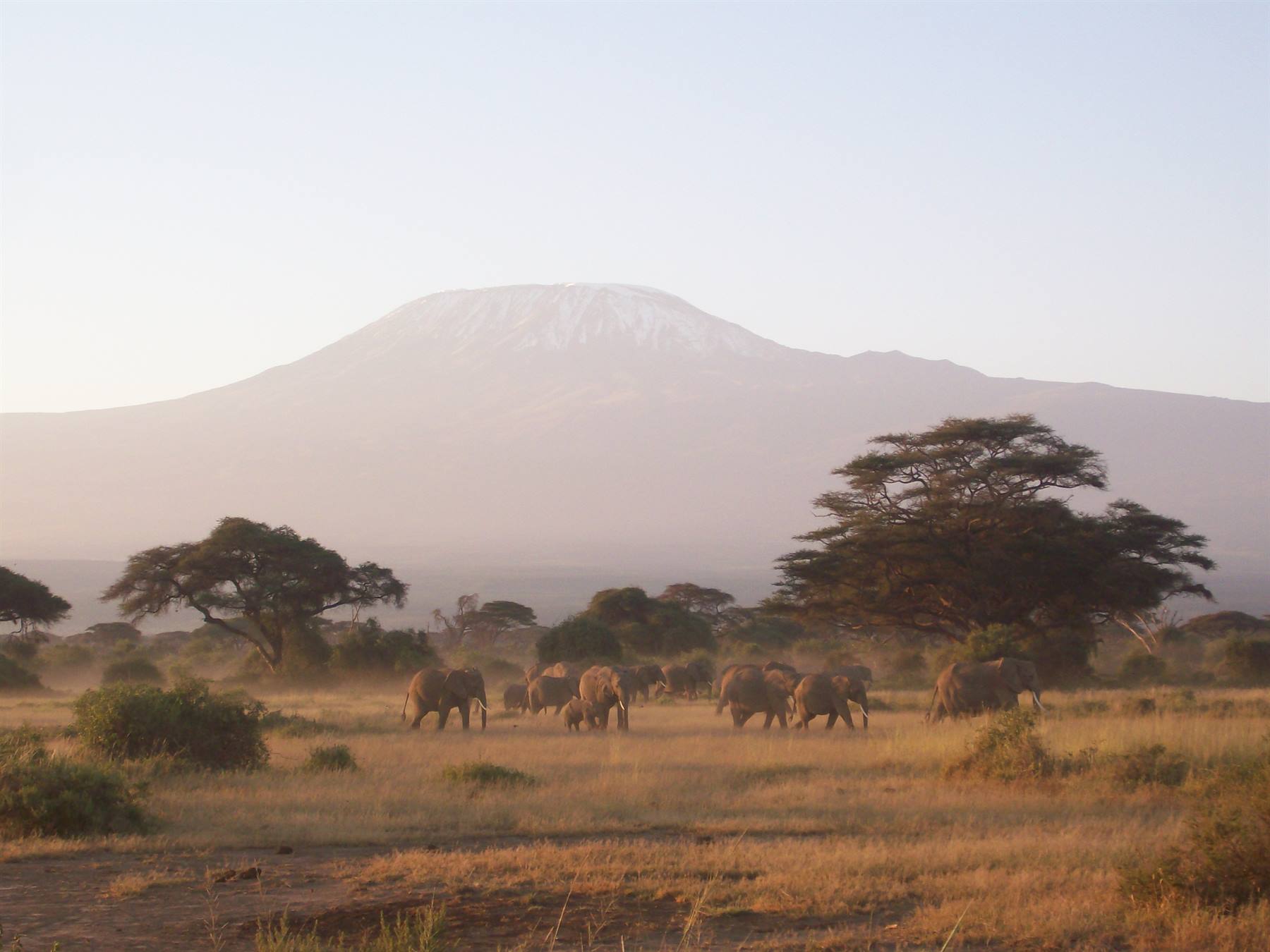
We get up at first light and when we open the zipper of our tent the grand spectacle of Kilimanjaro finally free of clouds appears to us. The waiter was right last night, tonight as if by magic almost all the mist has disappeared. We set off immediately for the game drive and this time our group is complete. We manage to see the most classic image of Africa, a herd of elephants on the slopes of the great mountain. Kilimanjaro, which here at the Amboseli gives its best, is beyond the border, in Tanzania. It is the highest mountain of the entire continent and with its almost 6000 meters also the highest peak in the World among those isolated, that is among those that are not part of a mountain range. We return to the Kibo Camp just in time to have breakfast then set off again for Tsavo West.
For the transfer we will use a shortcut, a dirt road where frequent acts of banditry have occurred and for this reason we will be accompanied by a soldier armed with a machine gun whom we load onto our off-road vehicle in a village on the border with Tanzania. During the journey we enjoy excellent views of Kilimanjaro whose profile in the meantime has become very sharp; now the mountain shows itself in all its grandeur. The peculiarity of this famous mount lies in its summit permanently covered in snow despite the fact that we are just south of the equator. The soldier accompanying us is in civilian clothes so as not to arouse suspicion. We cross an area of young lava flows that cover large surfaces in black, a sign of geologically recent eruptions. The strange environment completely devoid of vegetation at Shetani reminds me of what I saw many years ago on my trip to Iceland.
After all, from here one sees the nearby Chyulu Hills which are nothing but volcanic hills. We enter Tsavo West and say goodbye to the soldier who escorted us. We then stop at Mzima Spring where we get out of our vehicle for a short walk in a riparian forest accompanied by an armed park ranger. The Mzima are anomalous springs; in practice it is the point where the waters coming from Kilimanjaro emerge to the surface forming two small lakes separated by a strip of land beneath which an underground stream flows. When one walks between one small lake and the other one feels the ground vibrate underfoot from the passage of the water. In the small lakes live numerous freshwater fish and some hippos. A curious structure with glass windows allows one to see the bottom of the lake as if we were in a submarine.
We return to our vehicle and resume the dirt road which, with ups and downs, leads us to the Ngulia Lodge for lunch. The Lodge is very beautiful; it has a large restaurant without walls that overlooks the bush and a pool placed on a natural terrace dominating the savannah below. The Lodge is in fact located on one of the Ngulia hills. The room is decent and the window overlooks a pool where elephants come to drink. In the afternoon my companions are tired and discouraged by the heat; only I set off for the scheduled game drive. Tsavo West has thick vegetation so it is difficult to spot animals but they take me to the Rhino Sanctuary, a protected reserve where several black rhinos are found. Unfortunately, probably due to the excessive heat, I do not manage to see even one rhino and the other animals that can be spotted are also reduced to a few specimens of zebras and antelopes.
The landscape is instead interesting; in certain stretches it recalls the American Far West, it almost feels like being in Arizona. Back at the Lodge I rejoin my companions on the veranda near the restaurant where many are waiting for the arrival of a cheetah. The Lodge staff has placed a piece of meat on a wooden perch and every evening a cheetah comes to eat it. We wait patiently from 6:00 pm but the feline seems to skip the appointment. To the nearby pool, instead, a couple of elephants come. It is dark but there is a spotlight illuminating the scene. When we all think the cheetah has given up and we head to the restaurant for dinner, here comes the animal which catalyses all the attention on its exploits. It is a spectacle even just to see it eat, climbing onto that perch and twisting elegantly as only an acrobat could to gulp down that piece of meat.
When the cheetah is satiated and leaves, it is our turn to dine. We have no choice but to retire to our rooms and file away another intense day that began on the slopes of Kilimanjaro and ended near the jaws of the cheetah.
Nakuru
Day 716 Jan 2000
Tsavo Est
On waking we have breakfast in the restaurant of the Ngulia Lodge then begin our transfer to Tsavo East. Tsavo is the largest Park in Kenya and one of the most vast in Africa; it is administratively divided in two, the West where we are at this moment and the East where we are heading. Having left the West we travel a stretch of the main road artery of Kenya that connects the two most important cities of the Country, the Capital Nairobi with the port of Mombasa. We enter Tsavo East from the Manyani Gate and almost immediately see the Mudanda Rock which many describe as similar to the monolith found in the center of the Australian desert but I cannot see any resemblance. Unlike the rolling and bushy West, the East is flat and has sparse vegetation; the element that immediately catches the eye is the very red earth.
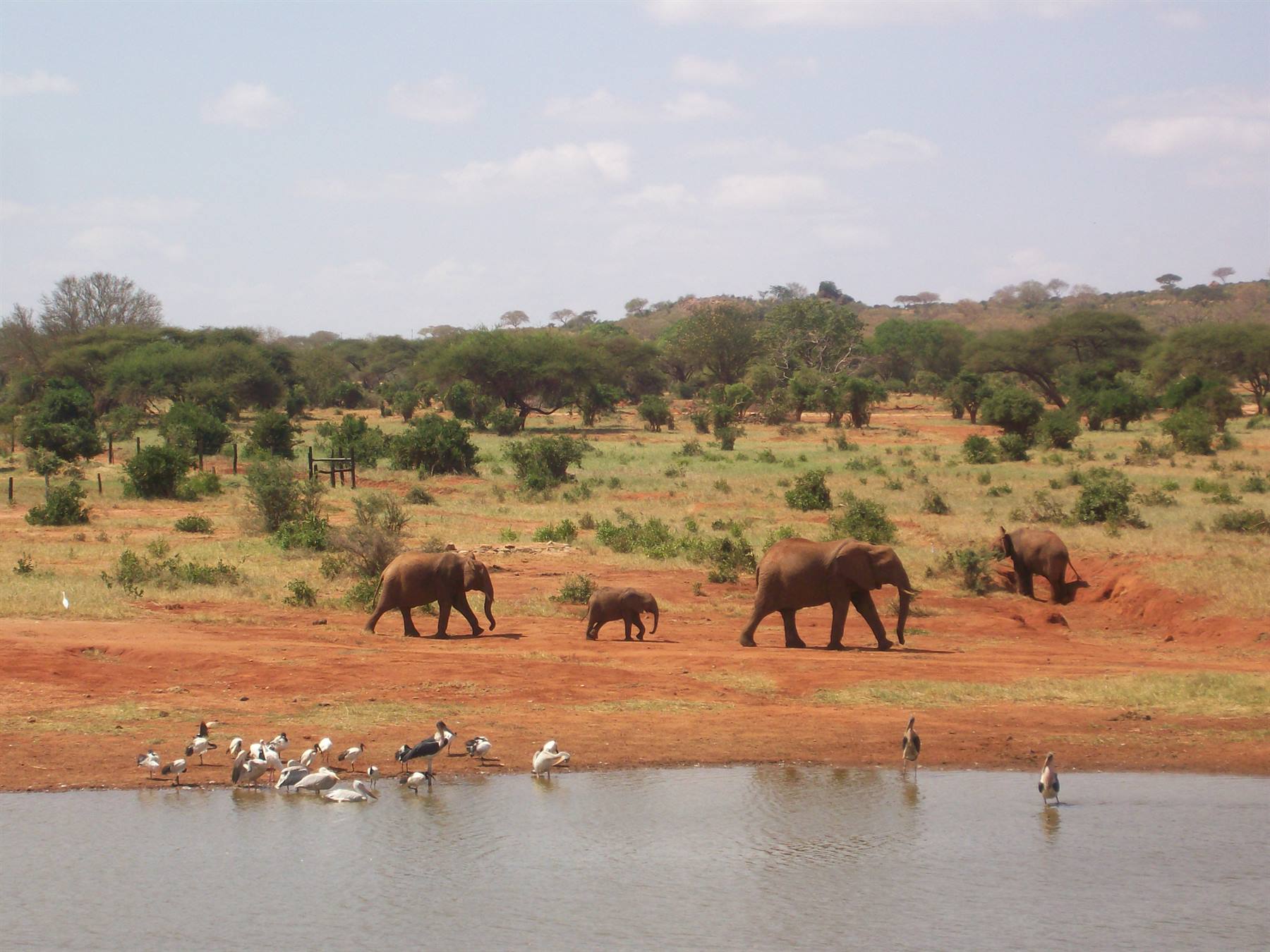
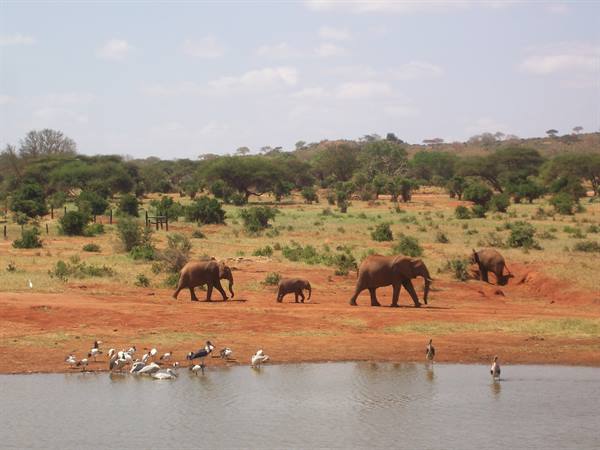
Contrary to what I thought, here one sees various animals of different species and we happen to spot lions right away. We arrive for lunch at the Voi Wildlife Lodge, absolutely the best accommodation of our trip in Kenya. It is a luxury Lodge with a veranda overlooking a small lake where numerous animals come to drink, especially elephants. There is also a rich birdlife that regularly frequents these waters. The Lodge is equipped with a large restaurant, two pools, a gym, sauna, massage room and a bridge that ends with a stilted gazebo overlooking the lake. Even the buffet cuisine is decidedly better and more varied compared to that found elsewhere. The room is spacious and elegant; a completely glassed wall overlooks the small lake and offers the continuous view of the animals that drink.
After lunch we linger to observe from the Lodge's terrace the numerous elephants that come and go to the small lake. We are not alone; there is also a group from Piombino with whom we make acquaintance. I do the afternoon Game Drive with only one of my companions and three foreign tourists who were left stranded due to a breakdown of their vehicle and who asked our guide for a ride. Among other things, having to go and pick them up, I also have the chance to see the small Lion Hill Lodge located on a hill from which one dominates the savannah below. With them we return to see the lions already spotted in the morning and encounter other animals already seen in previous days such as zebras and antelopes. This Park is, however, above all the kingdom of elephants; there are a great many of them and herds are seen everywhere.
We take our guests back, and also the guide who will sleep at the Ndololo Camp, then return to our beautiful five-star Lodge. In the evening after dinner we witness an incredible spectacle from the Veranda of the Voi Wildlife. In the silence of the African night an enormous herd of buffaloes arrives to drink; there are a great many of them and the line that orderly enters the water seems never to end. An unexpected spectacle of nature that alone would have been worth this trip. After this splendid vision that made us feel as if inside a documentary we retire to our room for the night.
Tsavo West
Day 817 Jan 2000
Watamu
After breakfast we take the road to Watamu. Along the way in the Park there are still many animals that we spot, including the usual group of lions that for three days have occupied the same spot, heedless of the dozens of tourist vehicles that position themselves to observe them. Tsavo East is heavily frequented also because it is the closest to the coast and most tourists who come to Kenya mainly for the sea dedicate at least one day to a short safari in this Park. Personally I do not consider Tsavo as beautiful as the Masai Mara but it is decidedly sufficient to get an idea of a safari in Africa. At the exit of the Park we meet a long column of tourist vehicles coming from the seaside resorts that are about to enter; they are almost all Italians.
We go to the banks of the Galana River where a crocodile accustomed to tourists and prompted by a local performs by opening its mouth wide for us, but here it really feels like being at the circus. The road to the sea passes through the Arabuku Sofoke Forest where there are numerous villages of huts along the road. Having reached Watamu we arrive at what will be our accommodation for the next 5 days, the Ascot Residence. Here, having unloaded the luggage, the guide and the driver say goodbye to us; we leave them a tip then take our place in the accommodation. We have rented for 4 nights a terraced house with a veranda overlooking the condominium pool, a living room with kitchenette and two bedrooms with bathroom. The house next door is owned by the people from Piombino met yesterday at the Voi Wildlife Lodge in Tsavo East.
The Residence is an elegant structure built by a man from Lissone in Lombardy, made up of numerous apartments (and small villas) that were then sold to Italian tourists. The owner has kept the restaurant, the casino, the bar and manages the rentals of the apartments sold on behalf of the owners. The owner of the complex is a very active man and is the Watamu representative of the Italian Embassy in Nairobi. The pool in front of our accommodation is surrounded by deck chairs for sunbathing and there is also a masseuse available. Having sorted our things we go to do a reconnaissance of the nearby beach in one of the three bays around Watamu. We immediately realize that the biggest problem will be repelling the siege of the beach boys who insistently try to sell you everything.
To send away a self-proclaimed Somali refugee who follows us like a shadow we are forced to pay but the music essentially does not change; having avoided one, another appears. And if one then has the imprudence to turn to one of them for information it is then very difficult to get rid of him. The beach is of a shifting white that without sunglasses bothers the sight; when one treads the very fine sand it crunches underfoot but unfortunately it is strewn with seaweed. The water is clear and lukewarm and the temperature is similar to an Italian August. Towards evening we go to watch the fishermen return in another bay. They arrive with their characteristic sailboats overloaded with large reddish fish.
The phenomenon of the tide here is very evident; what was before a wide beach is completely covered by the waters, what was a strange mushroom-shaped hill becomes an island, the landscape changes continuously. Returning to the Residence we meet near a dilapidated travel agency a young man who proposes an excursion for tomorrow; we will give him the answer later and it will be affirmative. Today we skipped lunch and we grant ourselves a rich dinner at the Ascot restaurant. It is the owner himself who recommends an abundant grilled fish and shellfish accompanied by roast potatoes and a thin focaccia just out of the oven, all very good. We take a short walk around the town which is a poor village of sheet-metal huts, some coral constructions and a few restaurants for tourists but at 10:00 pm there seems to be a curfew because we are the only ones strolling.
The center of Watamu is in strong contrast with the surrounding bays on whose shores the famous all-inclusive villages are located. We have no choice but to return for the night; tonight we will sleep without a mosquito net because it seems that here there is no need for one.
Tsavo West
Day 918 Jan 2000
Gedi, the Griama and Malindi
We have breakfast at the Ascot Restaurant, where we are the only guests. Unlike the Lodges of the past few days where you ate buffet-style, here breakfast is served Italian-style: tea on the table, toasted bread and jam; it's not as abundant but good. Right afterwards a taxi comes to pick us up for the excursion booked last night with the beach boy. He will be our guide. First stop, the ruins of Gedi, an ancient abandoned Swahili city. The place is more interesting for its surrounding environment than for the ruins themselves. There are centuries-old trees, essences never seen before, and some monkeys climbing among the ruins. We then continue along a secondary road that passes through a forest and we stop in a poor village where we buy candy and notebooks for the children we will meet along the way.
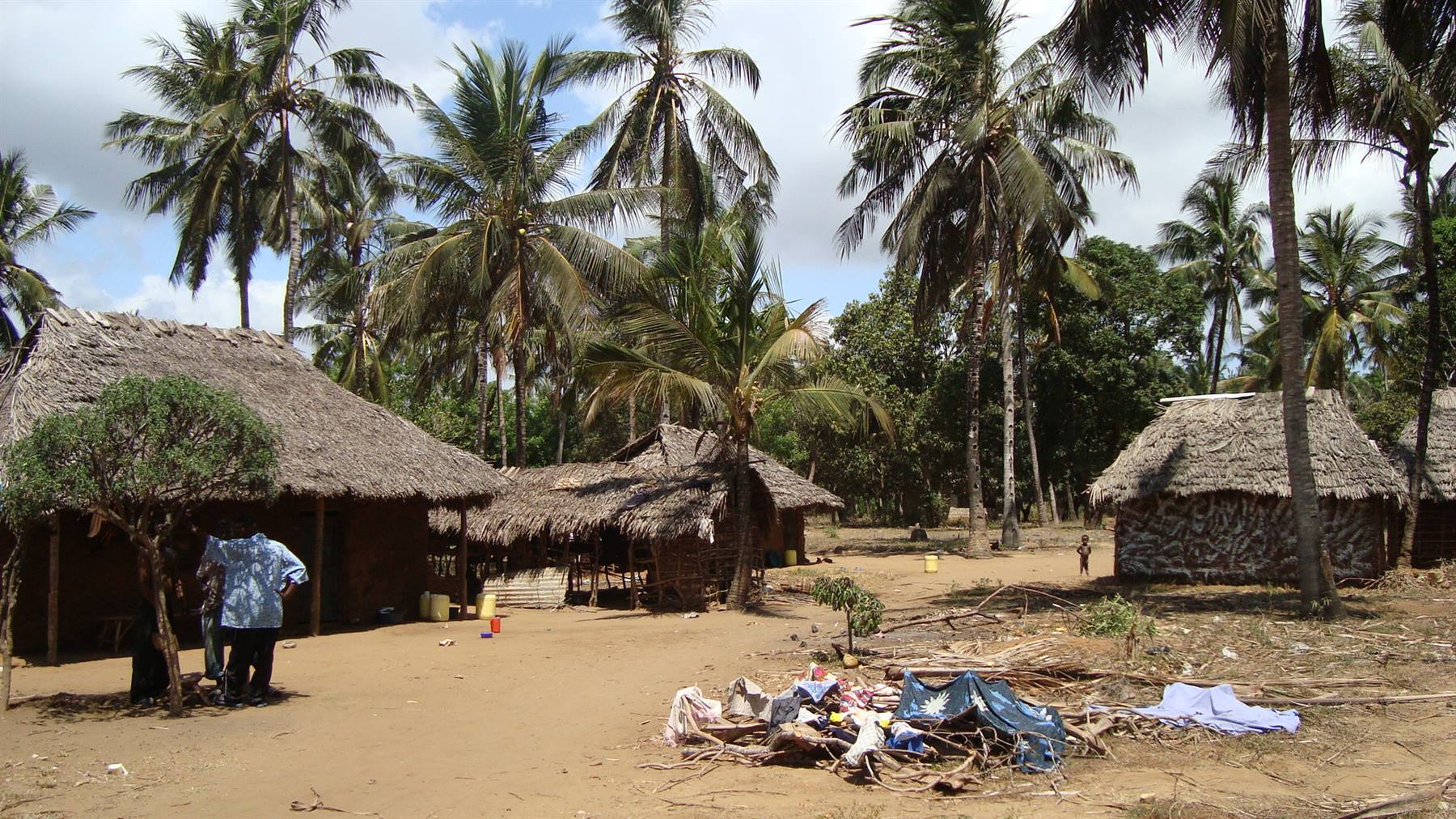
For this reason we stop at an elementary school where children dressed in identical little smocks follow the teacher's lessons under a tree. Others repeat words out loud in a hut completely devoid of walls. They are not distracted by our presence, which instead attracts numerous other children who surround us to receive candy. The next stop takes us to a village of the Griama tribe, a people who live in huts with mud walls and coconut-leaf roofs. Many dwellings, however, have no walls. The inhabitants seem to idle in the heat, also because there is nothing to do except go fetch water with a jerrycan from the public fountain, supervised by a boy who charges for it, receipt and all. The tribal chief is not happy about our visit; he asks for and obtains some money from our beach boy. Here there is absolute poverty, but they certainly don't starve since the trees are full of fruit.
A mother shows us the body of her little girl, badly burned by boiling water. We take the dirt road again to the end of the forest, then continue on a paved stretch to Malindi. Here we visit a shed where numerous artisans produce wooden handicrafts, along with its large display area. Then we take a panoramic taxi tour through the area of discos for tourists and along the seafront, where in the distance you can see the so-called Vasco Da Gama lighthouse. The lighthouse, which is actually a very white cross of Portuguese stone, served sailors as a landmark; from here onward, after circumnavigating Africa, one had to face the Indian Ocean all the way to India. We also stop at the market for a short stroll in a truly dirty and messy place where merchandise is piled up seemingly without any logical criteria. We return to Watamu along the main road, back to our little villa.
We skip lunch, and in the afternoon one of my companions and I take a long walk around the town as far as the Post Office. Then we take a tuk tuk to Blu Bay, where we join another of our companions. We swim in the Bay, which is overlooked by some All Inclusive Resorts frequented almost exclusively by Italians. Coming out of the beach we are "harassed" by two young local girls who ask if we want to have sex with them; we politely refuse. The woman in the group has stayed sunbathing at the Residence pool; we reach her by tuk tuk and together we go to dinner at the Ascot Restaurant. Same menu as last night and same treat. To digest, we take a walk around Watamu; it's earlier than yesterday and there are still some tourists around; in a trattoria we even find a woman from my hometown with her husband, who are staying at a Resort.
They tell us the food there is good and we book for tomorrow evening. We return to the Ascot for the night.
Tsavo East
Day 1019 Jan 2000
Watamu Marine Park
After breakfast at the Ascot we take part in the excursion that our Tour Operator offered us to make up for the bad accommodation in Nakuru. A taxi comes to pick us up at the Residence and takes us to Blu Bay, from where we take a boat for the so-called "Blue Safari". Numerous guests from the All Inclusive Resorts take part in the excursion, all Italians. To be honest there's also a couple of Italian-speaking Swiss who, incidentally, we had already seen both at the Masai Mara and at Nakuru; at the third encounter we break the ice and get to know them. Once out on the water we spot a group of dolphins emerging from the water with their fins. We then head to the Watamu Marine Park and dive into the sea for a short snorkeling session on a coral reef. The place isn't much to write home about, although among the few corals present we spot several surgeonfish.
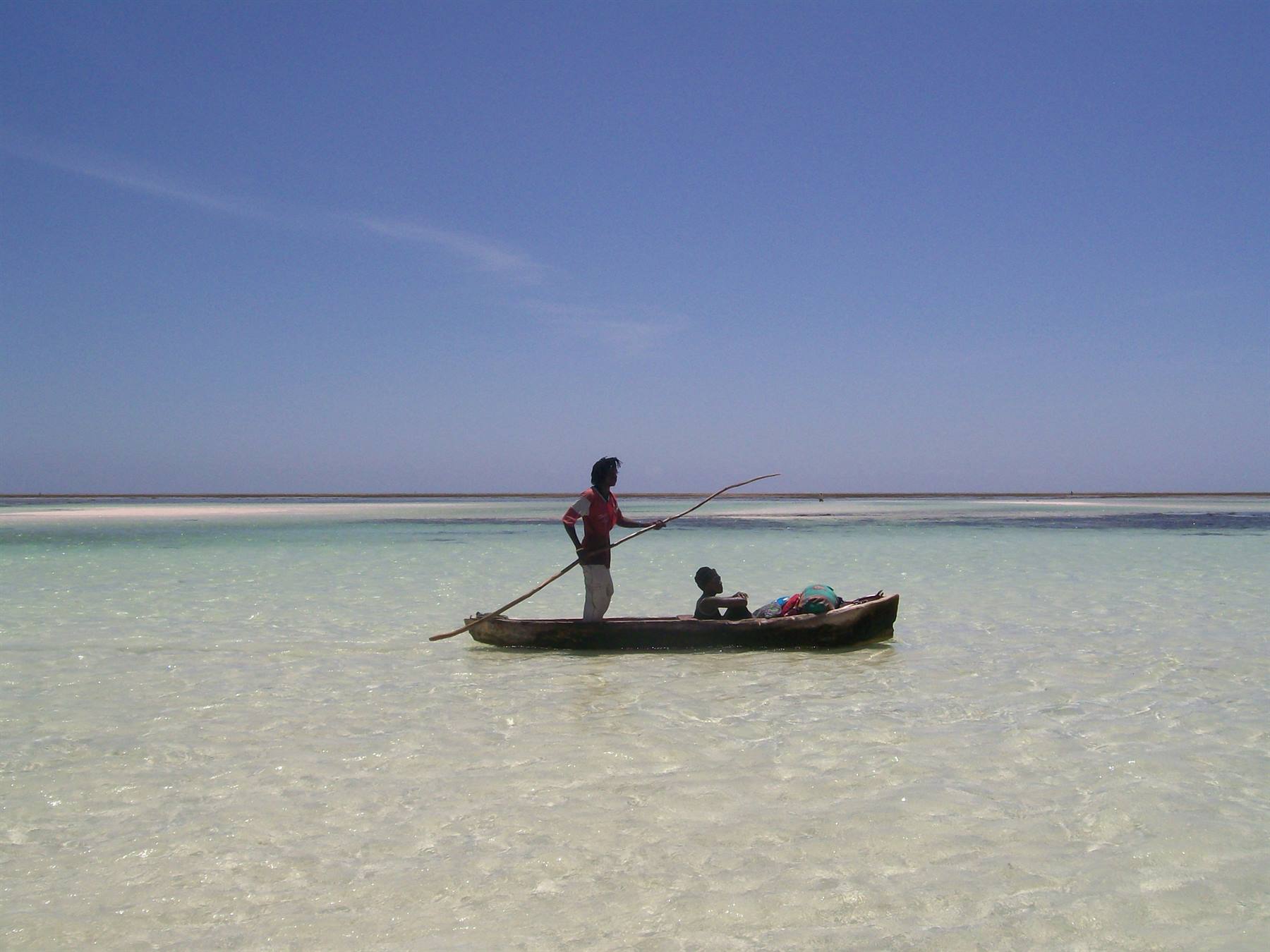
The water is shallow and it's hard not to brush the corals with your knees. The equipment was provided by the organization, but I avoid putting on the fins. Back on the boat we move to an intricate fjord that skirts a mangrove forest, called Mida Creek. Along the way you can see canoes and fishermen's boats. Inside the fjord there are some islets that are mostly strips of emerging sand, and on one of these we see a flock of flamingos. We get off on a small island of white sand and mangroves where there is a hut without walls whose roof is covered with the usual coconut leaves. Here the organization welcomes us with a grilled fish and shellfish lunch, with large lobsters on proud display. We have lunch seated at a long table accompanied by the cheerful singing of the organization's young men.
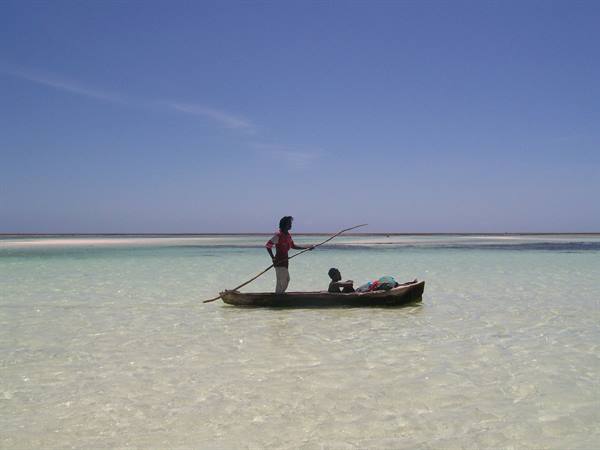
I then separate from the rest of my companions to join a couple of Italians on a short excursion in a rudimentary canoe carved from a tree trunk. The canoe is propelled by a boy who pushes with a pole against the bed of the channel we travel along. Another boy, meanwhile, explains what we are seeing. The channel is surrounded by mighty mangroves on which large bats can be seen hanging, and in the water there are small barracuda and other fish. After this short stretch I rejoin my companions on the islet where we had lunch, then we take the boat again to return to Watamu. Back at the Residence we relax between the room and the pool, idling until dinner.
We were supposed to have dinner at the town trattoria booked the night before, but one of my companions went ahead to scout and learned that the owner hadn't bought the fish because we hadn't left a deposit—an inexplicable thing since he hadn't even asked for one. Disappointed, we go back to dinner at the Ascot Restaurant, where tonight we also try the pizza, which incidentally isn't bad for these latitudes. Nothing left to do but retire for the night.
sea
Day 1120 Jan 2000
Sardinia 2
After breakfast, together with my fellow villager, we transfer by taxi to the Malindi Marine Park. From a small harbour we board a boat and head out to sea. Once we reach the coral reef we dive into the water to observe corals and fish in a much more striking environment than that of yesterday's excursion. After the brief snorkelling we continue to the so-called "Sardinia 2", a series of pure white sandbanks that emerge from the sea during low tide. The place is wonderful, the beautiful day enhances the contrast between the various shades of blue-green in the sea and the whiteness of the beach. The first stop lets us observe starfish up close; here too, in the middle of the ocean, we are not spared vendors of trinkets, joined also by those who would like to foist on us skewers of freshly caught fish and shellfish.
After a short transfer, the stop on the second sandbank allows the organisers to cook our lunch on spartan grills resting on the ground. The enchanting spot is crowded with numerous boats packed with tourists, most of them Italian. While the lobsters cook, the tide rises and the legs of the barbecues are submerged by the water along with generous portions of sand. We have lunch on the boat because meanwhile "Sardinia 2" is disappearing before our eyes. On the way back, the various boats end up drawing alongside each other and, urged on by the organisers, we all end up singing "Jambo Buana" together, the Swahili musical hit of this trip to Kenya. I savour the moment, so carefree, in a paradisiacal setting, certainly one of the highlights of this African journey.
Back in Malindi we take a taxi and after a short stop at a souvenir shop in town we transfer to Watamu, rejoining the Ascot and our travel companions. We have dinner at the Residence restaurant together with the young couple from Ticino whom we have got to know.
sea
Day 1221 Jan 2000
Nairobi
After breakfast the owner of the Ascot drives us in his car to Malindi airport. The terminal is tiny, practically a little shack where you wait for the flight, and a landing strip. On a small twin-engine plane of the Fly 540 company we reach Nairobi in about an hour. At the Jomo Kenyatta airport in the capital we drop off our luggage and take a taxi to the centre, where we visit the covered central market, take a short stroll, snap a few photos of the skyscrapers and have dinner at the Italian restaurant "La Trattoria" together with the taxi driver. Back at the airport we collect our luggage and wait to board.
village of the Griama tribe
Day 1322 Jan 2000
Back to Italy
A little ahead of time we take the 00:55 Kenya Airways flight to Rome. We arrive around 6 in the morning. Here my fellow villager and I part from our two travel companions and head home.



0 reader comments